
Related News
- 00
0000-00
How to size heavy-duty loaders for North American mining operations - 00
0000-00
How altitude affects mining excavator performance in Latin America - 00
0000-00
Caterpillar Launches New Cat 6060 and Upgraded Autonomous Mining System - 00
0000-00
When does eco-friendly construction equipment pay for itself? - 00
0000-00
Will a wheel loader quick coupler fit your existing attachments?
In 2026, hydraulic machinery is becoming a decisive driver of jobsite efficiency as contractors balance productivity, precision, decarbonization, and automation. For business decision-makers, understanding how electro-hydraulic control, intelligent sensing, fuel-to-electric transition, and uptime-focused design are reshaping excavators, loaders, graders, and dozers is essential to staying competitive in a rapidly evolving global equipment market.
For executives responsible for fleet strategy, procurement timing, and operational margins, the issue is no longer whether hydraulic systems will evolve, but how quickly those changes will affect cost per hour, asset utilization, and project delivery reliability.
Across crawler excavators, wheel loaders, motor graders, bulldozers, and skid steer loaders, hydraulic machinery is moving toward higher control accuracy, lower energy waste, faster diagnostics, and better integration with digital workflows. The result is a measurable shift in how jobsites plan labor, fuel, maintenance, and machine mix.
Why hydraulic machinery is central to jobsite efficiency in 2026
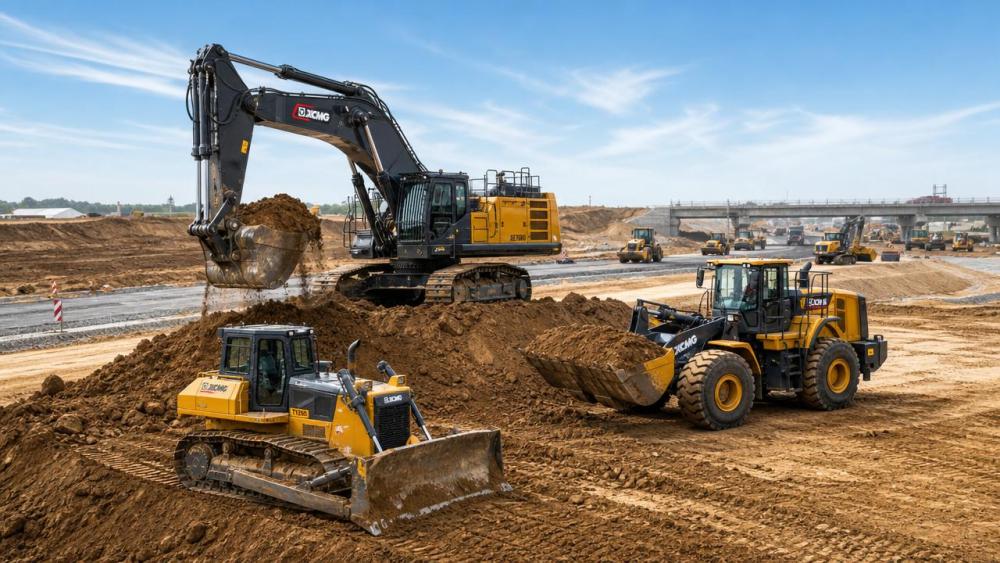
In earthmoving and infrastructure work, hydraulic machinery remains the force multiplier behind digging, lifting, grading, pushing, and attachment performance. Yet in 2026, efficiency is defined less by peak power alone and more by how precisely that power is delivered over 8- to 12-hour operating cycles.
A modern excavator or loader can lose significant productivity through small inefficiencies: slow hydraulic response, excessive idling, poorly tuned auxiliary circuits, or delayed maintenance alerts. Even a 5% to 8% loss in cycle efficiency becomes material when multiplied across a fleet of 20 to 50 machines.
From raw force to controllable productivity
Hydraulic machinery has traditionally been valued for breakout force and durability. Those remain important, especially in quarry loading, trenching, mine stripping, and subgrade preparation. However, buyers are now comparing machines on controllability, repeatability, and energy conversion efficiency just as closely as on tonnage class.
For example, electro-hydraulic proportional control can reduce over-actuation in repetitive tasks. In practical terms, that can mean smoother boom and bucket coordination, reduced rework in finish grading, and lower operator fatigue over 2 to 3 shifts per day.
The four performance metrics executives are watching
- Cycle time consistency over full shifts, not only under test conditions
- Fuel or energy consumption per cubic meter moved or per hour operated
- Unplanned downtime frequency, often tracked in 250-hour and 500-hour service windows
- Precision output, such as grading tolerance, trench profile accuracy, or attachment response speed
This shift matters because project owners are enforcing tighter schedules and more traceable performance standards. A grader holding tighter surface tolerance or an excavator reducing pass count by 1 to 2 cycles per operation can materially improve project economics.
Where the gains show up first
The earliest gains often appear in fuel savings, attachment efficiency, and operator consistency. In mixed fleets, managers also see improvement in dispatch planning because more predictable hydraulic performance makes machine-job matching easier across road, utilities, mining, and urban infrastructure work.
The technology trends reshaping hydraulic machinery platforms
The next phase of hydraulic machinery development is not defined by a single breakthrough. It is the combination of smarter controls, cleaner power sources, and service-centered design that is changing machine economics. Decision-makers should evaluate these trends as an integrated system rather than isolated options.
Electro-hydraulic control is becoming a baseline expectation
Electro-hydraulic architectures allow pumps, valves, actuators, and operator inputs to interact with much finer control logic than conventional mechanical linkage systems. In many applications, this supports faster response, lower energy loss, and multiple work modes tuned to loading, digging, grading, or lifting.
For enterprises, the advantage is not only smoother operation. It is also standardization. A fleet with configurable hydraulic settings can align machine behavior across job types, reducing training time and helping operators move between units in the 10-ton to 50-ton range more efficiently.
Sensing and automation are moving deeper into the hydraulic loop
Sensors are no longer limited to engine monitoring or basic telematics. Pressure sensors, angle sensors, IMUs, GPS, laser references, and camera-assisted perception are increasingly feeding hydraulic decisions in real time. This is especially relevant for motor graders, excavators, and dozers working to tight tolerances.
In finish work, a few millimeters matter. A grader operating within a typical tolerance band of ±3 mm to ±10 mm can reduce material overuse and rework. On large road or airport projects, even a small reduction in aggregate waste compounds quickly over thousands of square meters.
Fuel-to-electric transition is changing hydraulic system design
Electrification does not eliminate hydraulics; it changes how hydraulic power is generated and managed. In compact and mid-size equipment, electric drives paired with optimized hydraulic pumps are becoming more viable where duty cycles are predictable and charging windows can be planned.
For many buyers, the practical question is whether a machine can meet a 6- to 10-hour shift requirement without compromising attachment power or travel performance. In dense urban projects, lower noise and reduced on-site emissions also add procurement value beyond direct energy cost calculations.
Remote diagnostics and uptime engineering are now board-level concerns
High-value fleets cannot afford long fault-detection cycles. Hydraulic machinery platforms in 2026 increasingly support predictive diagnostics for pumps, hose health, temperature anomalies, and abnormal pressure behavior. This shortens troubleshooting windows and improves parts planning.
On projects where a single machine delay can hold up 3 to 5 dependent tasks, the value of uptime design is direct and measurable. Better hose routing, faster service access, and 250-hour or 500-hour maintenance visibility can reduce disruption far more than headline power increases alone.
The table below summarizes how major hydraulic machinery trends affect jobsite outcomes across common heavy equipment categories.
The main conclusion is that hydraulic machinery trends are converging around controllable output and uptime. Buyers should prioritize platforms that combine hydraulic performance with digital visibility, rather than treating those as separate procurement tracks.
What business decision-makers should evaluate before buying in 2026
Choosing hydraulic machinery in 2026 requires more than comparing purchase price and rated horsepower. The stronger approach is to build a procurement model around jobsite fit, supportability, and measurable operating return over the first 24 to 60 months.
Match hydraulic performance to duty cycle, not brochure claims
A fleet used for bulk excavation, quarry loading, and mine support will value sustained flow stability and cooling capacity under heavy loads. A road contractor may place more value on guidance integration, blade response, and fine-control repeatability. The best hydraulic machinery choice depends on actual work patterns.
Buyers should document at least 4 variables before tendering: average daily operating hours, material type, attachment mix, and expected precision threshold. This avoids overbuying peak power while underbuying control quality or serviceability.
Assess total operating cost through a service lens
Hydraulic machinery can appear comparable at acquisition, yet differ materially in hose accessibility, filter intervals, oil cleanliness sensitivity, and pump rebuild complexity. These differences often determine whether service events take 3 hours, 1 day, or several days when parts availability is constrained.
Executives should ask for maintenance schedules, standard wear item lead times, remote diagnostic support scope, and technician response expectations. On high-intensity sites, downtime cost can exceed financing savings surprisingly quickly.
Consider emissions strategy and site access requirements
In some regions, non-road emissions rules, urban low-noise zones, and public procurement specifications are already affecting fleet composition. Even where regulations are less aggressive today, procurement cycles of 3 to 7 years mean future compliance should be part of current buying logic.
This is particularly relevant for compact hydraulic machinery deployed in municipal works, utilities, and redevelopment zones, where electric or hybrid options may support access to projects that diesel-only equipment cannot enter as easily.
The following framework helps procurement teams compare hydraulic machinery options using practical B2B criteria instead of headline specifications alone.
This type of matrix helps remove bias from procurement decisions. It also gives finance, operations, and maintenance teams a common language for evaluating hydraulic machinery beyond initial capital cost.
How to implement new hydraulic machinery trends without disrupting operations
Many businesses understand the trend direction but struggle with execution. The best rollout plan is phased. Instead of replacing an entire fleet at once, successful organizations usually test 1 or 2 machine classes, benchmark them over 90 to 180 days, and then expand based on measured outcomes.
A practical 5-step rollout model
- Audit current fleet performance by job type, fuel use, downtime, and rework frequency.
- Select high-impact machine categories such as excavators, loaders, or graders.
- Define baseline KPIs, including cycle time, energy cost per hour, and service response time.
- Run pilot deployments with trained operators and maintenance feedback loops.
- Scale the specification only after confirming measurable gains over at least one service interval.
This staged approach lowers procurement risk. It also reveals whether the expected benefits come from the machine itself, the hydraulic settings, operator behavior, or workflow design around the machine.
Common mistakes to avoid
Overvaluing peak specs
A machine with higher headline flow or breakout force may not deliver better results if the jobsite demands fine control, frequent attachment changes, or low-idle operation. Decision-makers should test actual duty profiles whenever possible.
Underestimating training requirements
Advanced hydraulic machinery often includes multiple work modes, software logic, and integrated guidance features. Without operator onboarding, a fleet may capture only part of the available efficiency gain during the first 30 to 60 days.
Ignoring support infrastructure
A technically strong machine can still become a weak fleet asset if diagnostic tools, spare parts, and service coverage are inconsistent across regions. For international operators, supportability should be tested market by market, not assumed globally.
Where intelligence platforms add value
For decision-makers tracking crawler excavators, wheel loaders, motor graders, bulldozers, and skid steer loaders, intelligence-led evaluation has become a competitive advantage. Technical insight into electro-hydraulic behavior, autonomy readiness, and regional demand shifts supports better timing, better tender alignment, and better capital allocation.
That matters in a market where decarbonization, emissions changes, and precision construction are converging. Procurement is no longer a simple equipment purchase. It is a long-horizon operating strategy tied to project access, efficiency, and brand credibility in competitive bids.
What the 2026 outlook means for fleet strategy
Hydraulic machinery in 2026 is becoming smarter, cleaner, and more measurable. The companies that benefit most will be those that connect hydraulic performance with digital monitoring, operator capability, and lifecycle support rather than treating each as a separate budget line.
For business leaders, the opportunity is clear: use emerging hydraulic machinery trends to improve cycle efficiency, reduce avoidable downtime, strengthen compliance readiness, and build more resilient equipment portfolios across infrastructure, mining, and urban works.
If you are evaluating next-generation excavators, loaders, graders, dozers, or compact equipment, now is the right time to review your fleet roadmap against 2026 hydraulic machinery requirements. Contact us to explore tailored market intelligence, compare equipment pathways, and get a solution-focused view of the next investment move.