
Related News
- 00
0000-00
How to size heavy-duty loaders for North American mining operations - 00
0000-00
How altitude affects mining excavator performance in Latin America - 00
0000-00
Caterpillar Launches New Cat 6060 and Upgraded Autonomous Mining System - 00
0000-00
When does eco-friendly construction equipment pay for itself? - 00
0000-00
Will a wheel loader quick coupler fit your existing attachments?
Choosing the wrong earthmoving machinery can quietly derail schedules, inflate operating costs, and create avoidable bottlenecks across the jobsite. Selection mistakes often begin before equipment reaches the field. Poor planning, weak workload analysis, and inaccurate site assumptions can turn capable machines into sources of delay. As infrastructure cycles become tighter, fuel standards stricter, and digital control systems more common, smarter earthmoving machinery decisions now shape both project speed and long-term asset performance.
Why earthmoving machinery selection errors are becoming more visible
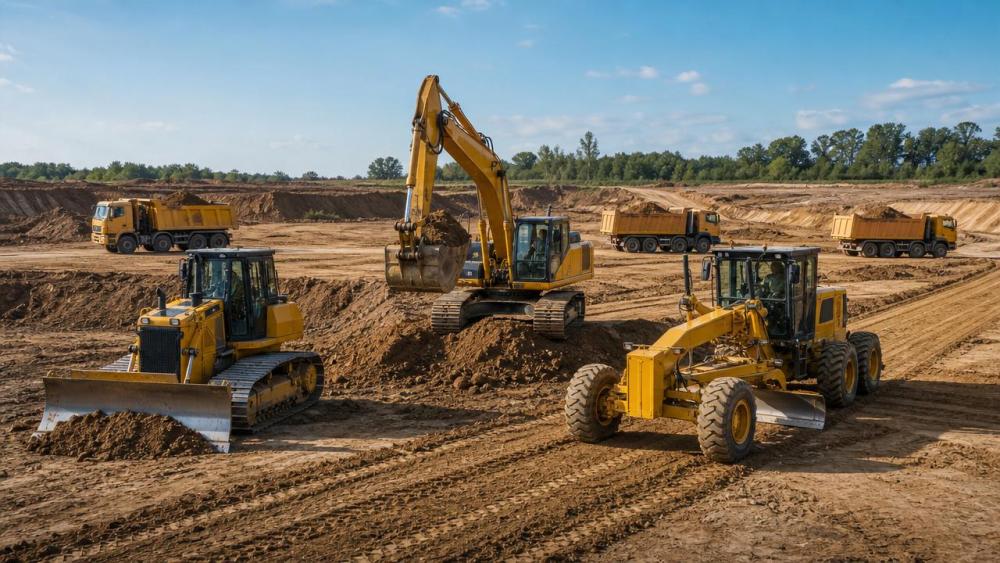
Project schedules are less forgiving than before. Earthworks now connect tightly with surveying, haulage, paving, utilities, and digital progress tracking.
When one excavator, dozer, grader, or loader is mismatched, the entire chain slows. Delays spread beyond excavation and affect sequencing, labor use, and subcontractor coordination.
At the same time, modern earthmoving machinery is more specialized. High breakout force, GPS grading, telematics, and low-emission powertrains reward accurate specification.
This shift matters across the broader industrial landscape. EMD’s perspective shows that machine choice now influences productivity, compliance, carbon intensity, and remote-operability readiness.
The strongest trend signals behind project delays
Recent jobsite patterns reveal that delay risk often comes from decision quality, not machine availability alone. Several signals appear repeatedly across sectors.
- More mixed sites with tight access, unstable soils, and overlapping trades.
- Greater dependence on precision grading and digital layout control.
- Stricter fuel efficiency and non-road emission expectations.
- Higher penalty exposure for missed milestones and idle crews.
- Broader use of telematics for utilization, maintenance, and operator behavior tracking.
These signals mean that selecting earthmoving machinery by habit, brand familiarity, or headline size is no longer enough.
The most common earthmoving machinery mistakes that delay execution
1. Sizing machines for peak moments instead of average production
Oversized equipment can reduce maneuverability, increase fuel use, and create unnecessary haul matching problems. Undersized machines extend cycle counts and labor exposure.
The correct approach is production balancing. Match bucket size, travel speed, push capacity, and truck loading rhythm to the dominant daily workload.
2. Ignoring ground conditions and material variability
Rocky fill, wet clay, abrasive overburden, and compacted spoil all behave differently. A machine that performs well in one material may stall in another.
Selection should consider undercarriage type, breakout force, tire or track suitability, blade configuration, and attachment compatibility.
3. Treating one machine as a universal solution
Many delays come from asking a single unit to dig, load, finish-grade, and support utility work. This often creates queues and idle crews.
Crawler excavators, wheel loaders, motor graders, bulldozers, and skid steer loaders each solve different constraints. Versatility matters, but specialization still drives output.
4. Underestimating attachment and technology requirements
A base machine may be adequate, yet still underperform without the right bucket, ripper, coupler, grade control, or hydraulic flow specification.
Precision projects especially suffer when 3D guidance, laser support, or payload monitoring is treated as optional rather than productivity infrastructure.
5. Neglecting maintenance access and service responsiveness
A machine that looks efficient on paper can become a schedule risk if service intervals are difficult, wear parts are slow to source, or diagnostics are limited.
Downtime on key earthmoving machinery rarely stays isolated. It usually spreads into haul, compaction, and finishing activities.
What is driving these mistakes in today’s equipment environment
How wrong earthmoving machinery choices affect the wider business chain
The impact extends well beyond excavation speed. Equipment mismatch disrupts cost structure, resource timing, and downstream quality control.
For example, a grader without suitable control integration can force repeated finishing passes. That delays paving, increases fuel burn, and raises rework risk.
Likewise, a wheel loader selected without proper dump height or bucket profile may reduce truck loading efficiency. Transport units then idle in expensive queues.
- Schedule impact: missed sequencing windows and handover slippage.
- Financial impact: higher fuel, rental, labor, and maintenance costs.
- Quality impact: uneven grading, poor cut-fill balance, and more rework.
- Risk impact: unsafe congestion and excessive machine-task improvisation.
The priority checks that should guide equipment decisions now
Better selection starts with a short list of non-negotiable checks. These checks are practical, repeatable, and aligned with current earthmoving machinery demands.
- Define the dominant task, not just the broad project category.
- Map soil, moisture, slope, access width, and haul distance early.
- Match machine output to the whole fleet, not a single activity.
- Confirm attachment, hydraulic flow, and control-system requirements.
- Review service intervals, local support, and parts lead times.
- Check operator familiarity with telematics and smart guidance tools.
- Evaluate fuel efficiency and emission fit without sacrificing duty-cycle performance.
A practical way to reduce delay risk before mobilization
A structured review can prevent most major selection errors. The goal is not perfection. The goal is to remove predictable mismatch before field pressure rises.
- Break the project into digging, loading, hauling support, grading, and finishing phases.
- Estimate average daily production targets for each phase.
- Assign the most suitable earthmoving machinery to each production bottleneck.
- Test the fleet mix against worst-access and worst-material conditions.
- Validate uptime assumptions through service plans and wear-part availability.
- Use telematics or prior job data to compare planned and actual utilization.
This method fits both conventional fleets and newer low-emission or semi-autonomous equipment strategies. It also supports stronger handoffs between planning and field execution.
What stronger selection discipline means for future-ready operations
The next phase of construction efficiency will depend on data-linked, application-specific earthmoving machinery. Selection discipline is becoming a competitive advantage.
Organizations that align machine capability with terrain reality, digital workflows, and maintenance readiness will see fewer delays and better capital productivity.
EMD’s industry lens suggests that the best-performing fleets will combine hydraulic strength, precise control, lower emissions, and measurable utilization intelligence.
If project delays keep appearing around excavation, loading, or grading, review the selection logic first. The fastest schedule recovery often begins with better equipment matching, not more equipment.