
Related News
- 00
0000-00
How to size heavy-duty loaders for North American mining operations - 00
0000-00
How altitude affects mining excavator performance in Latin America - 00
0000-00
Caterpillar Launches New Cat 6060 and Upgraded Autonomous Mining System - 00
0000-00
When does eco-friendly construction equipment pay for itself? - 00
0000-00
Will a wheel loader quick coupler fit your existing attachments?
Before autonomous construction becomes routine, the biggest risks often appear before deployment. Early choices shape safety, uptime, compliance, productivity, and long-term trust across the construction ecosystem.
For intelligence platforms such as EMD, this pre-adoption phase matters because crawler excavators, wheel loaders, graders, bulldozers, and skid steers now depend on data quality as much as mechanical strength.
Autonomous construction promises lower rework, steadier cycle times, and safer operations. Yet weak validation, poor mapping, and unclear handoff logic can turn innovation into stoppages, incidents, and expensive retrofits.
Why autonomous construction risk is moving upstream
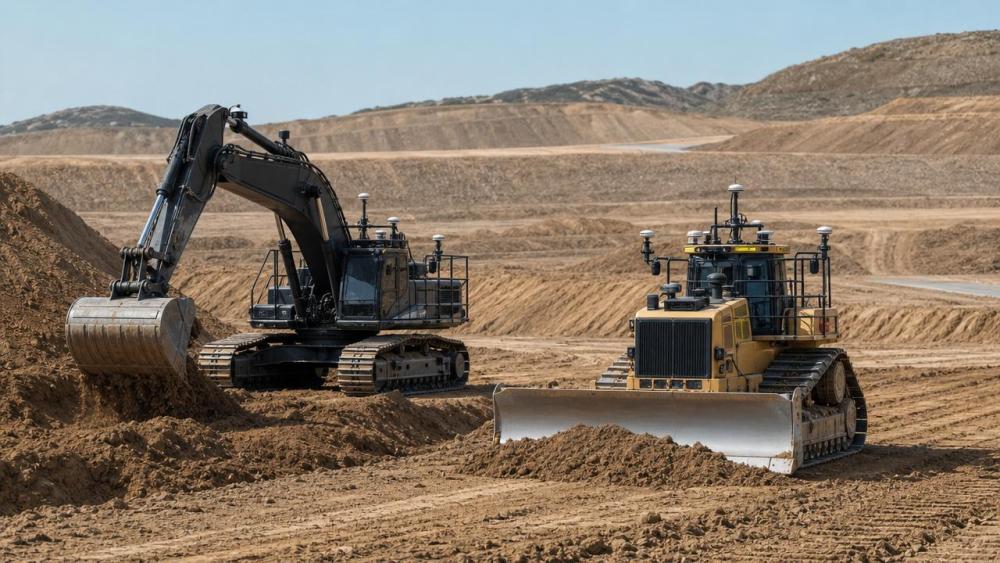
The market no longer treats autonomy as a future concept. It is becoming a near-term operating model for earthmoving, haul support, grading, and hazardous-zone work.
That shift changes where risk begins. In traditional equipment programs, many issues surfaced during field operation. In autonomous construction, critical failures often originate in design assumptions and setup decisions.
A machine may arrive fully functional mechanically, yet still be unready for autonomous construction. Sensors, software, connectivity, terrain models, and human override procedures must perform together under dynamic site conditions.
This is especially important in mixed fleets. A dozer, grader, or excavator may work beside manual equipment, temporary obstacles, subcontracted crews, and changing topography within the same shift.
The clearest signals shaping pre-site adoption decisions
Several industry signals show why autonomous construction requires stronger readiness controls before site activation. These signals are technological, regulatory, operational, and financial.
- Higher use of GNSS, LiDAR, radar, cameras, and inertial systems in heavy equipment.
- Growing use of remote operations in mines, quarries, and hazardous environments.
- Tighter documentation demands for software updates, machine behavior, and event logging.
- Pressure to reduce fuel waste, idle time, and rework through precise machine control.
- More scrutiny on cyber resilience for connected fleets and cloud-linked control systems.
Together, these changes push autonomous construction risk assessment earlier. The focus is no longer only machine capability. It is system readiness across the full deployment chain.
The forces creating hidden autonomous construction risks
The risks before site adoption usually emerge from interactions between hardware, software, terrain intelligence, and human processes. A single weak link can undermine the entire autonomous construction program.
Sensor truth is not guaranteed by specification sheets
Autonomous construction depends on perception accuracy. However, nominal sensor performance rarely matches real-world dust, vibration, glare, mud, slope, or signal interference.
A grader working to millimeter-level targets can fail if calibration routines are inconsistent. An excavator can misjudge edge conditions if occlusion zones were not modeled during acceptance testing.
Software confidence requires field-like validation
Simulation is essential, but it is not enough alone. Autonomous construction software must be proven against terrain variation, communication delays, temporary barriers, and human unpredictability.
Version control also matters. A harmless-looking update can change braking logic, path planning, or object classification, creating new risk if validation records are incomplete.
How these risks affect business performance beyond the machine
Pre-site autonomous construction failures do not stay technical for long. They quickly affect schedules, insurance exposure, utilization rates, stakeholder confidence, and total project economics.
For example, inaccurate digital site models can trigger repeated grading corrections. That means extra fuel burn, lower machine availability, delayed downstream work, and a weaker sustainability narrative.
Weak intervention logic creates another problem. If manual takeover is slow or confusing, a minor anomaly can escalate into a safety event, damaging confidence in autonomous construction across future projects.
- Operational impact: slower deployment, rework, lower productivity, disrupted sequencing.
- Financial impact: retrofits, downtime, claim risk, training costs, delayed return on investment.
- Compliance impact: documentation gaps, reporting failures, approval delays.
- Reputational impact: weaker trust in autonomous construction programs and digital transformation plans.
What deserves the closest attention before autonomous construction goes live
Readiness should be measured through structured checkpoints, not broad confidence statements. The following areas deserve focused review before activating autonomous construction on any site.
- Calibration governance for cameras, LiDAR, radar, GNSS, and machine control references.
- Edge-case validation for dust, low visibility, steep grades, temporary works, and mixed traffic.
- Clear mode transition rules between autonomous, remote, assisted, and manual operation.
- Digital twin and site map refresh frequency aligned with actual terrain change rates.
- Communication resilience, including latency thresholds, fallback behavior, and fail-safe triggers.
- Cybersecurity controls for machine access, update authorization, and event traceability.
- Regional compliance review covering machinery safety, emissions, radio use, and data handling.
Human factors remain central in autonomous construction
Autonomy does not remove people from the risk picture. It changes their role toward supervision, exception handling, remote support, and system verification.
That means interface clarity matters. Alarm logic, override authority, escalation paths, and fatigue considerations should be tested before deployment, not after an incident.
A practical way to judge autonomous construction readiness
A staged approach reduces uncertainty. It also creates comparable evidence for decision-making across equipment categories and site types.
This framework is useful for heavy fleets covered by EMD intelligence. Excavators and bulldozers face terrain-force uncertainty. Graders and skid steers face precision and proximity challenges.
How to respond before risk turns into delay
The most effective response is to treat autonomous construction as an integrated operating system, not a single equipment feature. That mindset strengthens deployment discipline.
- Set measurable acceptance thresholds for perception accuracy, localization, and response timing.
- Require documented validation after every software, sensor, or mapping change.
- Build a site-specific hazard library covering weather, terrain shifts, and temporary structures.
- Audit handoff procedures through drills, not only written instructions.
- Use event logs to connect safety analysis with maintenance and uptime decisions.
- Review regulatory obligations early across all intended operating regions.
Autonomous construction can deliver real value, but only when hidden upstream weaknesses are exposed early. Strong pre-site decisions protect both operational ambition and engineering credibility.
For organizations tracking earthmoving innovation through EMD, the next step is simple: evaluate readiness before rollout, compare evidence across fleets, and close risk gaps before the first autonomous shift begins.