
Related News
- 00
0000-00
How to size heavy-duty loaders for North American mining operations - 00
0000-00
How altitude affects mining excavator performance in Latin America - 00
0000-00
Caterpillar Launches New Cat 6060 and Upgraded Autonomous Mining System - 00
0000-00
When does eco-friendly construction equipment pay for itself? - 00
0000-00
Will a wheel loader quick coupler fit your existing attachments?
As infrastructure demand shifts toward smarter, cleaner, and more productive jobsite solutions, construction equipment manufacturers are gaining market share by advancing reliability, automation, and fuel efficiency. For dealers, distributors, and agents, understanding these competitive moves is essential to identifying high-potential brands, aligning with market trends, and capturing stronger margins in a fast-evolving global equipment landscape.
For channel partners in earthmoving, roadbuilding, quarrying, and urban jobsite supply, the question is no longer simply which machine sells fastest. The better question is which manufacturers are building durable market share through product architecture, aftersales readiness, emissions compliance, and digital machine intelligence.
That shift matters across crawler excavators, wheel loaders, motor graders, bulldozers, and skid steer loaders. In each category, buyers increasingly compare not just purchase price, but uptime targets, operator assistance, telematics visibility, attachment flexibility, and total cost over 3 to 7 years of fleet ownership.
For dealers, distributors, and agents, this creates a practical opportunity. By aligning with construction equipment manufacturers that understand decarbonization, automation, hydraulic efficiency, and serviceability, channel partners can strengthen bid competitiveness, reduce support friction, and improve repeat equipment sales in both established and emerging infrastructure markets.
Why Construction Equipment Manufacturers Are Expanding Their Share
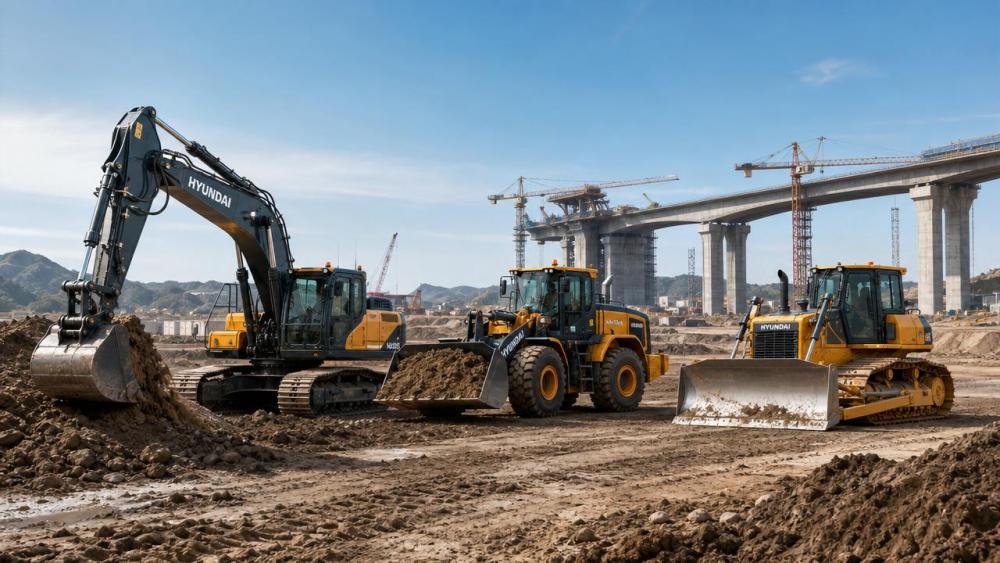
The current gains in market share are being driven by five linked factors: uptime performance, fuel savings, operator support systems, compliance readiness, and parts availability. In many procurement cycles, a machine that reduces idle burn by 8% to 15% can win over a lower-priced alternative that creates higher lifetime operating cost.
Manufacturers with stronger engineering depth are also responding faster to mixed demand across large infrastructure, municipal utilities, mining support, and compact urban works. This flexibility is especially visible in 1.8-ton to 6-ton mini excavators, mid-size wheel loaders, and skid steer platforms with 50 to 200 attachment options.
1. Reliability Has Become a Sales Multiplier
Fleet owners increasingly evaluate mean service interval, hydraulic hose routing protection, undercarriage wear rate, and electronic fault accessibility before signing supply agreements. Construction equipment manufacturers that simplify maintenance access can reduce service labor time by 15% to 30% during routine inspection cycles.
In crawler excavators and bulldozers, durability under abrasive, high-impact conditions remains critical. Reinforced booms, improved filtration, sealed electrical connectors, and easier-to-clean cooling packs directly affect machine availability. Dealers benefit because fewer emergency failures usually translate into better customer retention and lower warranty dispute pressure.
2. Automation Is Reframing Product Value
Automation is no longer limited to premium flagship models. Grade assist, payload monitoring, return-to-dig functions, traction management, and 2D or 3D machine control are moving into broader product lines. On grading applications, centimeter-level guidance can help reduce rework passes and improve finishing consistency on roads, subgrades, and airport surfaces.
For channel partners, automation has two commercial effects. First, it raises average transaction value. Second, it opens recurring revenue through calibration, software updates, training, and retrofit packages. A distributor that can support both hardware delivery and digital commissioning is better positioned for long-term account growth.
3. Emissions and Energy Transition Are Changing Brand Preference
Non-road emissions regulations continue to shape product acceptance in many markets. Buyers now ask whether engines, aftertreatment systems, and cooling packages are suitable for local fuel quality, ambient temperatures, and duty cycles. Construction equipment manufacturers with region-specific calibration strategies often gain trust faster than those relying on a single global setup.
Electrification is also advancing, although its adoption remains segmented. Compact equipment used in indoor demolition, municipal operations, and low-noise zones is a more immediate candidate than heavy dozing in remote sites. Dealers should expect uneven uptake over the next 2 to 5 years, not a uniform shift across every machine class.
The table below highlights the main competitive levers that help construction equipment manufacturers gain share across major equipment categories and explains why those levers matter to dealers and agents.
The pattern is clear: share gains are not coming from one feature alone. Construction equipment manufacturers are winning by combining mechanical durability, digital usability, and practical ownership economics. For channel partners, this means evaluating supplier strength across the full machine lifecycle, not just at the point of sale.
What Dealers, Distributors, and Agents Should Evaluate Before Adding a Brand
A growing manufacturer is not automatically the right partner for every territory. Dealers need a disciplined framework covering product fit, support capability, regional compliance, spare parts depth, and commercial protections. In many cases, a 12-month launch plan reveals more than a showroom demonstration ever could.
Assess Product-Market Fit by Segment, Not by Catalog Size
Some construction equipment manufacturers gain market share because they dominate specific use cases rather than offering the widest range. A supplier strong in 20-ton to 35-ton excavators may outperform a broader competitor if your market is driven by civil earthworks, trenching, and aggregate loading instead of mixed compact equipment demand.
- Map local demand across at least 4 segments: infrastructure, municipal, quarry, and compact urban works.
- Check whether the supplier covers the most active tonnage bands in your region.
- Review attachment compatibility, quick coupler options, and auxiliary hydraulic flow ranges.
- Compare standard specification against what your customers actually tender for.
Review Aftermarket Readiness in the First 90 Days
Brand growth often stalls when parts support lags behind equipment placements. Before committing, ask for fill-rate targets, critical spare stock lists, warranty claim steps, and technical response timing. A healthy aftermarket setup should define at least 20 to 40 fast-moving parts by machine family and a target response window of 24 to 72 hours for priority cases.
This is especially important for high-load machinery such as wheel loaders and bulldozers, where unplanned stoppage creates immediate cost exposure. For dealers, a weak parts pipeline can erase margin gains from initial machine sales within a single quarter.
Core Support Questions to Ask
- What is the typical lead time for routine wear parts: 3 to 7 days or 3 to 5 weeks?
- Which diagnostic tools are required, and who owns access rights?
- How many technician training modules are included in the onboarding package?
- Can telematics alerts be shared with dealer service teams in real time?
- What are the rules for warranty labor reimbursement and approval thresholds?
Verify Technology Support, Not Just Technology Availability
A machine may offer 2D guidance, payload monitoring, or remote diagnostics on paper, but weak implementation can hurt adoption. Dealers should test installation workflow, sensor calibration, user interface simplicity, and software language support. A strong system should be teachable to operators within 1 to 2 days for basic functions and 1 week for advanced jobsite integration.
This is where intelligence-led platforms such as EMD bring value to channel decision-making. The practical advantage lies in understanding how electro-hydraulic response, hydrostatic transmission behavior, grading precision logic, and remote-control communication architecture influence actual field performance rather than brochure claims.
The following comparison table can help distributors and agents screen construction equipment manufacturers before signing territorial or category agreements.
This type of screening helps separate fast-growing, support-ready manufacturers from brands that look competitive only in initial pricing. For dealers and agents, disciplined evaluation protects both reputation and service capacity.
How Market Share Gains Translate Into Channel Opportunity
When construction equipment manufacturers gain market share, channel partners can benefit in three direct ways: faster inventory turn, stronger service attachment, and improved positioning in project-based tenders. However, the opportunity only materializes when the dealer aligns its sales model, technical support, and local stock planning with the supplier’s real strengths.
Higher Share Often Supports Better Margin Mix
A manufacturer with stronger acceptance in excavators or skid steer loaders often creates easier upsell paths into couplers, buckets, hammers, tires, grade systems, and maintenance kits. Over a 12-month period, the gross profit from attachments and support services can materially outperform margin on the base machine alone.
That is particularly relevant in compact urban and municipal accounts, where machine versatility matters as much as horsepower. A skid steer platform with broad hydraulic attachment support may generate 3 to 5 ancillary sales conversations from a single fleet placement.
Share Growth Improves Tender Credibility
Project contractors and fleet managers often prefer brands that show sustained product support and strong operational visibility. When a manufacturer demonstrates capability in emissions-compliant powertrains, low-latency remote diagnostics, or grading precision systems, it becomes easier for dealers to defend value during technical evaluation rounds.
This matters in categories highlighted by EMD’s intelligence focus. Motor graders, for example, are increasingly judged on sensor integration and finishing consistency, while full-hydraulic bulldozers may be examined through the lens of transmission efficiency and controllability under varying load conditions.
Regional Strategy Must Match the Brand’s Growth Logic
Not every expanding manufacturer grows for the same reason. Some are gaining through compact electrified equipment in urban zones. Others grow through heavy excavators and loaders in mining, aggregates, or state-backed infrastructure programs. Dealers should build a 3-part plan covering priority segments, service staffing, and working-capital discipline before scaling inventory.
A Practical 5-Step Channel Expansion Approach
- Rank local demand by machine family and average deal size.
- Start with 2 or 3 high-velocity models rather than a full catalog launch.
- Stock essential wear parts before the first major delivery batch.
- Train sales and service teams on application-specific talking points.
- Review machine uptime, parts consumption, and lead quality every 60 to 90 days.
Common Risks When Following Fast-Rising Manufacturers
Even when construction equipment manufacturers are gaining market share, channel partners should avoid rushed expansion. The most common problems are overstocking, underestimating service demands, misreading local specification needs, and depending too heavily on one product category.
Mistaking Visibility for Stability
A brand can appear highly visible at trade shows or in media coverage but still lack mature field support. Before making commitments, ask how many regional parts hubs exist, whether technical escalation is centralized, and how software support is handled across time zones. Launch momentum without support depth can damage dealer credibility in 6 months or less.
Ignoring Application Mismatch
Machines optimized for one duty cycle may disappoint in another. A wheel loader designed for general handling may not perform equally well in abrasive quarry loading. A compact excavator tailored to urban utility work may not satisfy heavy trench production targets. Dealers should request duty-specific demonstrations and inspect cycle-time behavior, breakout feel, and cooling performance under load.
Underpricing Support Obligations
Aggressive initial pricing can create pressure to absorb service costs later. Be clear about pre-delivery inspection scope, commissioning labor, operator training, warranty travel rules, and telematics subscription responsibilities. A contract that looks attractive at signing can become margin-negative if support terms are vague.
Where Intelligence-Led Decision Support Adds Value
For dealers, distributors, and agents operating in a crowded equipment market, the advantage increasingly comes from interpretation, not just information access. It is one thing to know that construction equipment manufacturers are launching new excavators, graders, or skid steer loaders. It is far more useful to understand which technical changes will actually alter buying behavior, tender outcomes, and service economics.
That is why sector-focused intelligence matters. EMD’s perspective on crawler excavators, wheel loaders, motor graders, bulldozers, and skid steer loaders helps channel partners connect machine design trends with practical commercial decisions. Insights into hydraulic breakout force, electro-hydraulic control logic, grading precision systems, and autonomous communication architecture can sharpen brand selection and reduce trial-and-error expansion.
In a market moving toward electrification, autonomy, and stricter compliance, the winners will be the channel partners that combine product knowledge with disciplined execution. Construction equipment manufacturers may be gaining market share, but dealers secure the downstream value when they choose brands with the right balance of engineering strength, service readiness, and market fit.
If you are evaluating new supplier relationships, optimizing your earthmoving portfolio, or comparing growth opportunities across excavators, loaders, graders, bulldozers, and skid steer platforms, now is the time to act with deeper market intelligence. Contact us to discuss your target segment, request a tailored evaluation framework, or learn more about practical solutions for building a stronger equipment distribution strategy.