
Related News
- 00
0000-00
How to size heavy-duty loaders for North American mining operations - 00
0000-00
How altitude affects mining excavator performance in Latin America - 00
0000-00
Caterpillar Launches New Cat 6060 and Upgraded Autonomous Mining System - 00
0000-00
When does eco-friendly construction equipment pay for itself? - 00
0000-00
Will a wheel loader quick coupler fit your existing attachments?
Wet ground can turn routine work into a serious safety test for off-road machinery. Traction drops fast, stopping distances grow, and hidden soft layers can swallow machine stability.
Across excavation, loading, grading, dozing, and compact urban worksites, the same weather event creates different risk patterns. Safe decisions depend on machine type, ground condition, slope, and task intensity.
For operations linked to earthmoving performance, the goal is not only avoiding incidents. It is also protecting uptime, reducing structural stress, and preventing delays caused by poor site judgment.
Why wet ground changes the risk profile for off-road machinery
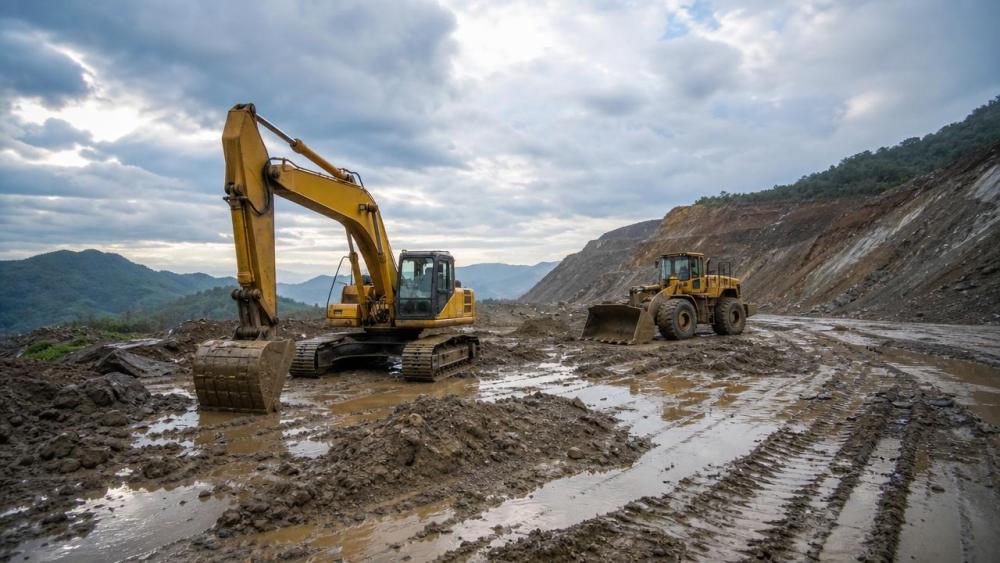
Wet surfaces reduce friction between tires or tracks and the soil. That change affects steering response, braking control, drawbar pull, and the ability of off-road machinery to hold a line.
Water also changes soil strength below the surface. A crust may appear firm, while saturated subgrade beneath it cannot support machine weight, swing loads, or repeated passes.
This matters across the comprehensive industrial landscape. Crawler excavators, wheel loaders, bulldozers, motor graders, and skid steer loaders each interact with wet ground differently.
The main safety risks include:
- loss of traction during travel, pushing, or loading
- side slip on crowned roads, ramps, and shoulders
- rollover risk from rutting, edge collapse, or uneven sinkage
- bogging that overloads powertrain and recovery systems
- reduced visibility from spray, mud, and poor weather
- hidden utility, trench, or fill failure beneath the machine
How to judge wet-site conditions before off-road machinery enters
The first safety decision happens before the engine starts. A short field check often reveals whether off-road machinery can work normally, work with controls, or should stay out.
Surface signs that often mislead teams
Shiny soil, standing water, and fresh ruts are obvious warnings. More dangerous are surfaces that look compacted but pump water under load or break apart at the edges.
Recently filled ground, trench backfill, stockpile bases, and haul-road shoulders deserve extra caution. These zones lose bearing capacity much faster than undisturbed soil.
Field checks that improve decision quality
- walk the route and identify rut depth, pooling, and edge cracking
- probe suspect ground at travel lanes and turning zones
- check slope angle, cross slope, and drainage direction
- review machine weight, attachment load, and ground pressure
- mark exclusion areas near trenches, ponds, and soft shoulders
These checks support better off-road machinery deployment. They also reduce emergency recovery events, which often create greater risk than the original task.
Which work scenarios create the highest wet-ground danger
Excavation beside trenches, slopes, or waterlogged cuts
Crawler excavators usually perform better than wheeled units on soft ground. Even so, swing loads near trench edges can trigger local collapse and sudden track settlement.
The key judgment point is not only traction. It is whether the supporting ground can remain stable during digging, slewing, and truck loading cycles.
Loading on haul roads, stockpiles, and muddy transfer points
Wheel loaders face frequent slip during approach, bucket fill, reverse travel, and turning. Wet fines at transfer points can cut tire grip and increase articulation instability.
Here, off-road machinery safety depends on lane maintenance, stockpile face condition, and speed discipline. A stable loader can still become unsafe in a poorly drained loading zone.
Dozing and pushing on saturated pads or landfill-style surfaces
Bulldozers offer high tractive effort, but pushing resistance rises sharply in sticky or saturated material. When one track loses support, side drift and blade-induced imbalance can appear quickly.
Repeated passes may hide growing under-track voids. The safe call is often to shorten push distances, reduce blade loads, and restore drainage before productivity drops further.
Fine grading on wet roads, shoulders, and airport-style surfaces
Motor graders need predictable tire contact to maintain line and surface tolerance. On wet subgrade, small steering corrections may become overcorrections, especially on cross slopes.
Precision work suffers before obvious failure appears. If the blade starts dragging unstable material, grading accuracy and machine control both decline at the same time.
Tight-space work around urban utilities and finished surfaces
Skid steer loaders are highly flexible, but short wheelbase and quick turning can worsen rutting on wet ground. Surface damage, curb slip, and sudden sinkage are common concerns.
In these conditions, the best off-road machinery choice may be a lighter unit, a different attachment, or temporary ground protection mats.
How wet-ground requirements differ by off-road machinery scenario
What control measures improve off-road machinery safety in wet conditions
Effective controls combine site preparation, machine setup, and operator decision rules. No single measure solves every wet-ground hazard for off-road machinery.
Site controls
- improve drainage before major travel begins
- build designated routes with aggregate or matting
- separate travel lanes from excavation edges
- restrict access after heavy rainfall until rechecked
Machine and task controls
- match machine type to ground pressure limits
- reduce loads, speeds, and turning intensity
- keep attachments low during travel
- avoid sudden braking, sharp steering, and side-hill travel
- stage recovery plans before any high-risk entry
Modern monitoring, telematics, and site intelligence can support these controls. They help track rainfall, route condition, machine utilization, and recurring soft-ground hotspots.
Common wet-ground mistakes that increase off-road machinery incidents
One frequent error is judging safety by whether the first pass succeeded. Wet ground often fails progressively after repeated loading, not at initial entry.
Another mistake is assuming tracked off-road machinery is always safe on saturated terrain. Tracks improve flotation, but they do not remove trench-edge, slope, or hidden void hazards.
Many sites also overlook transition zones. Machines lose control most often when moving between hardstand, mud, aggregate, and paved surfaces with different friction levels.
Finally, poor communication creates avoidable exposure. If route changes, soft spots, or exclusion lines are not updated quickly, even experienced operators face unnecessary uncertainty.
Practical next steps for safer off-road machinery operations on wet ground
Start with a simple wet-weather trigger plan. Define rainfall thresholds, inspection points, route approval steps, and stop-work criteria for each off-road machinery scenario.
Then classify work areas by risk level. Separate excavation edges, loading zones, haul routes, grading surfaces, and utility corridors because each needs different controls.
Review machine suitability, attachment choice, and ground support methods before the next storm cycle. Small adjustments often prevent major downtime and safety exposure.
For organizations tracking infrastructure equipment performance, structured field intelligence is essential. Better site data leads to safer off-road machinery use, stronger reliability, and more predictable project delivery.