
Related News
- 00
0000-00
How to size heavy-duty loaders for North American mining operations - 00
0000-00
How altitude affects mining excavator performance in Latin America - 00
0000-00
Caterpillar Launches New Cat 6060 and Upgraded Autonomous Mining System - 00
0000-00
When does eco-friendly construction equipment pay for itself? - 00
0000-00
Will a wheel loader quick coupler fit your existing attachments?
Rising infrastructure equipment costs can quietly derail schedules, squeeze margins, and force difficult decisions long before crews break ground. This pressure reaches roads, mining support, utilities, airports, ports, and urban redevelopment alike.
Across the broader industrial landscape, infrastructure equipment is no longer just a capital purchase. It is a moving cost center shaped by fuel, financing, parts, software, transport, labor availability, and emissions compliance.
When these costs rise faster than planning assumptions, projects slow down. Equipment arrives late, utilization drops, repairs stack up, and work sequences must be revised under pressure.
Understanding the full cost chain helps protect schedules. It also improves asset decisions involving crawler excavators, wheel loaders, bulldozers, motor graders, and compact support machines.
What infrastructure equipment costs really include
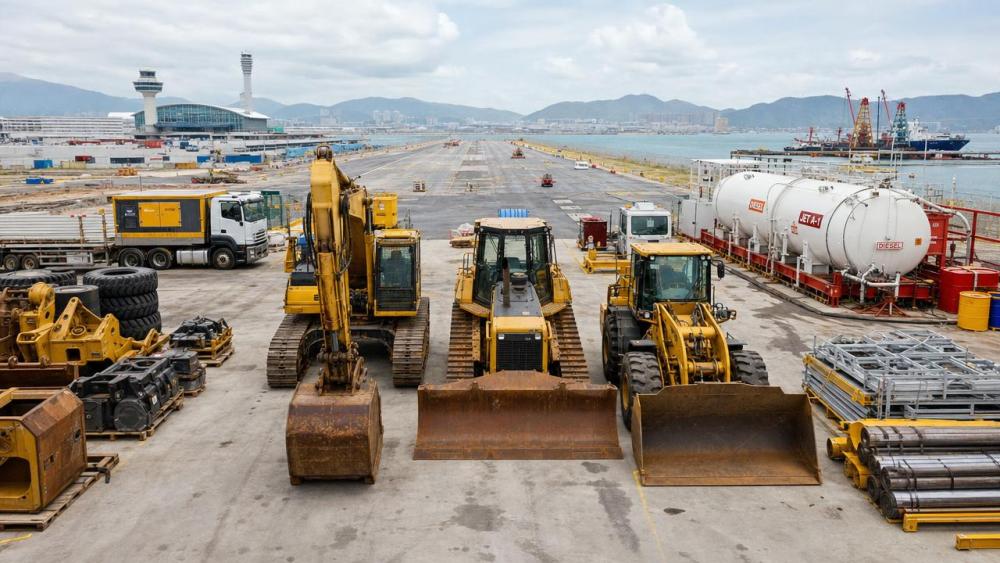
The visible price tag is only the starting point. Real infrastructure equipment costs include every expense that affects readiness, output, and reliability on site.
Acquisition cost covers purchase price, attachments, taxes, shipping, and dealer preparation. For larger fleets, financing terms and interest rate changes can materially affect project timing.
Operating cost includes fuel, lubricants, tires or undercarriage wear, and operator-related efficiency factors. These are often underestimated during early budgeting.
Maintenance cost includes planned service, inspections, consumables, field support, and component replacement. Unplanned maintenance adds the largest schedule risk because it interrupts critical path work.
Compliance cost is growing quickly. Emission rules, safety systems, telematics subscriptions, and site-specific environmental controls all add to infrastructure equipment ownership.
Downtime cost is the most destructive category. A failed excavator or grader can delay trucking, compaction, concrete preparation, drainage work, and inspection windows in one cascade.
Core cost elements that influence delivery
- Purchase or rental rate
- Financing, insurance, and taxes
- Transport, assembly, and mobilization
- Fuel, fluids, and energy consumption
- Maintenance parts and technician response
- Regulatory compliance and software support
- Idle time and breakdown-related delay
Current market signals shaping infrastructure equipment budgets
Several cross-industry trends are pushing infrastructure equipment costs higher. These signals affect both greenfield projects and rehabilitation programs.
These conditions are especially important for earthmoving fleets. High-hour crawler excavators and bulldozers can consume budget rapidly when parts and response capacity tighten at the same time.
Digital systems also change the equation. GPS grading, telematics, remote diagnostics, and machine control improve productivity, yet they introduce licensing, calibration, and training expenses.
How hidden infrastructure equipment expenses delay projects
Delays rarely come from one line item alone. They emerge when multiple cost pressures reduce equipment availability at the exact moment production must accelerate.
1. Mobilization arrives later than planned
Transport permits, haulage shortages, and assembly requirements can postpone start dates. Large infrastructure equipment often needs route planning, escorts, and specialized lifting support.
2. Rental substitutions lower productivity
When preferred machines are unavailable, substitute units may have lower breakout force, smaller buckets, weaker telematics integration, or limited attachment compatibility.
3. Maintenance windows are missed
Projects under schedule pressure often defer service. That can trigger overheating, undercarriage wear, hydraulic inefficiency, or sensor faults that stop work entirely.
4. Fuel assumptions prove unrealistic
High-load digging, rehandling, and dozing cycles consume more fuel than desk estimates suggest. If fuel logistics are weak, idle time grows quickly.
5. Compliance blocks site access
Urban and sensitive sites may reject older infrastructure equipment. Noise limits, exhaust rules, and documentation gaps can halt deployment even when machines are physically ready.
Business value of controlling infrastructure equipment costs
Cost control is not only a budget exercise. It directly supports timeline reliability, bid accuracy, asset utilization, and commercial resilience across the project lifecycle.
For complex sites, stable infrastructure equipment planning improves sequencing. Excavation, haul road shaping, material loading, drainage trimming, and finish grading stay better aligned.
It also protects margins. Avoiding emergency rentals, premium freight, and rush parts orders often saves more than small negotiated discounts at procurement stage.
Better visibility strengthens decisions around fleet age. Some assets should be rebuilt, some rented seasonally, and some replaced before reliability losses become more expensive than ownership.
Key business gains
- More accurate schedule commitments
- Higher machine availability
- Lower total cost of ownership
- Reduced compliance risk
- Stronger tender and contract discipline
Typical infrastructure equipment cost patterns by machine type
Different machines create different budget risks. Understanding these patterns helps align cost controls with field reality.
Practical steps to reduce delay risk
The most effective response is early visibility. Infrastructure equipment planning should start before final site mobilization, not after contract execution pressure has already started.
Build cost models around production reality
Use cycle-based assumptions instead of generic hourly estimates. Match fuel, wear, and maintenance forecasts to soil, haul distance, weather, and shift design.
Separate ownership cost from availability risk
A cheaper machine is not cheaper if breakdowns slow critical path work. Evaluate infrastructure equipment using uptime, support response, and parts access.
Use telematics and condition monitoring
Remote monitoring detects idle time, overheating, fault codes, and inefficient usage patterns. This supports preventive action before downtime becomes a schedule event.
Protect service intervals during peak activity
Planned maintenance should be built into look-ahead schedules. Short planned stops are far less damaging than uncontrolled failures during earthmoving peaks.
Review compliance before dispatch
Confirm emissions status, operator aids, noise controls, and digital documentation in advance. This prevents site-entry delays and regulatory disputes.
A grounded path forward
Infrastructure equipment costs delay projects when they are treated as isolated line items instead of a connected operating system. Price, uptime, logistics, compliance, and field performance always interact.
A practical next step is to audit current fleet assumptions against real operating conditions. Review lead times, support agreements, fuel exposure, service plans, and equipment utilization together.
For organizations tracking heavy machinery trends, EMD offers a strong lens on asset reliability, advanced machine control, and the evolving economics of infrastructure equipment in a changing industrial world.
With better visibility and disciplined planning, infrastructure equipment becomes a schedule enabler rather than a hidden source of delay.