
Related News
- 00
0000-00
How to size heavy-duty loaders for North American mining operations - 00
0000-00
How altitude affects mining excavator performance in Latin America - 00
0000-00
Caterpillar Launches New Cat 6060 and Upgraded Autonomous Mining System - 00
0000-00
When does eco-friendly construction equipment pay for itself? - 00
0000-00
Will a wheel loader quick coupler fit your existing attachments?
Earthmoving technology is redefining how technical evaluators measure site productivity, machine efficiency, and infrastructure precision. From crawler excavators and wheel loaders to graders and bulldozers, current gains in hydraulics, automation, sensing, and cleaner power are turning equipment into smarter, higher-output assets. This guide explains which improvements matter most when comparing performance, reducing operating risk, and improving delivery across demanding jobsite conditions.
Why a Checklist Matters for Evaluating Earthmoving Technology
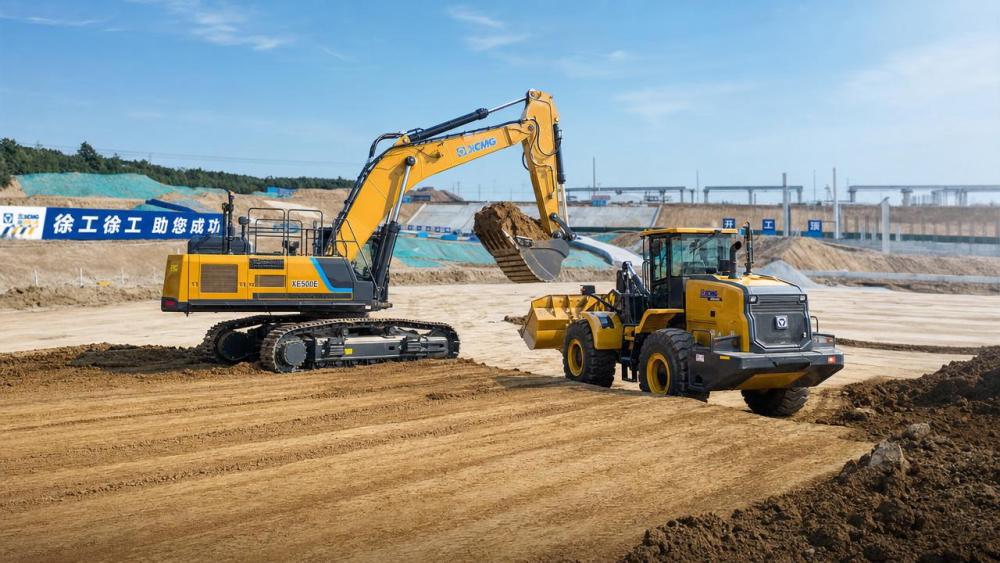
Earthmoving technology now combines mechanical strength with software intelligence. That shift makes simple horsepower comparisons less useful than before.
A structured checklist helps compare crawler excavators, wheel loaders, graders, bulldozers, and skid steers using output, precision, uptime, fuel use, and control quality.
It also creates a practical way to assess whether a machine supports decarbonization targets, remote work, and tighter construction tolerances.
Core Checklist: Earthmoving Technology Gains That Improve Site Output
Use the following checklist to judge whether earthmoving technology will create measurable site gains instead of adding cost without operational value.
- Prioritize electro-hydraulic control systems that deliver faster attachment response, smoother metering, and lower operator fatigue during repeated digging, loading, grading, and pushing cycles.
- Check breakout force together with hydraulic flow management, because raw force alone does not guarantee better earthmoving technology performance in mixed soil and rock conditions.
- Verify 3D grade control, GNSS, laser, or machine guidance accuracy, especially where surface tolerance, drainage slope, and finish quality directly affect rework rates.
- Measure cycle time improvements through payload sensing, bucket fill assistance, traction control, and automatic blade functions rather than relying on manufacturer speed claims.
- Review powertrain efficiency across diesel, hybrid, and electric platforms to confirm fuel burn, idle reduction, and emissions compliance under realistic duty cycles.
- Assess telematics depth, including fault codes, geofencing, utilization tracking, and remote diagnostics, because connected earthmoving technology supports stronger uptime decisions.
- Confirm undercarriage, frame, and wear component durability for abrasive environments, since output gains disappear quickly when downtime and rebuild intervals are underestimated.
- Test operator interface design, camera visibility, and semi-autonomous functions, because better human-machine coordination often improves consistency more than raw machine size.
- Compare attachment compatibility and hydraulic auxiliary capacity to ensure one machine can support trenching, loading, demolition, grading, and material handling tasks.
- Examine remote-control readiness and low-latency communication support for hazardous mines, unstable slopes, or urban zones where direct access increases safety risk.
Technology Gains by Equipment Category
Crawler Excavators
In crawler excavators, earthmoving technology gains usually come from hydraulic optimization, smart work modes, and accurate boom, arm, and bucket sensing.
These improvements help reduce overdigging, stabilize cycle times, and improve trench profile quality in utilities, foundations, quarry work, and mass excavation.
Wheel Loaders
For wheel loaders, the biggest gains come from payload intelligence, transmission efficiency, and traction control in short-cycle material movement.
Well-matched earthmoving technology reduces spillage, improves fill factors, and supports more accurate truck loading in aggregate yards and mine stripping operations.
Motor Graders and Bulldozers
Motor graders benefit most from GPS, laser, and blade automation that hold designed elevation with fewer passes.
Bulldozers gain through hydrostatic transmission control, blade load sensing, and slope assist that improve push efficiency and final grade consistency on heavy cuts.
Application Scenarios Where Earthmoving Technology Delivers the Most Value
Road and Airport Surface Construction
Precision grading technology has a direct impact on smoothness, drainage, and paving preparation. Small accuracy gains can remove entire rework loops later.
In this setting, earthmoving technology should be judged by pass count reduction, grade repeatability, and digital terrain integration.
Mining and High-Intensity Loading
Mining applications demand high durability, stable hydraulics, and remote diagnostics because downtime costs escalate quickly under continuous loading conditions.
Here, earthmoving technology must prove thermal stability, structural resilience, and safe remote operation capability rather than only headline productivity figures.
Urban Infrastructure and Tight Workspaces
Compact equipment and skid steers benefit from zero-radius mobility, attachment flexibility, and enhanced visibility in congested areas.
The best earthmoving technology in this scenario lowers site disruption, shortens task changeover, and improves safety around utilities, traffic, and nearby structures.
Commonly Overlooked Risks
- Ignore data compatibility and machine guidance may not integrate cleanly with surveying, fleet management, or project planning systems already in use.
- Overlook service access and advanced earthmoving technology can become harder to maintain, extending downtime during ordinary hydraulic or sensor failures.
- Assume autonomy equals output and crews may underuse available functions if controls, calibration routines, and workflow design remain unclear.
- Focus only on emissions labels and miss true efficiency differences caused by idle behavior, load matching, or poor operator-machine coordination.
Practical Execution Tips
Start with one task metric, such as cycle time, pass count, fuel per cubic meter, or grading tolerance. Then test machines against that metric on the same material profile.
Record telematics and operator feedback together. Earthmoving technology often shows its value through consistency, not just peak performance during short demonstrations.
Review total output by system. A high-performance excavator loses value if truck loading, haul coordination, or grade verification remains inefficient.
Include future regulatory and energy transitions in the evaluation. Cleaner powertrains and automation-ready controls can protect asset value over a longer service life.
Conclusion and Next Action
The strongest earthmoving technology gains come from connected improvements, not isolated features. Hydraulic precision, digital guidance, efficient power delivery, and remote intelligence work best as one operating system.
Use this checklist to compare machines by measurable site output, reliability, and control accuracy. Then validate the shortlist in live conditions before making a final equipment decision.
When earthmoving technology is matched to application demands, the result is faster execution, lower rework, safer operations, and stronger infrastructure delivery performance.