
Related News
- 00
0000-00
How to size heavy-duty loaders for North American mining operations - 00
0000-00
How altitude affects mining excavator performance in Latin America - 00
0000-00
Caterpillar Launches New Cat 6060 and Upgraded Autonomous Mining System - 00
0000-00
When does eco-friendly construction equipment pay for itself? - 00
0000-00
Will a wheel loader quick coupler fit your existing attachments?
Industrial machinery trends are changing fleet upgrade decisions across earthmoving, roadbuilding, mining, and urban infrastructure environments.
Decarbonization targets, automation layers, tighter emissions rules, and uptime pressure now shape which machines deliver stronger lifecycle value.
For EMD, these shifts are most visible in crawler excavators, wheel loaders, motor graders, bulldozers, and skid steer loaders.
The real question is not whether change is coming.
It is which operating scenarios benefit first, which specifications matter most, and how to avoid expensive upgrade mismatches.
Why industrial machinery trends now depend on operating scenario
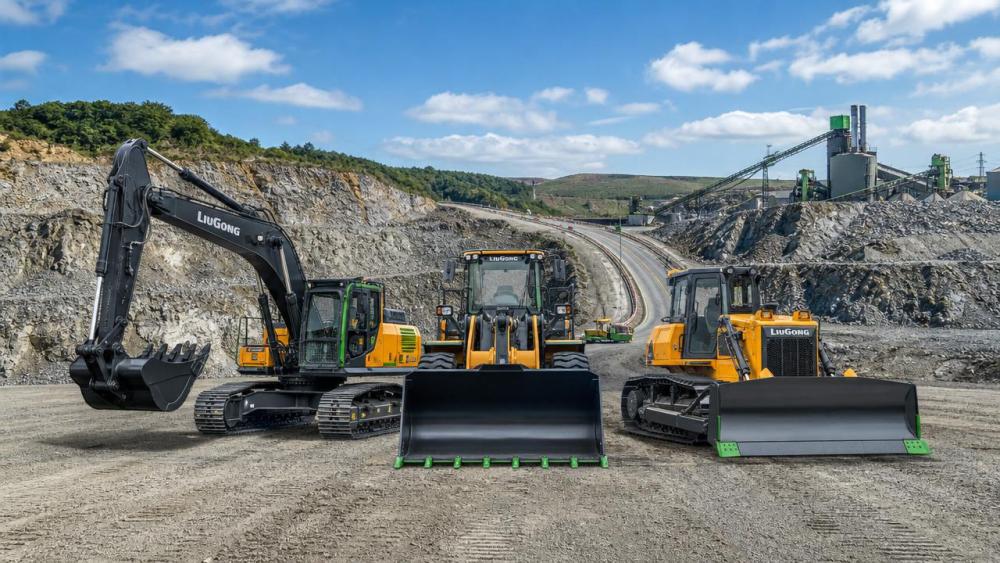
Industrial machinery trends do not affect every fleet in the same way.
A quarry loader faces different upgrade priorities than a compact machine serving dense urban redevelopment.
Likewise, a grader for airport paving needs different digital precision than a bulldozer working in bulk material push applications.
Scenario-based planning helps compare three critical variables.
- Duty intensity, including cycles, loads, and terrain severity
- Compliance exposure, such as emissions, safety, and reporting rules
- Technology payback, including fuel savings, uptime gains, and labor efficiency
This is where EMD’s intelligence approach becomes practical.
Hydraulic performance, automation readiness, and sustainability goals must be matched to real jobsite conditions, not broad marketing claims.
Scenario 1: Mega-infrastructure projects favor precision, uptime, and connected control
Large transport corridors, airports, ports, and utility corridors are major drivers behind current industrial machinery trends.
These environments reward fleets with digital accuracy, predictable maintenance, and high daily utilization.
Key judgment points for heavy civil upgrades
Crawler excavators increasingly need electro-hydraulic control systems with smooth response and attachment versatility.
Motor graders benefit from GPS, IMU, and laser-assisted grade control to reduce rework and support tighter tolerances.
Bulldozers with advanced traction management and semi-autonomous blade functions improve consistency on long pushes and rough surfaces.
In this scenario, machine intelligence matters almost as much as raw engine output.
Industrial machinery trends clearly show that connected telematics and remote diagnostics now support bid competitiveness and asset uptime.
Scenario 2: Mining and quarry operations prioritize payload, durability, and remote safety
Mining and quarry fleets operate under punishing load profiles, abrasive material flow, and strict productivity expectations.
Here, industrial machinery trends emphasize reinforced structures, efficient powertrains, and safer distance-based operation.
Core decision signals in extraction environments
Wheel loaders need stronger breakout force, higher bucket fill efficiency, and optimized fuel burn across long shifts.
Crawler excavators require durable booms, stable undercarriages, and reliable hydraulic cooling under sustained load.
Remote-control architecture becomes more valuable where blasting zones, slope risk, or dust concentration raise safety concerns.
This scenario also raises interest in predictive maintenance.
Sensor-based alerts for wear, fluid condition, and overheating can prevent costly downtime in isolated locations.
Scenario 3: Urban redevelopment rewards compact size, low emissions, and attachment flexibility
Secondary urbanization and tight workspaces are reshaping another branch of industrial machinery trends.
Compact machines are no longer secondary tools.
They are becoming central assets in utilities, municipal works, landscaping, and small-scale demolition.
What matters most in compact jobsite selection
Skid steer loaders gain value through zero-radius turning, fast attachment changes, and strong hydraulic auxiliary performance.
Mini and compact excavator demand is rising where noise limits, access constraints, and local emissions rules are tightening.
Electric or hybrid options become more attractive when daily travel distance is short and charging access is manageable.
In this scenario, industrial machinery trends connect directly with community impact and operating flexibility.
How scenario demands differ across key equipment categories
The table below translates industrial machinery trends into practical scenario differences.
Practical upgrade suggestions aligned with industrial machinery trends
A stronger upgrade path starts with ranking scenario fit before comparing list price.
The following actions help convert industrial machinery trends into better fleet outcomes.
- Map each machine to its dominant duty cycle, not just its broad category.
- Score equipment by fuel efficiency, uptime support, and digital compatibility.
- Check regulatory exposure early, especially for emissions-sensitive urban work.
- Prioritize attachment ecosystems where compact equipment serves many tasks.
- Review remote diagnostics and software update capability before expansion.
- Compare residual value potential for models with proven automation readiness.
EMD’s sector focus supports this method by linking machine physics, digital control logic, and infrastructure market direction.
Common misjudgments when reading industrial machinery trends
Several upgrade errors repeat across the market.
They usually come from treating industrial machinery trends as universal rules instead of scenario-specific signals.
- Assuming electrification suits every site, even where charging logistics are weak
- Paying for advanced automation without enough data workflow or utilization
- Choosing peak horsepower over hydraulic balance, cooling capacity, or control precision
- Ignoring parts access and field service in remote extraction environments
- Undervaluing compact machine versatility in dense urban project pipelines
Another common mistake is separating sustainability from productivity.
In many cases, lower fuel use, cleaner operation, and smarter controls directly improve asset economics.
What to do next with these industrial machinery trends
The most useful next step is a scenario audit across current and planned project types.
List which environments dominate demand, then connect each one to emissions exposure, precision needs, and utilization intensity.
From there, compare whether crawler excavators, wheel loaders, graders, bulldozers, or skid steers need upgrades first.
Industrial machinery trends become actionable when they are translated into site conditions, performance thresholds, and support requirements.
EMD tracks these shifts through infrastructure investment cycles, control-system evolution, and decarbonization pathways across global heavy equipment markets.
Use that perspective to build a fleet roadmap that is more precise, more resilient, and better aligned with the next wave of earthmoving demand.