
Related News
- 00
0000-00
How to size heavy-duty loaders for North American mining operations - 00
0000-00
How altitude affects mining excavator performance in Latin America - 00
0000-00
Caterpillar Launches New Cat 6060 and Upgraded Autonomous Mining System - 00
0000-00
When does eco-friendly construction equipment pay for itself? - 00
0000-00
Will a wheel loader quick coupler fit your existing attachments?
As 2026 planning begins, the construction equipment market is showing stronger pattern visibility across demand, technology, regulation, and capital allocation.
Signals from excavators, wheel loaders, motor graders, bulldozers, and skid steer loaders now matter beyond equipment volumes alone.
They reveal how infrastructure priorities, mine development, urban renewal, and emissions policy are reshaping equipment selection and lifecycle strategy.
For EMD, the construction equipment market is not a simple sales chart. It is a live map of power, precision, and industrial transition.
The companies that plan early for 2026 are more likely to protect margins, secure better supply positions, and align product roadmaps with real field demand.
Construction equipment market definition and planning context
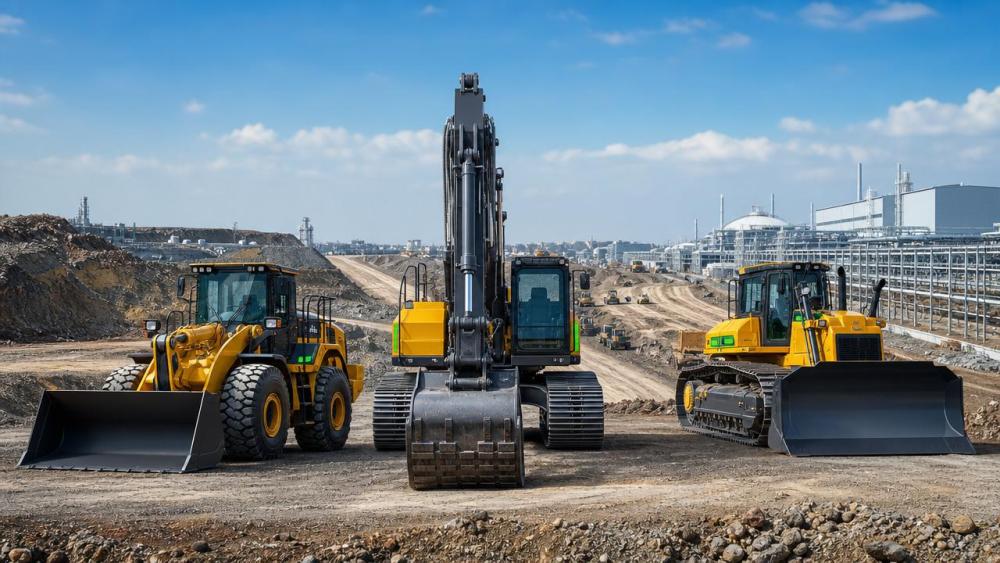
The construction equipment market covers machines used for earthmoving, material handling, grading, site preparation, and heavy infrastructure support.
Its core categories include crawler excavators, wheel loaders, motor graders, bulldozers, and compact machines for dense urban environments.
In 2026 planning, this market must be read through four lenses: demand timing, technology adoption, policy pressure, and regional project intensity.
That is why EMD tracks not only shipment movement, but also hydraulic performance, automation readiness, and decarbonization pathways.
The construction equipment market now rewards precision. Broad assumptions are losing value as machine classes split into distinct demand profiles.
Key market signals shaping 2026
Several signals now stand out across the global construction equipment market and should anchor planning decisions for the next operating cycle.
These signals suggest that the construction equipment market in 2026 will not be shaped by one trend, but by overlap between physical demand and digital capability.
Equipment category movements to monitor
Machine-specific demand patterns are becoming more important than headline market sentiment. Each category reflects a different investment and operating logic.
Crawler excavators
Crawler excavators remain central to the construction equipment market because they influence site productivity, trenching precision, and demolition pace.
Demand should stay tied to transport corridors, utility upgrades, quarry development, and heavy civil packages in growth regions.
Wheel loaders
Wheel loaders benefit from aggregate handling, mine support, and logistics yards where cycle efficiency directly affects cost per ton.
Hydraulic responsiveness, fuel burn, and operator assistance features are becoming stronger selection factors.
Motor graders
Motor graders remain closely tied to road works, airport surfaces, and high-precision site finishing.
The construction equipment market increasingly values graders with integrated GPS, laser support, and reliable fine-control systems.
Bulldozers and skid steer loaders
Bulldozers continue to serve heavy pushing, land clearing, and difficult ground conditions where traction defines output.
Skid steer loaders grow through urban projects, confined sites, and flexible attachment use, especially where labor and space efficiency matter.
Why decarbonization and autonomy now affect commercial positioning
Decarbonization is no longer a future topic inside the construction equipment market. It now influences bids, compliance readiness, and brand credibility.
Battery-electric compact machines are gaining relevance in cities, enclosed environments, and low-noise operating zones.
For larger machines, the transition may move through hybrid systems, engine optimization, hydraulic efficiency gains, and alternative energy pilots.
Autonomy follows a similar pattern. Full autonomy remains selective, but assisted control and remote operation are expanding practical value.
This is especially true in hazardous mines, repetitive loading zones, and grading environments where precision consistency improves economics.
EMD observes that the construction equipment market increasingly rewards systems thinking, not isolated hardware performance.
Buy decisions are moving toward total operating value, software integration, service diagnostics, and resilience under stricter emissions frameworks.
Regional and project-type demand patterns
The construction equipment market will likely stay uneven across regions, making location-based planning essential for 2026.
- North America: supported by road, utility, energy, and industrial reshoring projects.
- Europe: shaped by emissions compliance, rail upgrades, and selective green infrastructure investment.
- Middle East: sustained by mega-projects, logistics corridors, and large land development programs.
- Asia-Pacific: mixed between mature replacement demand and fast urban expansion in developing zones.
- Latin America and Africa: linked to mining, transport links, and long-cycle civil works opportunities.
Project type also changes machine mix. Urban projects favor compact and low-emission equipment. Large corridors favor excavators, dozers, graders, and loaders.
Business value of reading the construction equipment market correctly
A sharp reading of the construction equipment market supports stronger choices in production, inventory, channel focus, and product development.
It also helps reduce exposure to three common risks: overbuilding in weak segments, underinvesting in high-growth niches, and missing regulatory timing.
Practical planning suggestions for 2026
The construction equipment market does not reward passive observation. Planning should turn signal reading into concrete operating moves.
- Map demand by machine class instead of using one market-wide forecast.
- Rank regions by funded infrastructure visibility, not headline growth claims.
- Stress-test emissions compliance plans across current and upcoming standards.
- Build autonomy readiness through sensors, telematics, and remote-control architecture.
- Expand service intelligence for uptime, wear tracking, and predictive maintenance.
- Review compact equipment opportunities linked to urbanization and secondary city growth.
These steps are especially important where capital decisions must balance near-term revenue with longer-cycle technology transition.
Next-step outlook
The 2026 construction equipment market will favor organizations that combine macro awareness with machine-level intelligence.
Excavator demand, loader efficiency, grader precision, bulldozer traction, and compact versatility will all matter, but not in the same places.
EMD’s perspective is clear: success will come from reading infrastructure cycles, emissions pathways, hydraulic evolution, and autonomy deployment as one connected system.
Use the present construction equipment market signals to refine 2026 assumptions, update segment priorities, and build a more resilient operating plan now.