
Related News
- 00
0000-00
How to size heavy-duty loaders for North American mining operations - 00
0000-00
How altitude affects mining excavator performance in Latin America - 00
0000-00
Caterpillar Launches New Cat 6060 and Upgraded Autonomous Mining System - 00
0000-00
When does eco-friendly construction equipment pay for itself? - 00
0000-00
Will a wheel loader quick coupler fit your existing attachments?
When tough soil conditions threaten productivity, choosing the right earthmoving attachments becomes a critical project decision. The correct setup can raise breakout performance, cut cycle times, reduce undercarriage strain, and support better cost control. This guide explains how to compare attachment options for hard clay, rocky fill, wet ground, and mixed material jobs without losing sight of safety, uptime, or long-term machine efficiency.
Why a Checklist Matters for Tough Soil Jobs
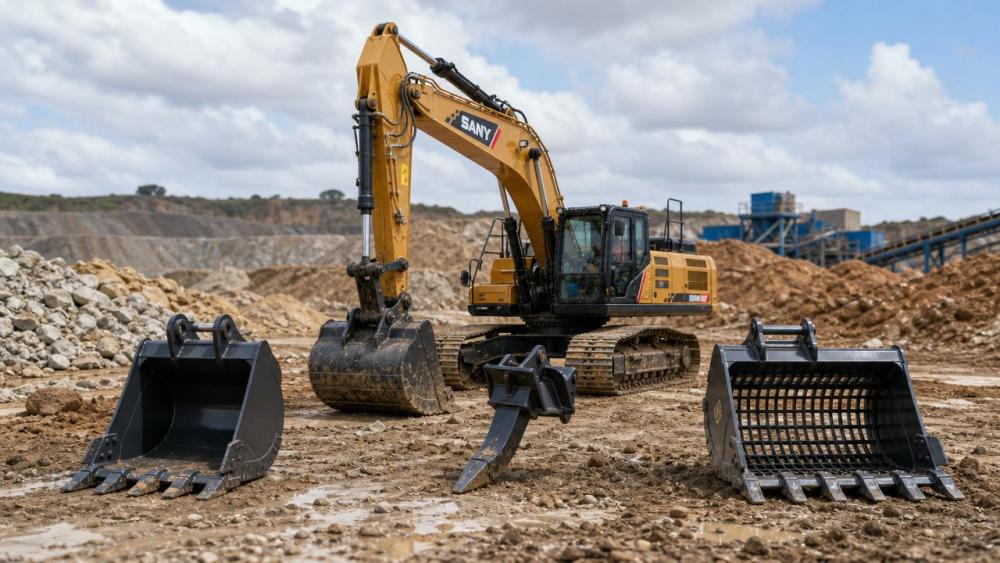
Difficult ground conditions punish poor attachment choices quickly. A bucket that works in loose topsoil may stall in dense clay, while a general-purpose edge may wear rapidly in abrasive gravel.
A checklist creates discipline before iron reaches the ground. It helps compare earthmoving attachments by soil resistance, machine hydraulics, wear rate, material flow, and target finish quality.
This approach also fits a broader industry need. Across infrastructure, mining support, utilities, and site development, equipment decisions now demand measurable productivity and lower operating waste.
Core Checklist for Selecting Earthmoving Attachments
Use the following checklist before assigning or renting earthmoving attachments for demanding soil. Each point should be reviewed against actual site conditions, not assumptions from past projects.
- Verify soil composition first. Identify clay content, rock percentage, moisture level, frost depth, and compaction so the attachment matches cutting resistance and material release behavior.
- Match attachment size to machine power. Oversized tools reduce penetration and increase fuel burn, while undersized tools waste hydraulic capability and extend loading cycles.
- Check breakout force requirements. Dense ground often needs narrower buckets, reinforced shanks, or ripper-style tools that concentrate force instead of spreading it.
- Evaluate tooth and edge configuration. Sharp penetration teeth, bolt-on side cutters, and abrasion-resistant edges improve entry in hard soil and reduce drag through compacted material.
- Confirm hydraulic compatibility. Flow rate, pressure range, coupler fit, and auxiliary circuit settings must support the chosen earthmoving attachments without overheating or unstable response.
- Assess wear package needs. In abrasive ground, heel shrouds, liners, wear strips, and heavy-duty side protection often deliver lower total cost than frequent steel replacement.
- Review dump and release performance. Sticky soils need designs that shed material cleanly, otherwise operators lose time clearing packed buckets and fighting carryback.
- Consider target task sequence. Digging, ripping, grading, trenching, and backfilling may require different earthmoving attachments rather than one compromise tool.
- Inspect visibility and control accuracy. Precision grading or utility work benefits from attachment geometry that supports sightlines, stable tilt response, and predictable cutting depth.
- Estimate maintenance exposure. Pin wear, tooth replacement intervals, coupler inspection time, and hose protection affect uptime as much as headline digging performance.
Attachment Types and Where They Perform Best
Heavy-Duty Buckets for Dense Clay and Compacted Fill
Heavy-duty buckets remain the most common earthmoving attachments for difficult soil. Their reinforced shell, stronger edges, and tougher tooth systems help maintain productivity under high breakout loads.
In sticky clay, bucket profile matters as much as strength. A shape that promotes clean release can outperform a larger bucket that carries more volume but packs material inside.
Rippers for Cemented Soil, Shale, and Weathered Rock
When a bucket cannot penetrate efficiently, a ripper often becomes the smarter first pass. It focuses machine force into a narrow tip, fracturing hard layers before bulk excavation begins.
This method reduces bucket shock loading and lowers cycle frustration. For layered ground, pairing rippers with follow-up buckets creates a more efficient attachment strategy than forcing one tool through every condition.
Skeleton and Screening Buckets for Mixed Debris
On demolition fill, recycled aggregate, or mixed excavation, screening-style earthmoving attachments can separate oversized debris while preserving usable material. That reduces handling passes and disposal volume.
However, they are rarely the first choice for pure penetration in hard intact soil. Their value rises when sorting and material recovery matter as much as digging.
Tilt Buckets and Grading Attachments for Finish Control
After rough excavation, grading-focused earthmoving attachments help control slope, drainage, and surface consistency. They are especially useful on road shoulders, pad trimming, ditches, and landscaping transitions.
These tools should not be forced into heavy breakout work. Using them outside their design purpose often causes excessive wear and poor cut quality.
Application Notes by Jobsite Condition
Wet and Sticky Ground
Select buckets with good release geometry and avoid unnecessary width. Wet clay can turn theoretical capacity into dead weight, slowing swing speed and increasing fuel use.
Teeth should favor penetration over volume carrying. In these conditions, practical loading rate matters more than nominal bucket size.
Abrasive Sand, Gravel, and Crushed Stone
Prioritize wear protection. Abrasion-resistant steel, replaceable edges, and side wear packages are essential earthmoving attachments features when surfaces grind steel every cycle.
Track component wear also rises in these conditions. Better attachment penetration can reduce repeated passes and limit unnecessary machine travel.
Frozen or Cemented Material
Use a staged approach. Rip first, then excavate, then grade. Trying to skip the loosening step usually increases shock loads, slows progress, and raises the risk of cracked edges or damaged pins.
Utility Trenches and Constrained Urban Work
Choose narrower earthmoving attachments with strong control characteristics. Accuracy, spoil placement, and trench wall stability may matter more than maximum hourly volume.
Commonly Overlooked Risks
Ignoring coupler weight: Quick couplers improve flexibility, but they also change tip radius and reduce net lifting or digging efficiency. That tradeoff should be measured, not guessed.
Using one bucket for every task: A universal approach often creates hidden cost through slower cycles, rougher finish quality, and accelerated wear on the wrong tool.
Underestimating operator adaptation: Even well-chosen earthmoving attachments need correct technique. Entry angle, curl timing, and crowd force directly influence performance and component life.
Focusing only on purchase price: Lower-cost attachments can become expensive if tooth systems fail early, welds crack, or wear parts are difficult to source during active production.
Practical Execution Tips
- Sample the ground before final attachment assignment, especially on sites with mixed fill, moisture variation, or undocumented buried material.
- Compare at least two attachment setups in the field and record cycle time, fuel use, and bucket fill consistency.
- Standardize wear inspections at shift end so tooth loss, edge damage, and loose hardware are found before production drops.
- Align attachment selection with the full workflow, including hauling distance, dump point height, and final surface tolerance.
- Keep a small matrix of machine class, soil type, and preferred earthmoving attachments for faster decision-making on future jobs.
Conclusion and Next Step
The best earthmoving attachments for tough soil are not simply the heaviest or the largest. They are the tools that match ground resistance, machine capability, wear exposure, and finish requirements with the least wasted motion.
Start with soil verification, then compare penetration, release, wear protection, and hydraulic fit. A disciplined checklist turns attachment choice into a controllable performance decision instead of a costly site experiment.
For organizations tracking heavy equipment efficiency, this method supports more reliable planning across excavation, loading, grading, and material handling operations. Better attachment selection delivers measurable gains where ground conditions are toughest and schedules are least forgiving.