
Related News
- 00
0000-00
How to size heavy-duty loaders for North American mining operations - 00
0000-00
How altitude affects mining excavator performance in Latin America - 00
0000-00
Caterpillar Launches New Cat 6060 and Upgraded Autonomous Mining System - 00
0000-00
When does eco-friendly construction equipment pay for itself? - 00
0000-00
Will a wheel loader quick coupler fit your existing attachments?
On rough terrain, off-road machinery can face sudden instability, reduced visibility, rollover hazards, and component stress that quickly escalate into serious safety incidents. For quality control and safety management teams, understanding these risks is essential to protecting operators, maintaining equipment reliability, and ensuring compliant site performance. This article outlines the key danger points and practical control priorities for safer heavy equipment operations.
For fleets that include crawler excavators, wheel loaders, motor graders, bulldozers, and skid steer loaders, rough-ground exposure is not an exception but a routine operating condition. Uneven slopes, soft shoulders, rock fragments, blind corners, and changing weather can turn a normal shift into a high-consequence event within seconds.
In B2B construction, mining, infrastructure, and earthmoving environments, the issue is not only operator skill. Safety outcomes depend on machine setup, inspection discipline, load control, travel path planning, communication protocols, and whether quality and safety teams can identify weak points before a machine enters the work zone.
Why Rough Terrain Creates High-Risk Conditions for Off-Road Machinery
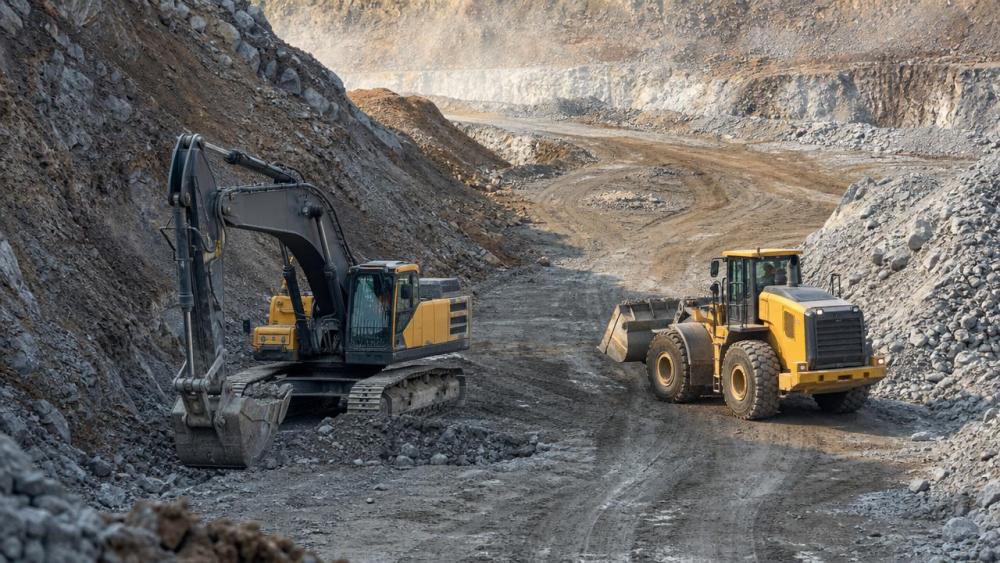
Off-road machinery is designed for difficult ground, but design capability does not remove risk. Once gradient, surface inconsistency, and dynamic loading combine, the machine’s center of gravity can shift outside its stable operating envelope. On side slopes of 10–15 degrees, even a well-maintained unit may experience reduced traction, attachment swing instability, or sudden track and tire slip.
The hazard increases when terrain changes faster than the operator can read it. A wheel loader moving from compacted fill to wet clay in less than 3 seconds can lose steering response or braking efficiency. A bulldozer crossing hidden voids, trench edges, or embankment shoulders may expose the undercarriage to impact loads far above normal travel conditions.
Primary Environmental Triggers
Quality control and safety management personnel should monitor at least 6 terrain variables before operation starts: slope angle, bearing capacity, moisture level, surface fragmentation, edge stability, and visibility range. These inputs influence machine suitability, travel speed, and whether additional controls such as spotters or temporary route barriers are needed.
- Loose gravel and blasted rock can reduce tire contact consistency and increase bounce loads.
- Wet soil can cut effective traction and extend stopping distance by 20%–50% depending on machine weight and tire or track condition.
- Ruts deeper than 100–150 mm can disturb steering geometry and create attachment oscillation.
- Dust, fog, and backlighting may reduce practical line-of-sight below 20 meters.
Machine Types and Typical Exposure Profiles
Different categories of off-road machinery fail in different ways on rough terrain. Excavators are sensitive to unstable setup and swing loading. Wheel loaders face braking, tire damage, and rollover hazards during travel with a raised bucket. Motor graders may lose blade control accuracy when bouncing across corrugated surfaces. Skid steers are highly maneuverable, but that same zero-radius turning can become a rollover factor on uneven edges.
The table below helps safety teams align terrain conditions with machine-specific risk patterns and operational controls.
A key takeaway is that rough terrain does not produce one universal failure mode. Each machine has a distinct stability profile, and control measures must be selected accordingly. Standardizing one travel rule for every asset often creates gaps rather than consistency.
Critical Safety Risks Quality and Safety Teams Should Audit
When auditing off-road machinery operations, safety managers should focus on high-probability and high-severity risk clusters. In most field environments, four categories deserve first attention: rollover exposure, visibility failure, structural and component overload, and operator decision error under changing ground conditions.
Rollover and Loss-of-Stability Hazards
Rollover remains one of the most serious incidents involving off-road machinery. It commonly starts with a sequence rather than a single mistake: over-speed on descent, turning with a raised load, operating too close to a shoulder, or tracking diagonally across a slope. Even a 5-degree change in lateral pitch can be significant when a machine is carrying material or using a heavy front attachment.
For practical control, many sites use a 3-part rule: maintain low travel speed, keep loads close to the ground, and prohibit slope maneuvers that combine turning and braking. These controls are simple, but they need daily reinforcement through supervision and pre-start briefings.
Signs of Immediate Instability
- Repeated wheel slip or track spin within 5–10 meters of travel
- Visible body roll during turns or bucket lift
- Attachment bounce large enough to affect steering line
- Ground cracking near shoulders, trench walls, or fill edges
Reduced Visibility and Blind-Zone Incidents
Rough terrain often reduces visibility in two ways at once: the environment limits line-of-sight, and the machine structure creates blind areas. Cab pillars, raised attachments, dust, uneven spoil piles, and reversing movements can hide workers, vehicles, or fixed obstacles. This risk is especially acute in mixed fleets where loaders, excavators, dump trucks, and service vehicles share narrow haul paths.
A reliable control approach is to define visibility thresholds. If effective forward or side visibility falls below 20–30 meters, operators should slow movement, use a spotter, or stop until the route is re-established. Camera systems help, but they do not replace route discipline or exclusion zones.
Component Stress, Fatigue, and Hidden Mechanical Failure
Rough terrain loads are not only external safety hazards. They also accelerate wear inside the machine. Repeated shock loading can loosen pins, damage cutting edges, reduce hydraulic hose life, and speed up undercarriage wear. On graders and excavators, calibration drift may also develop when sensors and control linkages are exposed to sustained vibration.
From a quality perspective, this matters because reliability and safety are linked. A cracked weld, delayed hydraulic response, or weakened tire sidewall may not cause failure on smooth ground but can become critical when the machine is working on broken rock, side slopes, or uneven haul routes for 8–12 hours per shift.
Human Factors and Procedural Drift
Many rough-terrain incidents happen after crews become familiar with a site. Shortcuts appear gradually: skipping route checks, carrying loads slightly higher to save time, or working outside the original traffic plan during peak production windows. These are not always deliberate violations. Often they reflect production pressure and weak feedback loops between operators, supervisors, and QC teams.
To counter this, safety management should audit not just machine condition but operational consistency. A 10-minute pre-shift hazard review and a 3-item post-shift defect report can be more effective than a large monthly checklist that is rarely translated into field action.
Practical Control Measures for Safer Off-Road Machinery Operations
Effective control starts before engine start-up. The goal is to reduce uncertainty in ground conditions, machine fitness, and operator response. For quality control and safety leaders, the best results usually come from combining terrain verification, machine inspection, operating limits, and clear communication in one repeatable field process.
A 5-Step Pre-Operation Control Process
- Inspect the route for soft spots, edge instability, overhead obstruction, and drainage changes.
- Verify machine condition, including tires or tracks, brakes, steering response, lights, and attachment locking points.
- Confirm load limits, slope restrictions, and travel direction for the specific machine class.
- Set communication rules for spotters, nearby vehicles, and restricted zones.
- Record hazards and hold points before the first cycle begins.
This process can usually be completed in 12–20 minutes per machine at shift start. On higher-risk sites such as quarry benches, temporary embankments, or rain-affected cut sections, the same review should be repeated after major weather changes or route rework.
Inspection Items That Should Not Be Skipped
The following checklist matrix is useful when building a standardized field inspection for off-road machinery used in rough terrain. It combines safety-critical and quality-critical points so that mechanical reliability is treated as part of site risk control, not as a separate maintenance issue.
The inspection pattern shows that not every check requires the same interval. Some items are shift-critical, while others are hour-based or event-triggered. A good safety system distinguishes these frequencies instead of treating all defects as equal.
Operating Rules That Improve Field Safety Fast
Where site conditions are variable, simple operating rules produce strong results. For example, keeping loader buckets low during travel, limiting reversing in poor visibility, avoiding diagonal travel across unstable slopes, and maintaining designated stand-off distances from trench edges can cut the likelihood of high-severity events without slowing production unnecessarily.
- Use lower travel speeds on rough haul paths and transition zones.
- Reassess routes after rainfall, blasting, or fill placement changes.
- Separate machine-only lanes from pedestrian or service-vehicle access where possible.
- Require stop-and-check action if steering, braking, or hydraulic response changes during operation.
How to Strengthen Safety Performance Through Procurement, Training, and Monitoring
Long-term control of rough-terrain risk is not only an operations issue. It begins with equipment selection and extends into training, telemetry, maintenance planning, and supplier support. For organizations managing mixed fleets, a safer off-road machinery strategy depends on aligning purchase decisions with the terrain reality of the site.
Procurement Factors That Matter in Rough Ground
When comparing machines, buyers often focus on engine power, rated payload, or acquisition cost. Those metrics matter, but safety teams should also review visibility layout, braking control, undercarriage durability, attachment compatibility, guarding, and service access. On harsh ground, poor maintainability can become a risk multiplier because defects remain unresolved longer.
A practical procurement review should score at least 4 dimensions: terrain suitability, operator visibility, maintenance accessibility, and monitoring capability. Telematics, fault alerts, and camera support do not replace operator judgment, but they improve response time when conditions or machine health begin to deteriorate.
Training Frequency and Competency Control
For off-road machinery working in rough terrain, annual training alone is often insufficient. A more effective pattern is a layered schedule: initial site induction, task-specific familiarization, monthly toolbox refreshers, and event-based retraining after a near miss, machine change, or route redesign. This creates multiple reinforcement points across the year.
Competency control should include observation, not only attendance records. A supervisor or safety lead should verify whether operators can identify 3–5 terrain hazards, explain safe travel routes, and demonstrate correct response to slip, load shift, or blind-area interference. Documentation is useful, but behavioral verification is what changes risk.
Monitoring, Reporting, and Continuous Improvement
Leading indicators are especially valuable where incident rates are low but exposure is high. Instead of waiting for accidents, management teams should track route defects found, pre-start failures, visibility complaints, unauthorized path deviations, and repeat machine defects. Even 5–10 recurring observations in one month can indicate a control weakness that deserves corrective action.
A strong review cycle normally includes daily reporting, weekly defect trend analysis, and monthly cross-functional meetings involving operations, maintenance, and safety. This is where intelligence-led organizations gain an advantage: they convert field observations into equipment decisions, work method changes, and more resilient site standards.
Common Mistakes to Avoid
- Treating all rough terrain as one risk category rather than classifying by slope, soil, and edge condition
- Relying on operator experience while underinvesting in route preparation and inspections
- Assuming cameras and alarms remove the need for spotters or exclusion zones
- Delaying repair of “minor” defects such as loose guards, light failures, or small hydraulic leaks
Rough terrain will always challenge off-road machinery, but serious incidents are rarely unavoidable. They usually develop where site conditions, machine capability, and field controls are not aligned. For quality control personnel and safety managers, the priority is to build a disciplined system that links terrain assessment, machine inspection, operator behavior, and procurement standards into one practical framework.
If your organization is evaluating safer fleet strategies for excavators, loaders, graders, bulldozers, or skid steers, EMD can help you interpret operational risk, machine trends, and control priorities with a more technical lens. Contact us to discuss your site conditions, request a tailored safety-focused equipment intelligence plan, or learn more about practical solutions for reliable off-road machinery performance.