
Related News
- 00
0000-00
How to size heavy-duty loaders for North American mining operations - 00
0000-00
How altitude affects mining excavator performance in Latin America - 00
0000-00
Caterpillar Launches New Cat 6060 and Upgraded Autonomous Mining System - 00
0000-00
When does eco-friendly construction equipment pay for itself? - 00
0000-00
Will a wheel loader quick coupler fit your existing attachments?
In harsh-duty jobsites, heavy machinery parts absorb constant punishment from impact, contamination, heat, and extended operating hours. Failure rarely begins with a dramatic breakdown. It usually starts with wear patterns that go unnoticed.
Across crawler excavators, wheel loaders, bulldozers, motor graders, and skid steer loaders, the same trend is clear. Reliability now depends less on reactive repair and more on early detection of high-risk component fatigue.
For fleets working in mines, demolition zones, quarries, landfill cells, and remote infrastructure corridors, understanding which heavy machinery parts fail most often supports smarter service timing, lower downtime, and stronger asset life planning.
Failure patterns are shifting as machines work harder for longer cycles
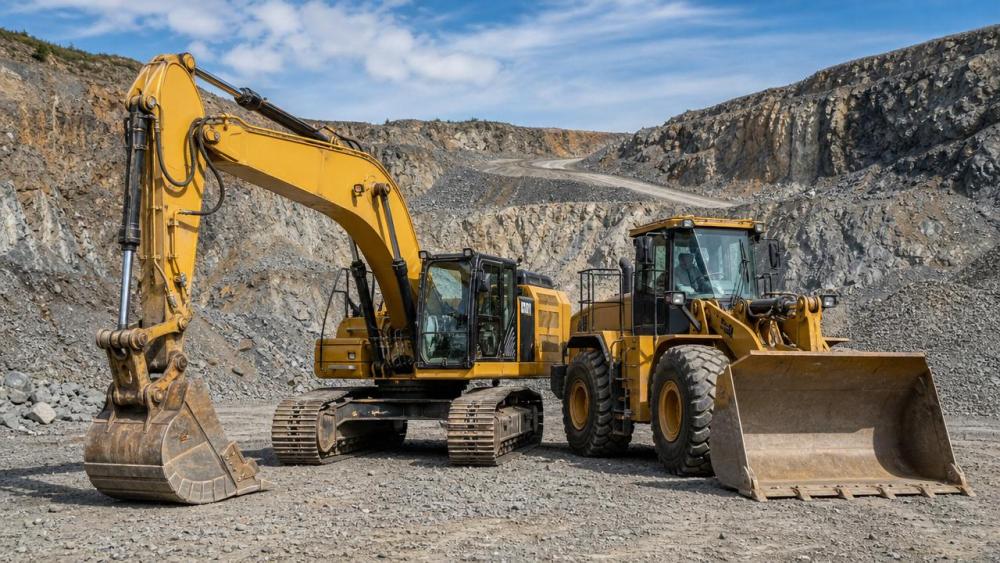
Modern equipment is more productive than ever, yet harsher applications are compressing maintenance windows. Machines now carry heavier loads, run hotter, and rely on tighter hydraulic and electronic tolerances.
That combination changes how heavy machinery parts wear out. Instead of simple age-based failure, many components now fail from contamination, overload spikes, vibration, or neglected lubrication intervals.
EMD field observations across earthmoving segments show one recurring theme. Small consumable weaknesses often trigger major system failures, especially where preventive inspection is inconsistent or operating conditions change rapidly.
Why harsh-use environments accelerate breakdown risk
- Dust and abrasive fines penetrate seals, joints, pins, and filtration systems.
- Shock loading damages undercarriage, bucket linkage, frame joints, and cutting edges.
- High ambient heat reduces lubricant stability and stresses hoses, pumps, and cooling circuits.
- Nonstop duty cycles shorten recovery time for bearings, bushings, and hydraulic components.
- Poor terrain increases vibration, which weakens electrical connectors and mounted assemblies.
The heavy machinery parts that fail most under extreme operating conditions
Not every component fails at the same rate. In severe-duty service, a predictable group of heavy machinery parts consistently shows the highest replacement frequency and the biggest impact on uptime.
1. Undercarriage components
Tracks, rollers, idlers, sprockets, and track chains are frequent wear points on crawler machines. Mud, rock, misalignment, and aggressive turning accelerate metal loss and uneven loading.
Undercarriage failure often starts with poor track tension or neglected debris removal. Once wear becomes uneven, fuel use rises and adjacent heavy machinery parts degrade faster.
2. Hydraulic hoses and seals
Hydraulic systems are the lifeblood of excavators, loaders, and graders. Hoses fail from abrasion, pulse pressure, heat aging, and contamination. Seal failures commonly follow fluid overheating or rod surface damage.
In harsh use, a minor leak can become a critical stoppage quickly. Lost pressure reduces attachment force, cycle speed, and machine control precision.
3. Pins, bushings, and linkage joints
Bucket ears, boom foot joints, loader arms, tilt linkages, and blade pivots handle repeated impact. When lubrication fails or contamination enters, play increases and geometry begins to drift.
These heavy machinery parts are often overlooked because wear develops gradually. Yet looseness in joints can reduce digging accuracy and multiply stress elsewhere.
4. Cutting edges, teeth, and ground engaging tools
Buckets, blades, rippers, and loader edges face direct abrasion. Once tooth profiles dull or edge protection is lost, machine efficiency drops and structural loading increases.
This is one of the simplest heavy machinery parts categories to monitor, yet delayed replacement often causes higher fuel burn and unnecessary strain on hydraulic cylinders.
5. Bearings and rotating joints
Fan hubs, driveline supports, wheel ends, slew rings, and articulation points are vulnerable to contamination and shock. In wheel loaders and graders, bearing failure can progress rapidly under side loading.
6. Filters and cooling components
Air filters, hydraulic filters, fuel filters, radiators, and oil coolers fail more by restriction than breakage. Dust-heavy operations can choke systems before the standard service hour target arrives.
Restricted cooling also damages other heavy machinery parts indirectly by increasing fluid temperatures and reducing lubricant performance.
7. Electrical harnesses and sensors
As machines adopt more electro-hydraulic controls, electrical reliability becomes a bigger uptime factor. Connectors fail from moisture, vibration, and heat cycling, especially in exposed routing zones.
The main forces driving faster wear across equipment categories
What these failure trends mean for uptime, cost control, and machine value
The impact of failing heavy machinery parts goes beyond the replacement item itself. One worn pin, restricted filter, or cracked hose can idle an entire machine during peak production periods.
Downtime costs rise sharply when failures occur in remote sites or during high-demand earthmoving phases. Emergency logistics, secondary damage, and unscheduled labor often exceed the component price.
There is also a long-term asset effect. Machines with chronic undercarriage neglect, linkage wear, and unresolved hydraulic leakage usually suffer lower resale confidence and reduced lifecycle profitability.
- Productivity loss from slower cycle times and reduced breakout force.
- Higher fuel consumption caused by friction, drag, and dull work tools.
- Greater safety exposure when structural looseness or hose failure appears under load.
- More expensive repairs when root-cause wear spreads to related heavy machinery parts.
Inspection priorities should now focus on early-warning wear points
The most effective response is not simply stocking more spares. It is identifying the heavy machinery parts that create cascade failures and tightening inspection around those zones.
Key areas to monitor more closely
- Track tension, roller wear, and sprocket tooth condition on crawler platforms.
- Hose abrasion points, clamp integrity, and fluid cleanliness in hydraulic circuits.
- Joint play, grease purge quality, and pin retention in linkage assemblies.
- Tooth loss, cutting edge thickness, and uneven wear on ground engaging tools.
- Cooler blockage, fan operation, and temperature drift under sustained load.
- Connector corrosion, chafed harness sections, and sensor fault recurrence.
A practical response plan for harsh-duty maintenance environments
The next smart step is building a wear-based maintenance view
Harsh-use reliability is no longer about waiting for heavy machinery parts to fail. It is about recognizing which components fail first, why they fail, and how their wear changes across applications.
For organizations tracking machine life in demanding environments, a wear-based inspection model offers clearer service decisions than hour-based routines alone. That approach protects uptime and reduces avoidable capital loss.
Use the highest-risk heavy machinery parts as the starting point. Audit current failure records, tighten inspection intervals, and map wear hotspots by equipment class. The result is a more predictable, resilient maintenance strategy.