
Related News
- 00
0000-00
How to size heavy-duty loaders for North American mining operations - 00
0000-00
How altitude affects mining excavator performance in Latin America - 00
0000-00
Caterpillar Launches New Cat 6060 and Upgraded Autonomous Mining System - 00
0000-00
When does eco-friendly construction equipment pay for itself? - 00
0000-00
Will a wheel loader quick coupler fit your existing attachments?
On rough construction and mining sites, off-road machinery faces constant safety threats from unstable ground, blind spots, overload, rollover, and hydraulic failure.
These risks affect uptime, compliance, repair budgets, and workforce protection. Strong control methods help keep operations stable, productive, and auditable across mixed terrain conditions.
For the wider equipment sector, off-road machinery safety is no longer only an operational issue. It is also a quality, asset management, and sustainability issue.
Understanding Off-Road Machinery Safety Risks
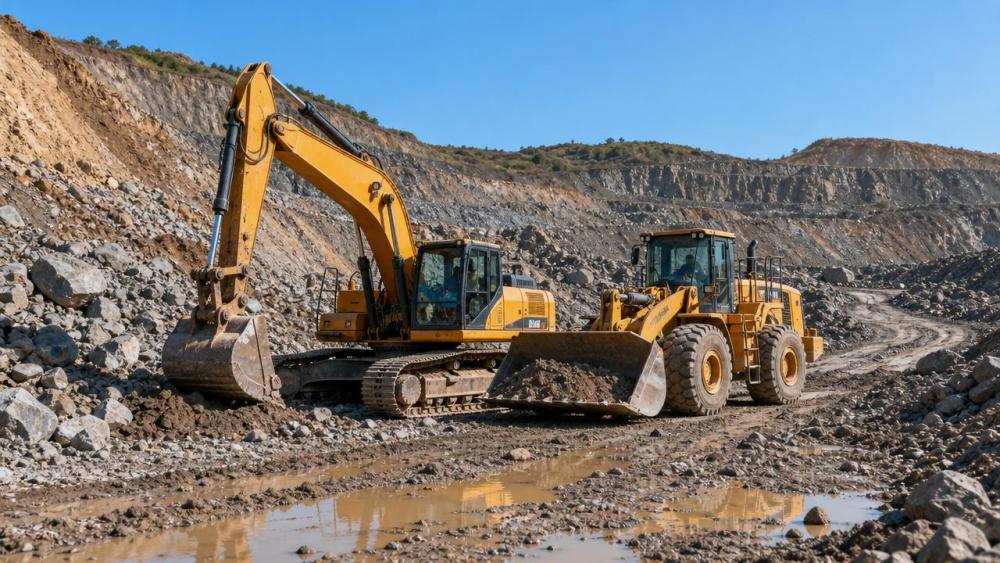
Off-road machinery includes excavators, wheel loaders, bulldozers, graders, and skid steer loaders working beyond paved, controlled environments.
Rough sites create changing ground pressure, uneven slopes, vibration, dust, water exposure, and limited sight lines. These factors combine to raise failure probability.
Unlike fixed industrial systems, off-road machinery operates while moving across unstable surfaces. That mobility turns small defects into major incident triggers.
A worn track shoe, delayed brake response, or overloaded bucket may remain manageable on flat ground. On broken terrain, the same issue can cause loss of control.
Safety risk should be viewed as an interaction between machine condition, operator behavior, site layout, weather, and task planning.
Core hazard categories
- Ground instability, sinkage, rutting, and edge collapse
- Rollover caused by side slope travel or sudden load shift
- Collision linked to poor visibility, congestion, or weak traffic control
- Hydraulic leaks, hose bursts, or pressure imbalance
- Brake, steering, or transmission malfunction under heavy demand
- Attachment failure, falling material, or overload stress
Current Industry Focus on Rough-Site Equipment Safety
Across infrastructure, quarrying, and mining, risk management for off-road machinery is becoming more data-driven and less reactive.
The sector now tracks machine health, near-miss events, ground conditions, and operator alerts to prevent shutdowns before they escalate.
This shift aligns with EMD’s industry intelligence focus on reliability, electro-hydraulic response, autonomy, and precision earthmoving performance.
The result is clear. Off-road machinery safety now depends on engineering controls, inspection discipline, and site intelligence working together.
Why Risk Control Delivers Business Value
Effective risk control protects more than people. It also protects machine availability, project schedules, fuel efficiency, and component life.
A single rollover, hydraulic fire, or berm collapse can stop hauling cycles, damage adjacent assets, and trigger investigation delays.
By contrast, stable safety systems improve utilization and support predictable operating costs across excavators, loaders, graders, and dozers.
Practical value areas
- Lower unplanned downtime from avoidable mechanical events
- Reduced tire, undercarriage, and attachment wear
- Better compliance records during audits and insurance reviews
- Safer adoption of telematics, autonomy, and remote operation tools
- More reliable production output in mines and infrastructure projects
For intelligence-led platforms like EMD, these patterns also show how safety links directly to machine design evolution and field performance benchmarking.
Typical Risk Scenarios by Equipment Type
Different machine classes face different rough-site exposures. However, several risk patterns appear repeatedly across the off-road machinery landscape.
This classification helps teams prioritize controls by machine behavior, not only by general site rules.
Critical Control Measures for Safer Off-Road Machinery Operation
The best safety programs combine daily checks, terrain assessment, operator discipline, and condition-based maintenance.
1. Evaluate ground before movement
Inspect haul roads, trench edges, stockpile bases, and dump areas. Identify soft zones, voids, standing water, and unstable shoulders.
Ground pressure matters. Heavy off-road machinery can sink or tilt even when the surface looks compact.
2. Control visibility and traffic interaction
Use one-way routes, exclusion zones, reversing alarms, cameras, and marked pedestrian paths where site conditions allow.
Blind spots remain one of the most persistent off-road machinery hazards, especially in dusty or congested areas.
3. Monitor hydraulic system health
Check hoses, seals, cylinders, and connectors for abrasion, leaks, heat damage, and pressure irregularity.
Hydraulic faults can reduce attachment stability, steering response, and braking performance, depending on machine architecture.
4. Manage load and attachment limits
Do not exceed rated lifting or carrying capacity. Verify quick coupler engagement and attachment compatibility before operation.
Uneven payload distribution greatly increases rollover risk, especially during turning, lifting, or slope travel.
5. Use structured pre-start inspections
- Fluid levels and visible leaks
- Tracks, tires, and undercarriage condition
- Brakes, steering, horn, lights, and alarms
- ROPS, seat belt, access steps, and handholds
- Bucket, blade, forks, couplers, and pins
Implementation Priorities for Consistent Field Results
Improving off-road machinery safety works best when controls are documented, measured, and reviewed after each operating cycle.
Short feedback loops matter. Near misses, abnormal vibration, and repeated route damage should trigger immediate correction.
Recommended site priorities
- Map hazard zones by slope, moisture, and traffic density.
- Set machine-specific operating limits for rough terrain.
- Track defect trends using inspection and telematics records.
- Review attachment use and overload incidents monthly.
- Align maintenance intervals with real site severity, not generic schedules.
As machines become smarter, safety depends on both physical durability and trustworthy data. Sensors, controls, and human response must remain aligned.
For organizations following EMD intelligence, the strongest path forward combines rugged design, precision control, and disciplined rough-site safety governance.
Next-Step Action Framework
Start with a focused review of the highest-risk off-road machinery tasks on rough ground. Rank them by severity, frequency, and downtime impact.
Then standardize inspection checklists, route controls, and hydraulic monitoring points for each machine category.
Finally, compare incident patterns with machine type, terrain, and operating method. That analysis turns safety activity into usable operational intelligence.
Better off-road machinery safety is built through repeatable controls, not isolated reactions. On rough sites, consistency is the strongest protection.