
Related News
- 00
0000-00
How to size heavy-duty loaders for North American mining operations - 00
0000-00
How altitude affects mining excavator performance in Latin America - 00
0000-00
Caterpillar Launches New Cat 6060 and Upgraded Autonomous Mining System - 00
0000-00
When does eco-friendly construction equipment pay for itself? - 00
0000-00
Will a wheel loader quick coupler fit your existing attachments?
For aftermarket maintenance teams, understanding which construction machinery components fail first is the key to reducing downtime, controlling repair costs, and extending machine life. From hydraulic seals and undercarriage parts to sensors and cooling systems, early failure points often reveal deeper stress patterns across excavators, loaders, graders, and dozers—making preventive service a critical advantage in high-demand operating environments.
In real field conditions, most first-failure events do not begin with catastrophic breakage. They start with small leaks, rising temperatures, abnormal vibration, delayed hydraulic response, or accelerated wear on moving contact surfaces. For maintenance managers supporting excavators, wheel loaders, motor graders, bulldozers, and skid steer loaders, identifying these patterns 50 to 200 operating hours earlier can mean the difference between a planned service stop and a costly machine-out event.
This article focuses on the construction machinery components that typically fail first, why they fail under heavy duty cycles, and how aftermarket teams can build more reliable inspection, stocking, and replacement strategies across mixed fleets.
Why Some Construction Machinery Components Wear Out First
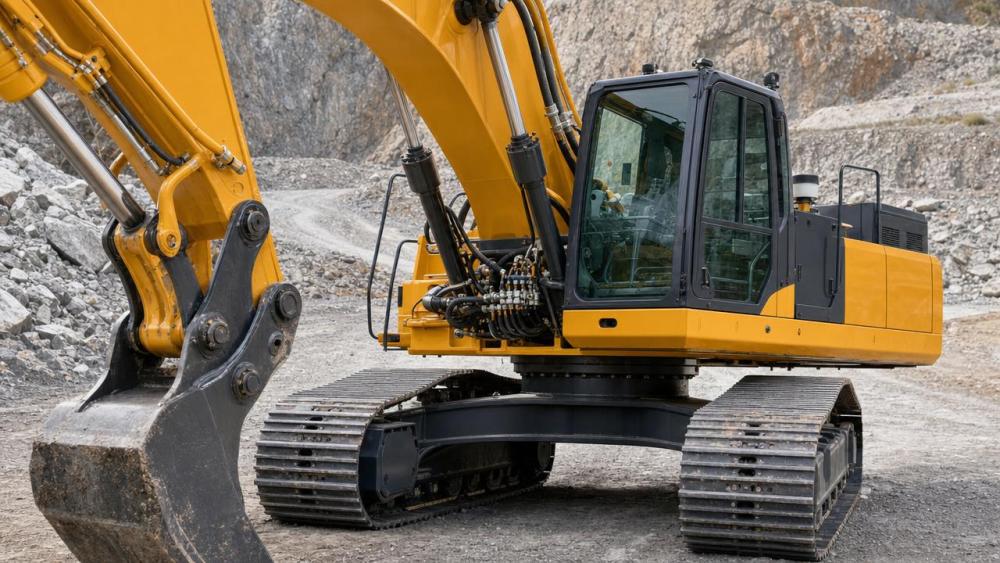
Early failure usually follows three force drivers: contamination, heat, and cyclic load. In construction machinery, these drivers often overlap within the first 500 to 1,500 operating hours, especially in dusty quarries, wet trenching, demolition work, or high-load earthmoving shifts exceeding 8 to 12 hours per day.
The first group of vulnerable construction machinery components is usually made up of wear items and sealing interfaces. These parts operate where pressure, friction, and contamination meet. Once a seal hardens, a bushing loosens, or a sensor drifts outside tolerance, secondary damage can spread quickly into pumps, pins, cooling circuits, or electronic controls.
The 5 main stress conditions behind early failure
- High contamination exposure from dust, fines, slurry, and metallic particles
- Thermal cycling between cold starts and peak hydraulic oil temperatures above 85°C
- Shock loading from repeated digging, pushing, lifting, or curb impact
- Lubrication breakdown caused by overextended service intervals
- Misalignment after undercarriage wear, pin wear, or mounting deformation
These conditions explain why the first failed parts are not always the most expensive parts. A low-cost hose, sensor, seal, or bearing can trigger a repair chain worth 10 to 30 times more if the issue is not isolated early.
Which parts usually fail first by system
For aftermarket planning, it helps to organize first-failure parts by system instead of by machine type alone. The table below gives a practical field view across common equipment categories and service environments.
The key takeaway is that construction machinery components exposed to contamination, repeated articulation, or temperature fluctuation tend to fail before major cast structures or core driveline housings. This is why preventive maintenance should prioritize interfaces, wear paths, and control signals rather than waiting for a hard failure.
The Highest-Risk Components for Excavators, Loaders, Graders, and Dozers
Although machine architectures vary, aftermarket maintenance teams often see the same pattern: 20% of the component categories generate roughly 70% of unplanned service calls. The exact mix depends on duty cycle, attachment use, terrain abrasiveness, and operator behavior, but several parts consistently appear at the top of failure lists.
Hydraulic seals and hose assemblies
Hydraulic sealing parts are among the earliest failing construction machinery components because they operate under constant pressure pulses, contamination, and temperature changes. On excavators and skid steers, rod seals and hose bends near articulation points often show visible deterioration between 1,000 and 2,500 hours, sometimes sooner in demolition or breaker applications.
Why they fail early
- Fine dust enters through damaged wipers or poor installation practices
- Pressure spikes exceed normal working cycles during shock loads
- Hose routing creates rub points or bending below minimum radius
- Heat accelerates seal hardening and fluid degradation
Undercarriage parts and ground-contact wear items
For crawler excavators and bulldozers, undercarriage parts may account for 30% to 50% of maintenance cost over the service life of the machine. Rollers, idlers, sprockets, track links, and shoes wear quickly in abrasive rock, packed clay, or poorly tensioned conditions. On graders and loaders, cutting edges and bucket teeth frequently become the first visibly degraded parts.
When these construction machinery components wear unevenly, they do more than reduce productivity. They also change machine geometry, increase fuel consumption, and place extra stress on final drives, lift arms, and frame joints.
Pins, bushings, and articulation joints
Pins and bushings fail quietly. A few millimeters of play at the boom foot, bucket linkage, center articulation, or blade circle can turn into inaccurate grading, attachment chatter, and structural cracking over time. In fleets with irregular greasing, wear rates can double within one service season.
Sensors, connectors, and control wiring
Modern machines increasingly depend on pressure sensors, angle sensors, speed inputs, and CAN-linked control harnesses. These are now essential construction machinery components, not optional electronics. In high-vibration zones or washdown-prone environments, loose connectors and damaged harness sleeves can produce false faults long before a mechanical part breaks.
The challenge for aftermarket teams is that electronic faults may look like hydraulic or powertrain problems. A drifting pressure sensor can create delayed travel response, and a damaged connector can trigger intermittent derating that wastes diagnostic time.
Cooling system wear points
Radiator fouling, hose aging, fan belt wear, and clamp relaxation are frequent first-line failures in hot or dusty sites. Once coolant or hydraulic oil temperatures rise above normal bands for repeated cycles, fluid life shortens and surrounding seals deteriorate faster. Even a 5°C to 10°C temperature increase sustained across shifts can accelerate broader system wear.
How Aftermarket Teams Can Detect Early Failure Before Downtime Escalates
The most effective maintenance programs do not rely on one inspection method. They combine daily operator observations, 250-hour service checks, trend-based fluid review, and component replacement thresholds based on wear history. This layered method is especially useful when one workshop supports multiple machine classes and brands.
A practical inspection framework
The table below shows a simple field-oriented inspection model that helps maintenance supervisors classify construction machinery components by urgency rather than by appearance alone.
This approach supports better planning because it ties each inspection cycle to a decision point. Instead of treating every wear sign as urgent, teams can separate monitor-only items from scheduled replacements and critical stop-work defects.
Four warning signals that should never be ignored
- Hydraulic response delay of more than 1 to 2 seconds under normal load
- Repeated temperature rise near the upper operating band during similar duty cycles
- Uneven left-right wear on tracks, tires, or cutting edges
- Intermittent sensor faults that clear and return within 24 to 72 hours
These signs often indicate systemic stress, not isolated part failure. Replacing a visible component without tracing contamination source, mounting movement, or thermal imbalance can shorten the life of the new part as well.
Replacement Planning, Stocking Strategy, and Procurement Priorities
Aftermarket performance depends not only on diagnosis but also on parts readiness. A strong stocking plan for construction machinery components balances failure frequency, lead time, machine criticality, and interchangeability. For a contractor or service distributor supporting 10 to 50 machines, this can reduce emergency ordering and improve workshop utilization.
How to prioritize parts inventory
The most useful stock list is usually built around three tiers. Tier 1 includes high-turn items such as filters, seals, hose kits, teeth, edges, belts, and common sensors. Tier 2 covers moderate-frequency items like rollers, bushings, pins, and coolant assemblies. Tier 3 includes low-frequency but high-impact items that may require supplier coordination rather than shelf stock.
Procurement checklist for maintenance buyers
- Confirm dimensional fit, pressure rating, and material compatibility
- Review seal compound or hose cover suitability for heat and fluid exposure
- Check whether the part serves a high-vibration or abrasive location
- Compare supplier lead time, batch consistency, and traceability support
- Track repeat failure data by machine model, jobsite type, and hour interval
For many workshops, the best savings do not come from buying the cheapest part. They come from reducing repeat replacements inside a 90-day to 180-day window. When construction machinery components are chosen based on true duty cycle rather than nominal fit alone, total maintenance cost becomes more predictable.
Common mistakes in first-failure replacement
One common mistake is replacing hoses without correcting clamp position or abrasion shielding. Another is changing pins and bushings without measuring bore deformation. A third is replacing a failed sensor while ignoring voltage instability or moisture intrusion at the connector. These errors create recurring failures that appear random but are actually procedural.
For maintenance teams working across excavators, loaders, graders, bulldozers, and skid steers, the most durable strategy is to map recurring failures by component family, not just by individual machine. That reveals whether the issue is environmental, operational, or supply-related.
Building a More Reliable Preventive Maintenance Program
A reliable preventive program for construction machinery components should be simple enough for field execution and detailed enough for workshop planning. In practice, that means defining inspection points, measurement limits, replacement triggers, and supplier response paths before the machine reaches failure stage.
A 5-step operating model
- Classify machines by duty severity: light, medium, or severe
- Identify top 10 high-risk components for each machine group
- Set inspection intervals at daily, 250-hour, and 500-hour levels
- Standardize replacement criteria and parts approval rules
- Review repeat failures every 30 to 60 days and adjust stocking plans
This model is especially valuable for mixed fleets operating in mining support, roadbuilding, utility excavation, landfill handling, and urban compact work zones. Different machines may fail differently, but the logic of early detection remains consistent: protect sealing surfaces, monitor wear geometry, control contamination, and verify signal integrity.
The construction machinery components that fail first are rarely random. They are the parts closest to friction, fluid pressure, vibration, contamination, and heat. For aftermarket maintenance teams, focusing on these first-line wear and control items delivers faster repairs, fewer repeat failures, and longer asset life across critical earthmoving fleets.
If you are refining a maintenance plan, evaluating replacement priorities, or looking for better support around high-risk construction machinery components, now is the right time to review your fleet failure patterns and parts strategy. Contact us to discuss your service needs, request a tailored maintenance approach, or learn more solutions for excavators, loaders, graders, dozers, and skid steer equipment.