
Related News
- 00
0000-00
How to size heavy-duty loaders for North American mining operations - 00
0000-00
How altitude affects mining excavator performance in Latin America - 00
0000-00
Caterpillar Launches New Cat 6060 and Upgraded Autonomous Mining System - 00
0000-00
When does eco-friendly construction equipment pay for itself? - 00
0000-00
Will a wheel loader quick coupler fit your existing attachments?
As infrastructure spending, emissions rules, and automation priorities reshape the global market, construction equipment manufacturers are entering a decisive new cycle in 2026. For dealers, distributors, and agents, knowing which brands are gaining technical, commercial, and regional momentum is essential to building a stronger portfolio. This guide highlights the manufacturers to watch and the signals that matter most for future channel growth.
Which construction equipment manufacturers deserve closer attention in 2026?
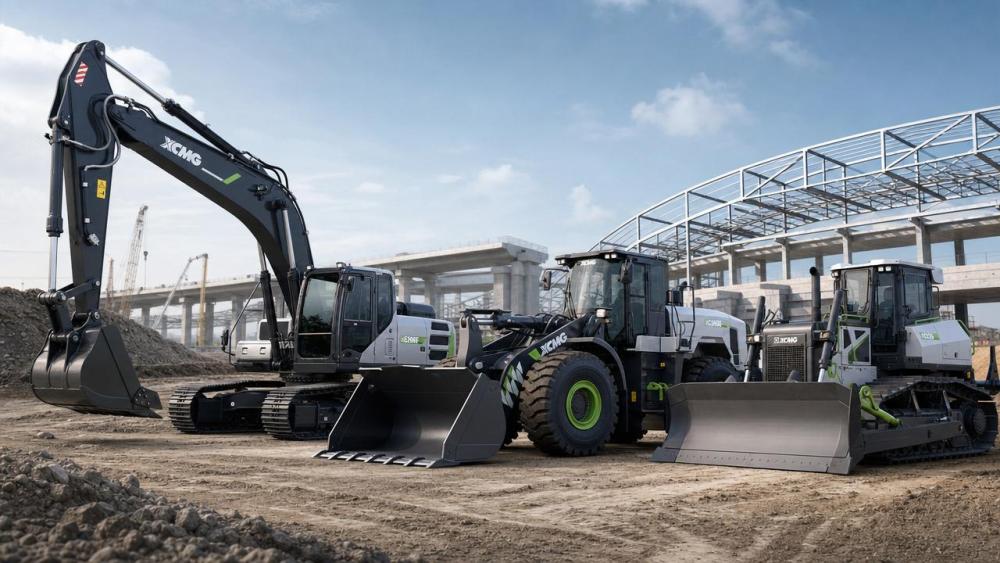
For channel partners, the question is not simply who sells the most machines today. The more useful question is which construction equipment manufacturers are aligning products, service systems, compliance readiness, and technology roadmaps with the projects that will define 2026.
That matters across crawler excavators, wheel loaders, motor graders, bulldozers, and skid steer loaders. Dealers need brands that can win tenders, support uptime, satisfy non-road emissions rules, and adapt to jobsite digitalization without creating excessive inventory risk.
From the perspective of EMD, the market is being reshaped by five powerful signals: decarbonization, control-system intelligence, precision earthmoving, urban compact equipment demand, and higher expectations for remote diagnostics and service response.
- Manufacturers with strong excavator and loader platforms are benefiting from civil works, mining support, and utility installation cycles.
- Brands investing in electro-hydraulic control, payload monitoring, and machine guidance are better positioned for productivity-driven buyers.
- OEMs that can localize parts, documentation, and aftersales support create lower risk for distributors expanding into new territories.
- Manufacturers with practical electrification plans, not just concept machines, are gaining relevance in urban and regulated environments.
In other words, the manufacturers to watch are not only product builders. They are ecosystem builders with credible engineering depth, channel discipline, and market timing.
What market signals should dealers track before choosing construction equipment manufacturers?
Before adding or expanding a brand, dealers should read the market through a practical lens. A strong sales pitch is not enough. The more reliable indicators are linked to equipment categories, regulations, infrastructure budgets, and machine utilization trends.
The table below summarizes the market signals that often separate a short-term opportunity from a sustainable channel partnership with construction equipment manufacturers.
Dealers that monitor these signals can identify which construction equipment manufacturers are building resilient product lines rather than chasing temporary demand spikes. This is where intelligence from EMD becomes useful: it connects macro trends to product-level buying decisions.
Why EMD’s perspective is useful for channel strategy
EMD focuses on the machinery categories that most directly influence earthmoving productivity and fleet profitability. Its coverage of crawler excavators, loaders, graders, bulldozers, and skid steers helps distributors compare manufacturers not only by brochure claims, but by operational logic.
That includes hydraulic breakout force trends, electro-hydraulic response quality, grading precision, hydrostatic transmission efficiency, and communication architectures for remote operation. For 2026, these details increasingly affect tender competitiveness and customer retention.
How should distributors compare construction equipment manufacturers across key machine segments?
A dealer portfolio should not be evaluated by headline brand recognition alone. It should be tested by segment fit. Some manufacturers are stronger in crawler excavators, others in wheel loaders, compact machines, or precision grading equipment.
The comparison below helps channel partners assess construction equipment manufacturers according to the segment strengths that matter in 2026.
This kind of segment-based review is more practical than trying to identify a universal winner. The best construction equipment manufacturers for one dealer may be the wrong fit for another if project types, customer size, and aftersales capacity differ.
A simple portfolio test for agents
- Do your local customers need heavy excavation, compact urban equipment, or precision roadbuilding support?
- Can the manufacturer support fast-moving wear parts and trained technicians in your region?
- Are machine specifications aligned with future tenders, not just current demand?
- Will the product line still be compliant if local emissions and safety rules tighten?
What technical and compliance factors matter most in 2026?
For many distributors, technical due diligence is where profitable partnerships are either built or undermined. A machine that looks attractive on price can create long-term trouble if it lacks control refinement, software stability, or compliance readiness.
Technical criteria worth deeper review
- Hydraulic performance under sustained load, especially for excavators and dozers working in hard material or harsh climates.
- Precision control quality for graders and smart earthmoving applications where rework costs can quickly erase equipment savings.
- Telematics reliability, because fleet owners increasingly expect alerts, maintenance planning, and machine utilization visibility.
- Electrical architecture maturity for emerging hybrid or electric products entering municipal and indoor-sensitive zones.
Compliance and documentation checkpoints
Construction equipment manufacturers that are truly ready for 2026 should be able to discuss emissions pathways, operator safety documentation, noise management, and regional import conformity in specific terms. Vague answers are a warning sign for dealers.
Common reference points may include non-road engine emissions frameworks, machine safety documentation, and application-specific local requirements. Exact rules vary by market, but the discipline of documentation should be visible in every serious OEM conversation.
How can dealers reduce procurement risk when evaluating construction equipment manufacturers?
A common mistake is to compare only machine price and discount structure. In reality, procurement risk is shaped by delivery reliability, parts fill rate, technical training, attachment compatibility, and resale confidence across the first two to four years of deployment.
The procurement checklist below helps distributors evaluate construction equipment manufacturers through a channel-risk lens rather than a single transaction lens.
When this checklist is applied early, dealers often avoid costly portfolio mistakes. It also helps identify which construction equipment manufacturers are prepared to grow with the distributor, not merely sell into the market.
Practical sourcing advice
- Start with the machine categories that generate repeat service revenue, not just first-sale volume.
- Request a parts list for fast-moving service items before committing to annual targets.
- Ask for documentation on telematics, grade control compatibility, and operator training support.
- Review whether the OEM can support both standard configurations and local-spec requirements.
What mistakes do buyers make when screening construction equipment manufacturers?
Mistake 1: Assuming a wide product catalog means strong support
A broad lineup is useful, but it does not guarantee spare parts depth, software support, or technician availability. Dealers should distinguish between catalog breadth and executable support capability.
Mistake 2: Overlooking precision and control quality
In excavators, graders, and dozers, the difference between acceptable and excellent control response affects operator productivity, finish quality, and fuel use. This is especially important in infrastructure and airport-related grading work.
Mistake 3: Treating emissions compliance as a paperwork issue only
Compliance influences parts sourcing, diagnostics, machine downtime, and customer resale confidence. Dealers should view it as an operational issue, not just a customs issue.
Mistake 4: Ignoring the rise of compact urban equipment
Many markets now show strong demand for mini excavators and skid steer loaders because secondary urbanization, municipal upgrades, and confined jobsites are increasing. Manufacturers strong in compact equipment may deserve more attention than legacy assumptions suggest.
FAQ: what do dealers ask most about construction equipment manufacturers?
How do I shortlist construction equipment manufacturers for my territory?
Start with local demand by segment, then test OEMs on compliance readiness, spare parts support, and application fit. A shortlist should include only those manufacturers that can support your target machine classes and your service model.
Which machine categories are most important for 2026 channel growth?
In many regions, crawler excavators remain central because of their versatility and project volume. At the same time, compact machines, wheel loaders, and precision grading equipment are gaining importance where urban construction, aggregates, and infrastructure renewal are active.
What should I ask manufacturers about delivery cycles?
Ask about production scheduling by model, optional configuration lead times, shipping windows, and regional stock programs. Also ask whether fast-moving attachments and service kits can be delivered separately to support early deployment.
How important are telematics and smart controls now?
They are no longer optional for many fleet buyers. Machine monitoring, remote diagnostics, payload visibility, and grade-assist functions increasingly affect uptime and operating cost, which makes them important selection criteria when comparing construction equipment manufacturers.
Why choose us for construction equipment manufacturer intelligence?
EMD supports dealers, distributors, and agents with focused intelligence on the machinery categories that define earthmoving and infrastructure execution. Our coverage is built around excavators, wheel loaders, motor graders, bulldozers, and skid steer loaders, with attention to decarbonization, autonomy, and field reliability.
If you are evaluating construction equipment manufacturers for 2026, you can consult us on model positioning, segment fit, hydraulic and control-system considerations, regional demand trends, and practical channel risks. We can also help you frame the right questions around parts support, delivery cycles, telematics readiness, and compliance documentation.
- Parameter confirmation for excavators, loaders, graders, dozers, and compact equipment
- Product selection support based on territory demand and customer application profiles
- Delivery cycle discussion for planned tenders, fleet expansion, or seasonal procurement
- Customized portfolio advice for balancing heavy machines with compact urban equipment
- Guidance on certification expectations, documentation review, and specification alignment
- Quotation communication support for channel comparison and supplier negotiation preparation
For distributors building a stronger 2026 lineup, the goal is not to chase every brand. It is to identify the construction equipment manufacturers whose technology, support structure, and market timing match your customers and your growth plan. That is where informed intelligence creates real commercial advantage.