
Related News
- 00
0000-00
How to size heavy-duty loaders for North American mining operations - 00
0000-00
How altitude affects mining excavator performance in Latin America - 00
0000-00
Caterpillar Launches New Cat 6060 and Upgraded Autonomous Mining System - 00
0000-00
When does eco-friendly construction equipment pay for itself? - 00
0000-00
Will a wheel loader quick coupler fit your existing attachments?
The construction equipment market is entering a new cycle shaped by decarbonization, automation, tighter emissions rules, and shifting infrastructure demand. For business decision-makers, understanding where crawler excavators, wheel loaders, graders, bulldozers, and skid steers are heading is now critical to investment timing, product strategy, and competitive positioning. This analysis highlights the market shifts that matter most—and what they mean for future growth.
Why a Checklist View Matters in the Construction Equipment Market
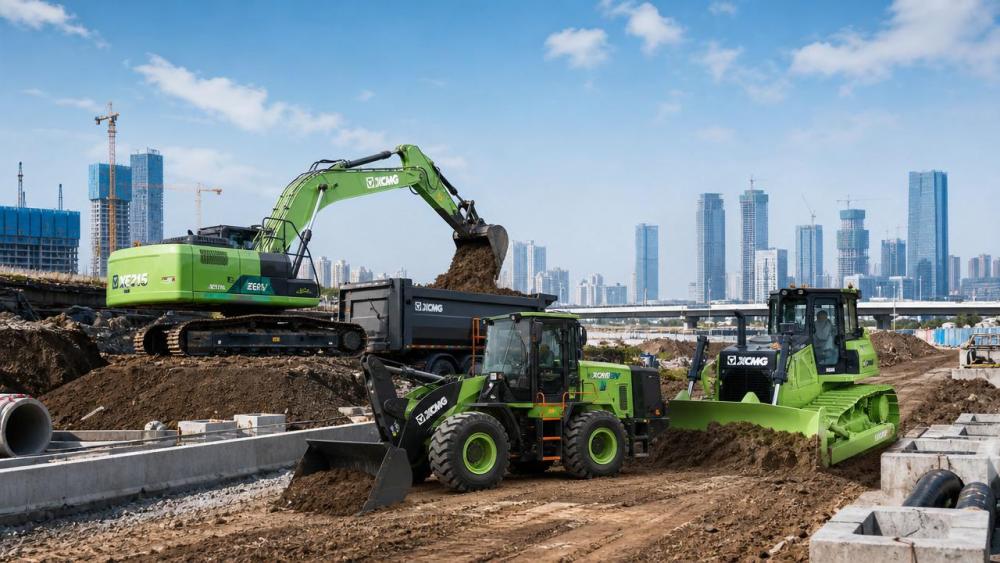
The construction equipment market no longer moves on volume alone. It now responds to emissions policy, infrastructure stimulus, financing costs, labor shortages, and digital fleet management maturity.
A checklist approach helps compare fast-moving signals without missing operational detail. It also turns broad market noise into practical actions for product planning, sourcing, channel strategy, and capital allocation.
For sectors tracked by EMD, the biggest advantage comes from linking machine physics with market timing. Breakout force, grading precision, attachment flexibility, and autonomy readiness increasingly shape commercial outcomes.
Core Checklist: Construction Equipment Market Shifts to Watch
- Track emissions regulation calendars across major regions, because the construction equipment market is being reordered by Stage V, Tier 4, and emerging non-road carbon compliance rules.
- Measure electrification by duty cycle, not hype, since compact loaders and mini machines are moving faster than heavy crawler excavators and dozers in battery adoption.
- Prioritize automation features with proven payback, including grade control, payload monitoring, remote diagnostics, and assisted digging functions that reduce rework and operator variability.
- Compare regional infrastructure pipelines, because road building, mining expansion, utilities work, and urban redevelopment each pull different machine categories within the construction equipment market.
- Watch compact equipment demand closely, as secondary urbanization and tight jobsite constraints continue lifting skid steer loaders, compact track loaders, and mini excavators.
- Reassess attachment ecosystems, because buyers increasingly value machine versatility, hydraulic compatibility, and fast tool change performance over raw base-unit ownership economics.
- Audit supply chain resilience for hydraulics, semiconductors, undercarriage parts, and battery components, since lead-time volatility still affects pricing and delivery confidence.
- Review total cost of ownership models, including fuel burn, maintenance intervals, telematics subscriptions, residual value, and uptime support across the machine life cycle.
- Benchmark autonomy readiness in hazardous or remote sites, where low-latency communications and remote control architectures are becoming meaningful competitive differentiators.
- Test dealer and service network depth, because in the construction equipment market, service response time often decides brand preference more than brochure specifications.
What These Shifts Mean by Equipment Segment
Crawler Excavators
Crawler excavators remain the anchor of the construction equipment market. Demand is supported by civil engineering, quarry work, utilities, and large transport corridor projects.
The next battleground is electro-hydraulic intelligence. Better control logic, fuel efficiency, and semi-autonomous digging support now matter as much as engine output and breakout force.
Wheel Loaders and Skid Steers
Wheel loaders are benefiting from aggregate handling, mine support, and port logistics. Payload accuracy and cycle-time optimization are becoming stronger buying triggers.
Skid steer loaders gain from urban jobsites and landscaping density. Their position in the construction equipment market improves when attachment variety and zero-radius maneuverability are prioritized.
Motor Graders and Bulldozers
Motor graders are tied closely to road construction, airport expansion, and precision surface work. GPS integration and millimeter-level grading performance increasingly influence replacement cycles.
Bulldozers remain essential for land clearing, mining support, and major earthmoving. Hydrostatic efficiency, undercarriage durability, and remote-operation readiness now carry more strategic weight.
Scenario-Based Reading of the Construction Equipment Market
Urban Redevelopment and Utility Upgrades
In dense cities, the construction equipment market favors compact, low-emission, low-noise machines. This trend supports mini excavators, skid steers, and electric compact platforms.
Projects also demand precision. Telematics, attachment flexibility, and digital jobsite integration improve utilization where access, time windows, and compliance are tightly controlled.
Mining, Quarrying, and Harsh-Duty Material Handling
In resource sectors, the construction equipment market still rewards mechanical endurance first. However, remote operation and predictive maintenance are moving from optional to necessary.
Wheel loaders, dozers, and heavy excavators benefit most when uptime data, component health monitoring, and low-latency control systems reduce safety exposure and unplanned stops.
Road, Rail, and Mega-Infrastructure
Large public works create broad demand across the construction equipment market. Excavators, graders, dozers, and support loaders all rise when transport investment moves from planning to execution.
The key signal is funding durability. Equipment demand strengthens when projects are multi-year, contract-backed, and linked to national logistics or energy transition priorities.
Commonly Missed Risks
- Overestimate electrification speed in heavy classes. Battery economics and charging constraints still limit rapid adoption for larger earthmoving platforms.
- Underprice software dependency. Grade control, telematics, and remote diagnostics add value, but also create update, training, and cybersecurity obligations.
- Ignore residual value divergence. In the construction equipment market, technologically outdated units can lose attractiveness faster when regulations tighten.
- Miss regional policy asymmetry. Demand can rise strongly in one geography while another slows under interest rates, permitting delays, or emissions enforcement.
- Treat service as secondary. Parts availability and field support still determine realized uptime more than headline machine capability.
Practical Execution Moves
Build a quarterly review grid covering regulation, infrastructure spending, fleet technology, and supply conditions. This creates a repeatable way to read the construction equipment market.
Separate compact, mid-size, and heavy segments in forecasting. Their electrification timelines, financing sensitivity, and application demand drivers are not the same.
Use total cost scenarios rather than acquisition price alone. Include uptime support, software capability, fuel savings, and future compliance exposure in any comparison.
Link technology evaluation to real application intensity. Machines used in quarry loading, airport grading, or urban trenching need different digital and hydraulic priorities.
Conclusion and Next Action
The construction equipment market is not shifting in one direction only. It is splitting by duty cycle, region, emissions pressure, and digital maturity.
The strongest position comes from watching equipment-specific indicators, not just headline demand. Crawler excavators, wheel loaders, graders, bulldozers, and skid steers each respond to different signals.
Start with the checklist above, rank the ten signals by business impact, and update assumptions every quarter. That discipline turns construction equipment market volatility into clearer timing and better strategic decisions.