
Related News
- 00
0000-00
How to size heavy-duty loaders for North American mining operations - 00
0000-00
How altitude affects mining excavator performance in Latin America - 00
0000-00
Caterpillar Launches New Cat 6060 and Upgraded Autonomous Mining System - 00
0000-00
When does eco-friendly construction equipment pay for itself? - 00
0000-00
Will a wheel loader quick coupler fit your existing attachments?
For dealers, distributors, and agents, avoiding costly heavy equipment maintenance mistakes is essential in a market shaped by uptime pressure, tighter emissions rules, and rising ownership costs.
Across crawler excavators, wheel loaders, bulldozers, motor graders, and skid steer loaders, maintenance quality now directly affects resale value, productivity, and service reputation.
Many failures do not begin with dramatic breakdowns. They start with missed inspections, poor lubrication control, contaminated fluids, and delayed parts replacement.
Understanding the biggest heavy equipment maintenance mistakes helps reduce downtime, protect hydraulic systems, and improve long-term asset performance in demanding construction environments.
Maintenance standards are rising as equipment becomes smarter and more stressed
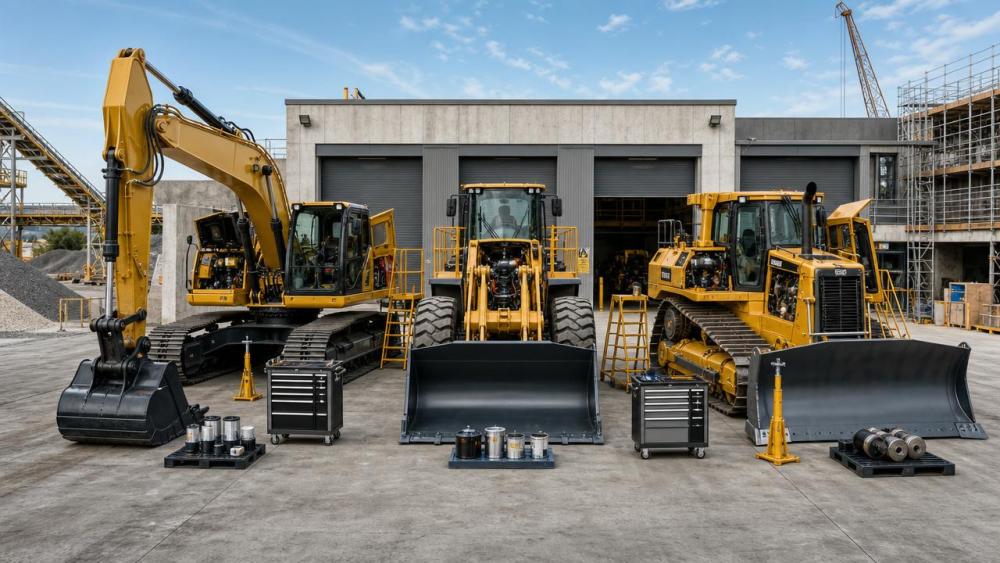
Heavy equipment maintenance has changed because machines now operate with tighter tolerances, advanced sensors, and stricter fuel-efficiency targets.
Electro-hydraulic controls, telematics, emissions aftertreatment, and precision grading systems have raised the cost of small service mistakes.
A minor issue in filter choice or fluid cleanliness can now affect engine derating, pump wear, sensor accuracy, or remote diagnostics quality.
This shift matters across the broader earthmoving sector tracked by EMD, where reliability, decarbonization, and automation are reshaping maintenance expectations.
Trend signals shaping heavy equipment maintenance
- Higher hydraulic pressures increase sensitivity to contamination and improper hose handling.
- Longer duty cycles in mining and infrastructure projects compress service windows.
- Stage V and Tier 4 Final systems demand precise fluid, fuel, and sensor care.
- Data-driven service models expose preventable maintenance errors more quickly.
The most common heavy equipment maintenance mistakes are still preventable
The most damaging heavy equipment maintenance failures usually come from routine neglect rather than rare component defects.
Mistake 1: Skipping daily inspections
Walk-around checks often reveal leaks, loose pins, cracked hoses, abnormal track tension, and tire damage before they trigger expensive downtime.
Ignoring these signs can turn a small seal issue into pump damage or structural wear.
Mistake 2: Using the wrong lubricants or fluids
Not all oils, coolants, and greases fit every climate, load profile, or hydraulic design.
Incorrect viscosity or incompatible additives can reduce film strength, accelerate wear, and compromise heavy equipment maintenance planning.
Mistake 3: Extending service intervals without evidence
Some fleets push intervals to save labor. Without oil analysis or duty-cycle data, that approach often creates hidden risk.
Filters may clog early in dusty applications, while undercarriage wear can accelerate on abrasive ground.
Mistake 4: Poor contamination control
Hydraulic contamination is among the most expensive maintenance problems in excavators, loaders, and graders.
Open containers, dirty funnels, careless hose replacement, and unsealed storage areas all undermine heavy equipment maintenance quality.
Mistake 5: Neglecting undercarriage and ground-engaging components
Crawler excavators and bulldozers lose major value when undercarriage wear is ignored.
Improper track tension, uneven shoe wear, and delayed rotation of wear parts increase fuel use and reduce machine stability.
Mistake 6: Treating fault codes as minor inconveniences
Telematics alerts and onboard diagnostics should trigger investigation, not postponement.
A recurring temperature or pressure warning often points to developing failure across cooling, hydraulic, or aftertreatment systems.
Several industry forces are making maintenance mistakes more costly
Heavy equipment maintenance now sits at the intersection of technology, compliance, and lifecycle economics.
The effects spread across uptime, cost control, and market credibility
Weak heavy equipment maintenance creates more than repair bills. It disrupts scheduling, weakens machine availability, and increases total cost of ownership.
When a loader misses a quarry cycle or a grader stops during fine leveling, delays ripple through labor, transport, and project sequencing.
Maintenance quality also affects residual value. Buyers examine service history, fluid cleanliness evidence, and fault-code patterns before paying premium prices.
In sectors where EMD tracks technical prestige and competitive tender performance, service discipline supports stronger equipment reputation and better business resilience.
Areas most affected by maintenance mistakes
- Hydraulic pump life and actuator response
- Fuel efficiency and emissions compliance
- Undercarriage wear cost and traction performance
- Attachment productivity and cycle time consistency
- Resale confidence and lifecycle profitability
The strongest response is disciplined, data-backed heavy equipment maintenance
Avoiding heavy equipment maintenance mistakes requires a practical system, not isolated reminders.
What deserves immediate attention
- Standardize inspection checklists by machine type and application severity.
- Match fluids and filters to OEM specifications and real operating conditions.
- Use oil sampling to justify any interval extension decisions.
- Control storage cleanliness for lubricants, hoses, fittings, and replacement parts.
- Track repeat faults through telematics rather than clearing warnings without root-cause review.
- Prioritize undercarriage inspections on tracked fleets working in abrasive terrain.
Simple indicators worth monitoring
The next phase of maintenance will reward foresight more than reaction
As fleets adopt connected systems and lower-emission machines, heavy equipment maintenance will become more predictive and less tolerant of informal habits.
The best results will come from combining technician discipline, clean service processes, machine data, and application-specific maintenance planning.
This is especially relevant in high-load environments involving excavating, grading, bulk material transfer, and continuous pushing operations.
Organizations that reduce heavy equipment maintenance mistakes early can improve uptime, stabilize ownership costs, and protect customer confidence over the full asset lifecycle.
Practical next steps
- Audit current service records for recurring preventable failures.
- Review fluid, filter, and contamination-control standards by fleet category.
- Create response rules for fault codes, overheating, and abnormal wear trends.
- Align heavy equipment maintenance schedules with actual operating severity, not assumptions.
A stronger maintenance framework today can prevent avoidable failures tomorrow and support more reliable performance across the entire earthmoving value chain.