
Related News
- 00
0000-00
How to size heavy-duty loaders for North American mining operations - 00
0000-00
How altitude affects mining excavator performance in Latin America - 00
0000-00
Caterpillar Launches New Cat 6060 and Upgraded Autonomous Mining System - 00
0000-00
When does eco-friendly construction equipment pay for itself? - 00
0000-00
Will a wheel loader quick coupler fit your existing attachments?
As infrastructure projects become smarter, cleaner, and more connected, construction equipment technology is entering a defining phase in 2026. From autonomous control and precision grading systems to electrified powertrains and hydraulic intelligence, the machines reshaping the earth are evolving fast. The most important shift is not one feature alone, but how software, energy systems, sensing, and machine design now work together. This guide outlines the technologies worth tracking and how to judge their real value.
Why a checklist matters for construction equipment technology in 2026
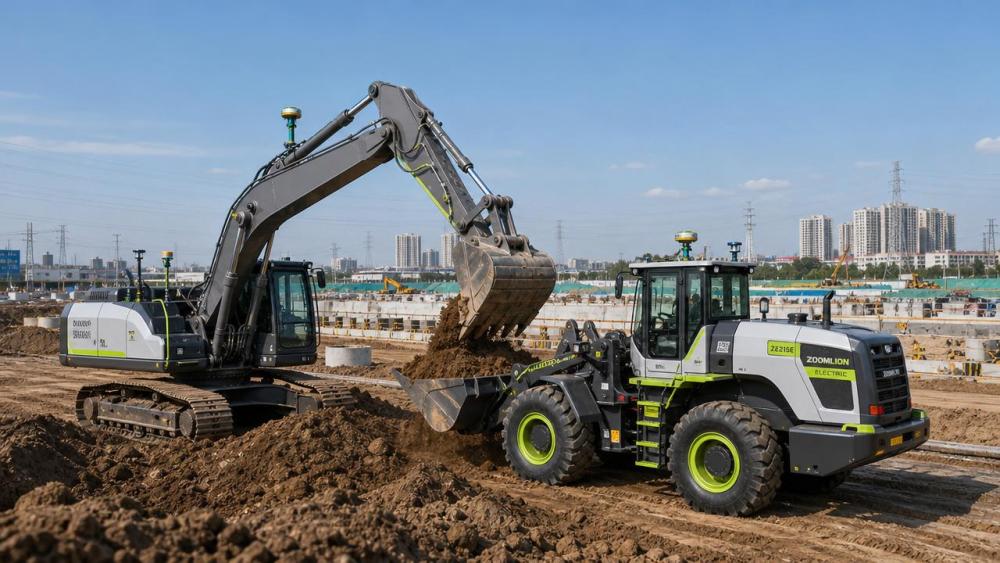
The market is crowded with claims around automation, electrification, telematics, and efficiency. Yet not every upgrade improves uptime, total cost of ownership, or earthmoving output. A checklist approach helps separate proven construction equipment technology from features that are impressive in demos but weak in field conditions.
This matters across crawler excavators, wheel loaders, motor graders, bulldozers, and skid steer loaders. In each category, the winning technologies are those that improve cycle time, reduce fuel or energy consumption, strengthen operator support, and increase asset visibility across mixed fleets.
Core checklist: technologies worth tracking now
Use the following checklist to evaluate whether a new wave of construction equipment technology is strategic, scalable, and ready for demanding project environments.
- Prioritize semi-autonomous and autonomous functions that improve digging, grading, hauling, or dozing accuracy without creating workflow friction during mixed manual-machine operations.
- Verify 3D machine control performance through repeatable field tolerances, GNSS stability, and sensor fusion quality rather than relying only on software interface claims.
- Track electrified powertrains by duty cycle fit, charging strategy, battery thermal management, and productivity under temperature extremes and heavy hydraulic loads.
- Assess electro-hydraulic intelligence for smoother multi-function control, faster response, lower fuel burn, and reduced operator fatigue during repetitive high-precision tasks.
- Examine telematics platforms for real fault diagnostics, utilization analysis, geofencing, maintenance prediction, and compatibility across mixed-brand fleets and attachment ecosystems.
- Measure remote operation readiness through network latency tolerance, camera placement, cybersecurity architecture, and safe operation in quarries, tunnels, and hazardous zones.
- Compare low-emission engine packages by aftertreatment durability, fuel quality sensitivity, service access, and compliance with tightening regional non-road regulations.
- Check modular attachment intelligence, including automatic recognition, hydraulic flow presets, and job-based parameter libraries that shorten setup time on compact equipment.
- Review operator-assist systems such as payload monitoring, bucket leveling, traction control, and anti-stall logic for measurable gains in consistency and material movement.
- Confirm software update pathways, data ownership terms, and dealer support depth before adopting any connected construction equipment technology at scale.
The most important technology trends behind the checklist
Autonomy is moving from pilot projects to practical workflows
Autonomous and semi-autonomous functions are no longer limited to concept machines. In 2026, the most relevant progress will come from task-specific automation. Think auto-dig sequences, return-to-grade blade control, collision alerts, and repeatable truck loading assistance.
The key question is not whether full autonomy exists. It is whether the construction equipment technology reduces rework and variability under real site constraints. Systems that cooperate with human input will often outperform fully isolated automation.
Electrification is expanding, but only where utilization makes sense
Electric compact machines are gaining momentum in urban work, indoor demolition, municipal operations, and noise-sensitive projects. Larger battery-electric wheel loaders and excavators are advancing too, especially where charging infrastructure is predictable.
However, electrification is not a universal answer. High-intensity loading, remote mining, and round-the-clock dozing still challenge battery economics and charging logistics. The best construction equipment technology decisions match machine duty profiles to energy architecture.
Hydraulic intelligence is becoming a major performance differentiator
Electro-hydraulic control is changing how excavators, loaders, and graders feel in operation. Smarter pump management, flow sharing, and adaptive control logic improve combined movements and reduce wasted energy. This is especially important in machines where precision and breakout force must coexist.
For EMD’s focus segments, hydraulic software is becoming as important as steel and displacement. It directly shapes fuel efficiency, operator confidence, and grading or loading consistency.
How these technologies apply in different jobsite scenarios
Road construction and airport grading
Motor graders benefit most from integrated GNSS, inertial measurement, and blade automation. In this environment, construction equipment technology should be judged by finish quality, pass reduction, and tolerance retention over long work windows.
Laser and 3D control systems are especially valuable when labor availability is tight and correction work is expensive. Data transfer between survey platforms and machine control software also matters more than many buyers expect.
Urban infrastructure and confined-space work
Compact excavators and skid steer loaders gain from electrification, zero-radius maneuvering, camera systems, and attachment intelligence. Here, the best construction equipment technology is often the one that combines flexibility, low noise, and rapid changeover.
Remote diagnostics are also useful in smaller machines because service interruptions can quickly disrupt dense project schedules. Compact fleets increasingly need enterprise-grade visibility.
Mining, quarrying, and heavy earthmoving
Wheel loaders, bulldozers, and large crawler excavators operate under heavy loads and punishing conditions. In these settings, durable telematics, low-latency remote control, and high-efficiency hydraulic management deserve close attention.
Autonomy has strong potential in repetitive haul road, stockpile, and hazardous-zone tasks. But reliability, communication architecture, and fail-safe behavior matter more than headline automation claims.
Commonly overlooked risks when tracking construction equipment technology
Data silos: A strong machine feature can lose value if telematics, maintenance, and project data cannot connect across brands, attachments, and subcontracted equipment.
Support gaps: Advanced systems require technician training, parts access, and software service discipline. Weak support can turn premium construction equipment technology into expensive downtime.
Misaligned duty cycles: Electrified or autonomous systems may underperform if charging windows, shift lengths, material density, or travel distances were not evaluated properly.
Cybersecurity blind spots: Remote operation and connected fleets expand the attack surface. Secure update protocols and network segmentation should be part of every digital equipment review.
Overpaying for unused functions: Some features look innovative but remain idle because workflows, training, or site conditions never support regular use.
Practical execution steps for 2026 equipment evaluation
- Map each machine type to a real duty cycle before reviewing any new construction equipment technology package.
- Request field-based performance evidence, including fuel, cycle time, grading tolerance, and uptime metrics.
- Test software usability with operators and supervisors, not only with sales or technical specialists.
- Check whether the platform integrates with existing fleet systems, service workflows, and data reporting tools.
- Score every feature against three outcomes: productivity, reliability, and regulatory readiness.
Conclusion and next action
The most valuable construction equipment technology in 2026 will not be defined by marketing language. It will be defined by measurable gains in precision, uptime, energy efficiency, safety, and digital control. Across excavators, loaders, graders, bulldozers, and skid steers, the strongest innovations are those that fit real operating conditions and scale across fleets.
Start with the checklist above, compare technologies by duty cycle and support depth, and focus on systems that connect performance with long-term asset strategy. In a market shaped by autonomy, decarbonization, and intelligent hydraulics, disciplined evaluation is the fastest route to better equipment decisions.