
Related News
- 00
0000-00
How to size heavy-duty loaders for North American mining operations - 00
0000-00
How altitude affects mining excavator performance in Latin America - 00
0000-00
Caterpillar Launches New Cat 6060 and Upgraded Autonomous Mining System - 00
0000-00
When does eco-friendly construction equipment pay for itself? - 00
0000-00
Will a wheel loader quick coupler fit your existing attachments?
Construction equipment technology is reshaping how infrastructure leaders balance productivity, precision, and sustainability. For long-cycle capital planning, the shift is now strategic rather than experimental. Electrified drivetrains, machine control, intelligent hydraulics, and connected diagnostics are changing how crawler excavators, wheel loaders, motor graders, bulldozers, and skid steer loaders are specified, deployed, and maintained across infrastructure, mining, roadbuilding, and urban projects.
Why a Checklist Matters for Construction Equipment Technology Decisions
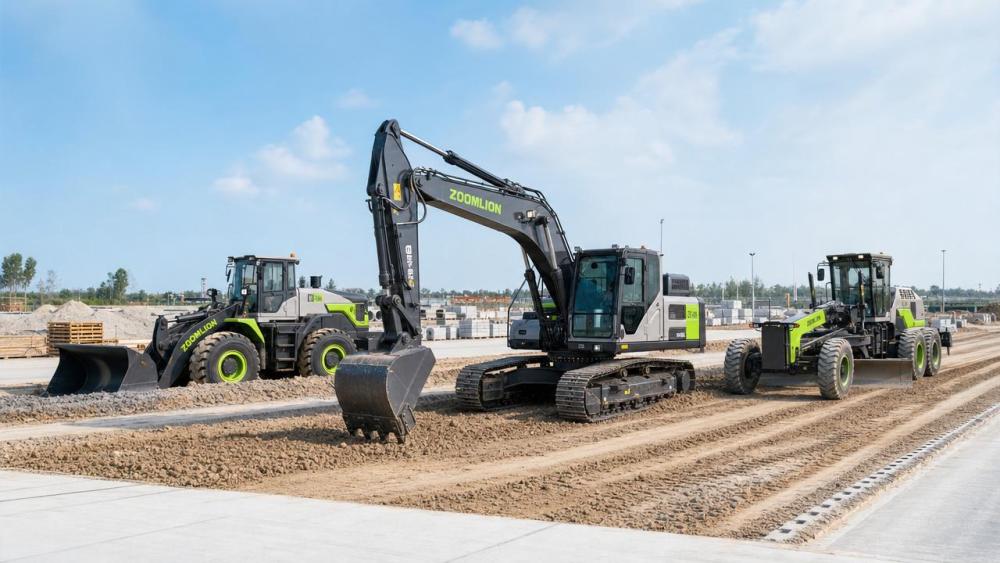
Construction equipment technology now evolves faster than normal replacement cycles. A machine purchased today may need to support emissions compliance, digital integration, and semi-autonomous workflows for years.
That makes a checklist useful. It reduces the risk of buying isolated features instead of scalable capabilities. It also helps compare equipment platforms by lifecycle value, not just acquisition cost.
For heavy earthmoving fleets, the strongest decisions usually connect productivity, reliability, operator support, and decarbonization readiness in one framework.
Core Checklist: Construction Equipment Technology Trends to Watch
- Prioritize electrification where duty cycles are predictable, charging access is feasible, and noise or emissions limits affect urban, tunneling, indoor, or sensitive infrastructure operations.
- Assess hybrid and energy-recovery systems for larger machines where full battery-electric architecture remains difficult because of payload, runtime, or remote site constraints.
- Verify intelligent hydraulics that improve breakout force control, reduce idle losses, and match pump output to attachment demand during variable digging or grading cycles.
- Adopt 2D and 3D machine control for excavators, graders, and dozers to reduce rework, shorten finishing time, and improve cut-fill accuracy on complex surfaces.
- Examine autonomy features in stages, starting with grade assist, payload weighing, obstacle alerts, and repeatable motion automation before full remote or autonomous operation.
- Connect telematics to maintenance planning, fuel or energy tracking, utilization analysis, and fault code monitoring so data drives actual uptime improvements.
- Check over-the-air software update capability, because construction equipment technology now depends on control logic improvements after equipment delivery.
- Review cybersecurity and data ownership terms when equipment, attachments, and jobsite systems exchange machine data across cloud and mobile platforms.
- Compare attachment intelligence, including quick couplers, tool recognition, and hydraulic presets that increase flexibility for skid steers and compact earthmoving fleets.
- Measure serviceability, parts availability, and technician readiness, because advanced construction equipment technology creates value only when support systems keep pace.
What These Trends Mean in Real Applications
Earthmoving and Excavation
For crawler excavators, construction equipment technology is increasingly centered on electro-hydraulic precision. Smart pump control, boom and bucket automation, and digital payload feedback reduce overdigging and shorten cycle time.
On large infrastructure sites, this matters because trench geometry, slope consistency, and truck loading accuracy directly affect downstream productivity. Better control also lowers operator fatigue during repetitive high-force work.
Road Construction and Fine Grading
Motor graders and dozers are seeing major gains from GNSS, laser guidance, and inertial sensing. Construction equipment technology in this segment is moving from operator judgment toward repeatable digital surface control.
The result is less material waste, faster final pass completion, and stronger quality assurance for airports, highways, drainage systems, and industrial yards where tolerances are increasingly strict.
Loading, Material Transfer, and Quarry Work
Wheel loaders benefit from onboard weighing, traction management, and fuel optimization logic. In harsh loading environments, construction equipment technology helps stabilize output despite changing material density and haul conditions.
Connected payload data also improves coordination between loaders, trucks, and plant operations. That creates more predictable tonnage movement and supports tighter cost control per ton handled.
Urban and Compact Jobsite Operations
Skid steer loaders and compact machines are becoming technology leaders, not entry-level tools. Zero-radius maneuverability, attachment recognition, and compact electrification fit dense projects with limited space and tighter environmental rules.
In these settings, construction equipment technology can improve multi-tasking efficiency across demolition, landscaping, utility repair, and municipal maintenance without expanding machine count.
Commonly Overlooked Risks
Underestimating Energy Infrastructure
Electrification plans often fail at the charging layer. Battery-electric machines need realistic analysis of grid access, charging windows, backup power, and site logistics before deployment targets become practical.
Buying Features Without Workflow Integration
Advanced displays, sensors, and automation packages can remain underused when jobsite processes stay manual. Construction equipment technology delivers value only when training, planning, and digital workflows change alongside hardware.
Ignoring Data Interoperability
Mixed fleets are common. If telematics, grade control, and maintenance platforms do not communicate cleanly, data becomes fragmented and difficult to convert into operating decisions.
Overlooking Reliability in Harsh Duty Cycles
Sensors and control modules must survive vibration, shock loads, dust, water, and temperature swings. Trend adoption should be filtered through field durability, not brochure performance.
Practical Execution Steps
- Map machine classes by duty cycle, idle ratio, site access, and emissions exposure before selecting the right construction equipment technology pathway.
- Pilot one high-impact technology at a time, such as 3D grading or smart payload monitoring, and measure cycle time, rework, and maintenance changes.
- Request open data compatibility with fleet management, BIM, and maintenance systems to avoid lock-in as digital jobsite requirements expand.
- Build service readiness early by confirming software support, diagnostic tools, spare parts coverage, and technician response capacity in target regions.
- Use total cost of ownership models that include fuel or energy, uptime, training, software, infrastructure, and compliance impacts.
Final Takeaway on Construction Equipment Technology
The most important construction equipment technology trends are no longer isolated innovations. They are converging into connected machine ecosystems shaped by electrification, automation, precision control, and digital intelligence.
The next step is to rank technology options by operational fit, site conditions, and support maturity rather than novelty. A disciplined checklist makes that evaluation faster and more defensible.
For organizations tracking crawler excavators, wheel loaders, graders, bulldozers, and skid steers, future-ready investment starts with one question: which construction equipment technology will produce measurable performance gains across the full equipment lifecycle?