
Related News
- 00
0000-00
How to size heavy-duty loaders for North American mining operations - 00
0000-00
How altitude affects mining excavator performance in Latin America - 00
0000-00
Caterpillar Launches New Cat 6060 and Upgraded Autonomous Mining System - 00
0000-00
When does eco-friendly construction equipment pay for itself? - 00
0000-00
Will a wheel loader quick coupler fit your existing attachments?
Industrial machinery trends are rapidly redefining how job sites are planned, financed, and operated. For any infrastructure-focused business review, these shifts affect equipment lifespan, operating cost, utilization, compliance exposure, and bid competitiveness. From crawler excavators to skid steers, the market is moving toward automation, electrification, hydraulic optimization, and precision control. Understanding these changes helps separate durable capital decisions from short-term hype.
In the broader industrial landscape, heavy equipment no longer competes on raw power alone. It competes on data quality, fuel efficiency, emissions readiness, uptime architecture, and software-enabled productivity. That makes industrial machinery trends a practical evaluation framework, not just a topic for market watching.
Why a Checklist Matters When Assessing Industrial Machinery Trends
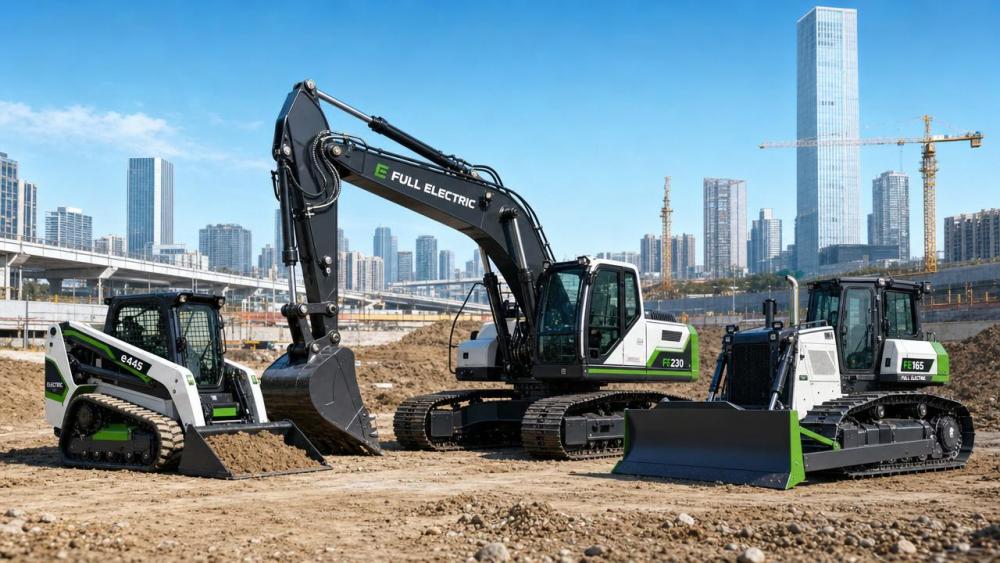
Job sites now combine tighter project schedules, tougher emission rules, volatile fuel prices, and rising labor constraints. A checklist prevents decisions from being driven by headline features while ignoring total asset performance.
It also creates a common lens for comparing crawler excavators, wheel loaders, motor graders, bulldozers, and skid steer loaders across mixed applications such as roadbuilding, mining support, urban infrastructure, and mass earthmoving.
Core Checklist for Evaluating Industrial Machinery Trends on Modern Job Sites
- Measure duty-cycle fit before comparing brands, because mismatched breakout force, bucket size, machine weight, or grading precision quickly erodes utilization and inflates operating cost.
- Check hydraulic efficiency under real loads, not brochure output, by reviewing cycle times, heat management, pump response, and proportional control smoothness.
- Verify automation depth, including 2D or 3D grade control, payload monitoring, remote diagnostics, and semi-autonomous digging or dozing functions.
- Compare electrification readiness carefully, focusing on battery duty limits, charging logistics, auxiliary power draw, and the site’s electrical infrastructure.
- Assess emission compliance by region, especially for non-road diesel fleets facing Stage V, Tier 4 Final, or similar tightening standards.
- Review telematics quality, because industrial machinery trends increasingly reward machines that produce clean utilization, idle-time, maintenance, and fault-code data.
- Test attachment versatility where space is tight, since skid steers and compact units gain value through hydraulic tool compatibility and fast changeover.
- Examine undercarriage and structural durability for abrasive or high-impact environments, especially in crawler excavators, bulldozers, and mine-support loaders.
- Calculate service access time, because poor filter placement, crowded engine bays, or difficult hose routing can reduce uptime more than small fuel savings improve it.
- Track software support and update policies, since machine intelligence now depends on calibration continuity, cybersecurity, and dealer-level diagnostic capability.
- Benchmark operator interface quality, including visibility, joystick precision, seat ergonomics, and display logic, because productivity depends on reduced fatigue.
- Estimate resale resilience by combining brand reputation, parts availability, emissions relevance, and adoption of mainstream control architectures.
How These Industrial Machinery Trends Affect Major Equipment Categories
Crawler Excavators
Crawler excavators remain central to industrial machinery trends because they combine hydraulic breakout force, fine control, and increasing automation depth. Electro-hydraulic systems now improve trenching accuracy, reduce overdig, and support fuel-saving work modes without sacrificing response.
The strongest market movement is toward machine control integration. Factory-ready sensors, 3D positioning, and payload visibility are changing excavators from standalone digging tools into measurable production platforms.
Wheel Loaders and Skid Steer Loaders
Wheel loaders are being judged less by engine size and more by pass-match efficiency, traction logic, and fuel burned per ton moved. In quarries, ports, and aggregate yards, that shift strongly reflects current industrial machinery trends.
Skid steer loaders follow a different path. Their value rises with attachment range, zero-radius maneuverability, and compact-site productivity. Electrified compact units are gaining attention where emissions, noise, and indoor work limits shape equipment choice.
Motor Graders and Bulldozers
Motor graders are seeing rapid change through GPS, inertial sensing, and laser-assisted blade control. Precision now matters as much as blade pull, especially on highways, airport surfaces, and logistics parks.
Bulldozers are also evolving beyond brute force. Full-hydraulic drive systems, slope-assist functions, and improved traction management support safer, more repeatable production on large cut-and-fill projects.
Scenario-Based Guidance for Reading Industrial Machinery Trends
Urban Infrastructure and Tight Work Zones
In dense urban sites, compact dimensions, low noise, and attachment flexibility often outrank maximum horsepower. Industrial machinery trends here favor electric mini excavators, compact loaders, and software-assisted visibility systems.
Charging strategy matters more than nameplate battery size. If recharge windows do not align with traffic restrictions, shift planning, or utility access, electric gains may remain theoretical.
Mining Support and Harsh Bulk Material Handling
In high-abrasion conditions, the right reading of industrial machinery trends starts with durability. Remote diagnostics, low-latency control systems, and thermal management become critical where failure events carry high downtime cost.
Autonomy also has stronger economic logic in hazardous zones. Remote-controlled loading or dozing can reduce exposure risk while stabilizing production consistency during long shifts.
Roadbuilding and Precision Surface Work
For grading-intensive projects, industrial machinery trends point to integrated measurement systems rather than standalone machines. Surface accuracy, pass reduction, and rework avoidance drive the real return.
This is where EMD-style intelligence becomes useful: machine capability must be linked to sensor quality, software calibration, and actual site workflow, not evaluated in isolation.
Commonly Overlooked Risks
- Ignoring idle-time data can hide major fuel waste, especially in mixed fleets where utilization appears high but productive operating hours remain low.
- Overvaluing peak specifications can lead to oversized machines that create transport, access, and underloading inefficiencies across the project lifecycle.
- Treating automation as plug-and-play can cause disappointment when calibration, connectivity, or operator adoption has not been planned properly.
- Neglecting emissions transition risk may shorten useful life in regulated markets and reduce resale opportunities earlier than expected.
- Underestimating parts and software support can turn advanced equipment into stranded capital when diagnostics depend on limited service coverage.
Practical Execution Steps
Start with three numbers: cost per productive hour, fuel or energy per cycle, and expected annual utilization. These reveal far more than purchase price alone.
Then map industrial machinery trends against site reality. Separate features that improve measurable output from features that only improve presentation value.
Request demonstration data under representative soil, slope, loading, or grading conditions. Real-world cycle behavior is essential for comparing hydraulic smoothness, control logic, and operator efficiency.
Finally, review fleet decisions through a systems lens. Machines, attachments, software, charging or fueling infrastructure, and maintenance support should be evaluated as one operating model.
Conclusion and Next Action
The most important industrial machinery trends are not isolated technology stories. They are connected shifts in powertrain strategy, hydraulic intelligence, machine control, emissions readiness, and digital fleet visibility.
A disciplined checklist helps identify which machines are built for long-term infrastructure value and which are likely to lose relevance as standards and job-site expectations rise.
Use this framework to compare equipment categories, validate site fit, and prioritize upgrades that improve productive output, compliance resilience, and lifecycle returns. In a market reshaped by industrial machinery trends, informed evaluation is now a direct source of competitive strength.