
Related News
- 00
0000-00
How to size heavy-duty loaders for North American mining operations - 00
0000-00
How altitude affects mining excavator performance in Latin America - 00
0000-00
Caterpillar Launches New Cat 6060 and Upgraded Autonomous Mining System - 00
0000-00
When does eco-friendly construction equipment pay for itself? - 00
0000-00
Will a wheel loader quick coupler fit your existing attachments?
For technical evaluators, earthmoving technology is no longer judged by raw power alone. Fuel burn, control precision, hydraulic efficiency, and machine intelligence now define real jobsite value.
Across infrastructure, quarry, mining, and urban worksites, the best machines now move more material with fewer wasted cycles. That shift is changing how fleets are specified, tested, and operated.
This article examines how modern earthmoving technology cuts fuel use without sacrificing breakout force, grading accuracy, traction, or uptime. It also outlines what deserves closer attention in the next equipment review.
Fuel-saving earthmoving technology is becoming the new performance baseline
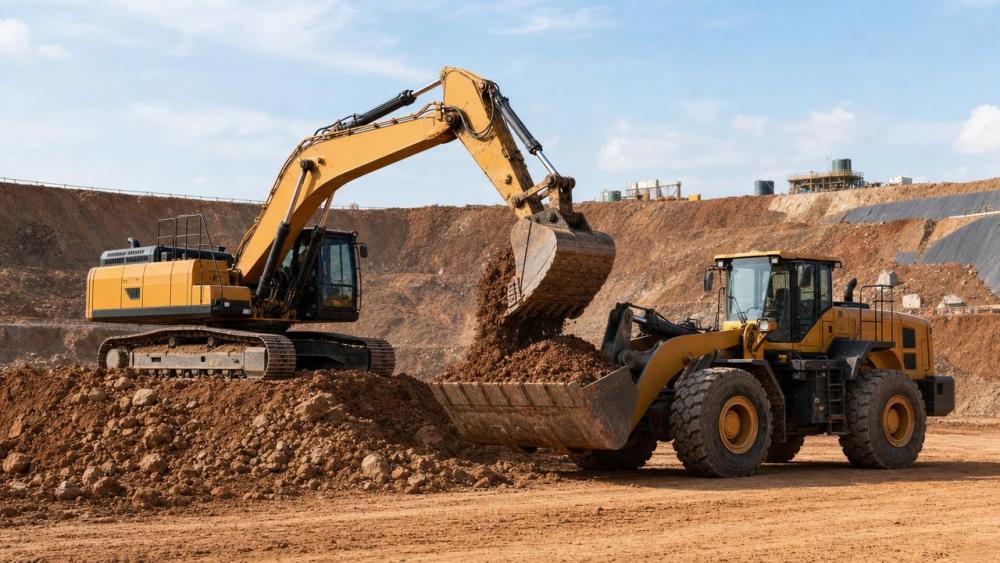
The market signal is clear. High-output machines are still essential, yet fuel efficiency now carries equal weight in equipment selection and lifecycle analysis.
Several forces are converging. Emission regulations are tightening. Energy costs remain volatile. Contractors also need lower idle losses, stronger utilization, and better visibility across mixed fleets.
As a result, earthmoving technology is evolving beyond engine size and rated horsepower. Real value comes from smarter hydraulic coordination, cleaner power delivery, and fewer unproductive movements.
In excavators, this means faster cycle completion with less throttle demand. In loaders, it means efficient bucket fill and carry. In graders and dozers, it means precision passes that reduce rework.
Why advanced earthmoving technology now reduces fuel burn more effectively
Fuel reduction is not driven by one feature. It usually comes from a system-level improvement that connects engine behavior, hydraulic flow, traction control, and operator assistance.
- Electro-hydraulic control meters flow more precisely, reducing over-supply and pressure losses.
- Load-sensing pumps match output to demand, lowering wasted hydraulic energy during partial-load work.
- Engine auto-idle and shutdown logic cut unnecessary consumption during pauses, waiting, and truck positioning.
- Power mode optimization balances digging force and fuel economy according to ground conditions.
- Transmission and traction refinements reduce wheel slip or track inefficiency under pushing and carry cycles.
- 3D guidance systems limit overcutting and repeated passes, saving fuel indirectly through accuracy.
These improvements matter because waste often hides between actions. A machine may have a strong engine, yet poor flow matching or excessive correction can quietly consume more fuel per cubic meter moved.
The biggest gains come from synchronized machine behavior
Modern earthmoving technology increasingly treats the machine as a coordinated energy system. When pumps, valves, sensors, and controls react together, the machine works harder only when needed.
That synchronization helps preserve productivity. Lower fuel burn does not have to mean slower digging, weaker dozing, or compromised grade quality when control logic is properly calibrated.
How the trend affects excavators, loaders, graders, and dozers differently
Not every machine cuts fuel in the same way. Duty cycle, attachment use, terrain, and operator input all influence where efficiency improvements produce the largest return.
This trend also changes project economics. Lower fuel burn improves cost predictability, but the larger gain often comes from higher consistency across shifts and sites.
When earthmoving technology reduces rework, idle time, and component stress, it can protect maintenance budgets as well. Better efficiency often leads to cleaner wear patterns and steadier machine temperatures.
The hidden drivers behind lower-consumption earthmoving technology
Behind the visible machine features, several strategic drivers are pushing this technology direction across the global equipment landscape.
- Decarbonization pressure is moving non-road equipment toward measurable efficiency gains, not only compliance headlines.
- Digital telematics now exposes idle ratios, payload inefficiency, route waste, and poor operator habits.
- Large infrastructure projects demand repeatable output across many machines, shifts, and subcontracted operations.
- Autonomy and remote-control architectures require stable, predictable machine responses to optimize energy use.
- Hydraulic component advances allow finer control without sacrificing breakout force or response speed.
EMD’s strategic view is that fuel-saving earthmoving technology is increasingly linked to intelligence depth. Better data, better control logic, and better spatial guidance now reinforce one another.
What deserves closer review when evaluating earthmoving technology
Headline fuel numbers can be misleading. A useful evaluation should connect consumption data with production quality, duty cycle reality, and controllability under difficult material conditions.
- Measure fuel per ton moved or per cubic meter handled, not fuel alone.
- Check hydraulic responsiveness during simultaneous functions, especially on excavators and skid steers.
- Review idle ratio, swing dwell time, and reverse-travel patterns from telematics records.
- Compare grading or dozing pass counts before and after automation support.
- Assess how easily operators can access economy modes without slowing the cycle.
- Examine thermal stability under long shifts, since heat often reveals hidden inefficiency.
- Look at attachment compatibility, because mismatched tools can erase efficiency gains.
The strongest earthmoving technology performs well across mixed conditions. It should save fuel in trenching, stockpiling, grading, stripping, and confined urban tasks, not only in ideal demonstrations.
Data quality now matters as much as machine specification
A machine can be technically advanced and still underperform if jobsite data is weak. Inaccurate payload assumptions, poor route planning, or uncontrolled idle time can distort evaluation results.
For that reason, earthmoving technology should be reviewed alongside telematics discipline, operator feedback, and maintenance consistency. Efficiency is a system outcome, not a brochure claim.
Practical next steps for responding to this shift
A clear response starts with structured comparison. The goal is to identify where fuel burn is being created, then match the right technology upgrade to the right operating bottleneck.
The next phase of earthmoving technology will likely deepen this integration. Electrified auxiliaries, remote-control systems, and automation layers will all depend on efficient, stable energy management.
That means today’s fuel discussion is really a broader capability discussion. Machines that burn less fuel while maintaining force and precision are better positioned for tomorrow’s operational demands.
To move forward, compare machines by task-level efficiency, control refinement, and data transparency. In the current market, the most valuable earthmoving technology is the technology that converts every liter into measurable work.