
Related News
- 00
0000-00
How to size heavy-duty loaders for North American mining operations - 00
0000-00
How altitude affects mining excavator performance in Latin America - 00
0000-00
Caterpillar Launches New Cat 6060 and Upgraded Autonomous Mining System - 00
0000-00
When does eco-friendly construction equipment pay for itself? - 00
0000-00
Will a wheel loader quick coupler fit your existing attachments?
Construction equipment trends are reshaping how dealers, distributors, and agents plan fleet portfolios for 2026. From electrification and smart controls to stricter emissions rules and rising demand for versatile earthmoving machines, market shifts are changing what buyers value most. This article explores the signals behind smarter fleet planning, helping channel partners align inventory, technology, and investment decisions with the next wave of infrastructure demand.
Why construction equipment trends matter more to fleet planning in 2026
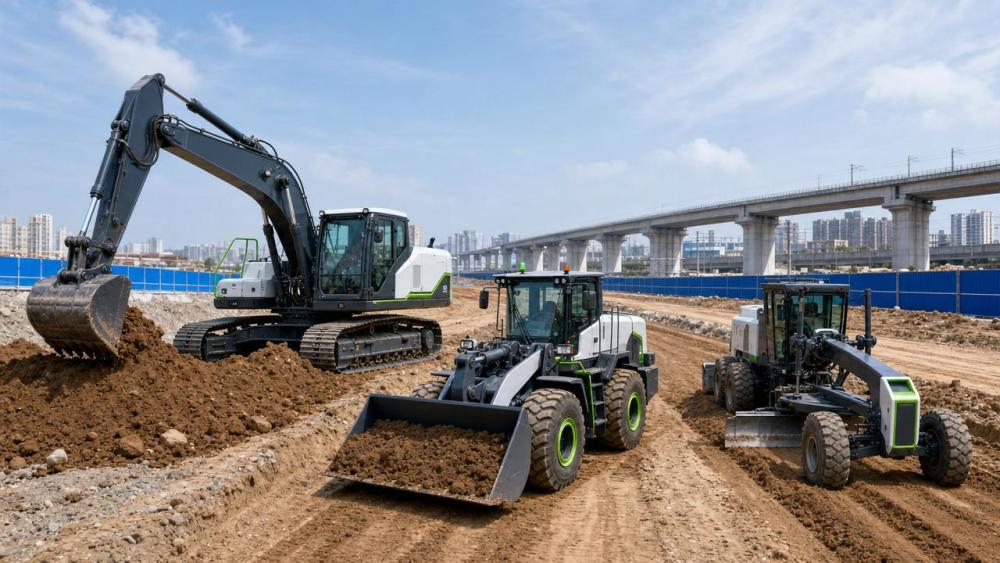
For dealers and distributors, fleet planning is no longer a simple volume game. The biggest construction equipment trends now affect residual value, financing risk, aftersales readiness, emission compliance, and even which bids customers can enter.
A contractor buying a crawler excavator, wheel loader, motor grader, bulldozer, or skid steer loader in 2026 is looking beyond engine power alone. They are evaluating operating data, attachment flexibility, control precision, operator assistance, and total cost over the machine’s working life.
This shift is especially important in the earthmoving segment tracked by EMD. Large infrastructure jobs, quarry operations, urban renewal programs, and airport or road projects all demand different fleet mixes. A distributor that stocks the wrong configuration can lock capital into slow-moving inventory.
- Emission rules are becoming a sales filter, not just a legal box to tick.
- Digital controls and telematics are influencing both procurement and service contracts.
- Compact and versatile machines are gaining share in urban and rental-driven channels.
- Autonomy-ready and remote-capable platforms are becoming strategic differentiators in hazardous or high-productivity sites.
What has changed from earlier fleet planning cycles?
Earlier planning cycles often prioritized engine size, basic bucket capacity, and upfront price. In 2026, channel partners must map stock decisions against jobsite connectivity, hydraulic compatibility, software updates, operator shortage, fuel volatility, and customer ESG pressure.
That is where EMD’s intelligence focus becomes useful. Deep monitoring of crawler excavators, high-intensity loading machinery, precision grading equipment, and strategic shifts in non-road machinery helps channel partners interpret technology direction before it becomes a pricing problem.
Which construction equipment trends are changing dealer inventory decisions?
The following comparison shows how current construction equipment trends affect stocking logic for core machine categories. For distributors, this is more actionable than broad market headlines because it connects trend signals to SKU selection and service preparation.
The practical lesson is clear. Construction equipment trends should influence not only what machines a channel partner lists, but also what support infrastructure sits behind those machines. Inventory without technical readiness can quickly erode margin.
The five machine pillars distributors should watch closely
EMD’s five-machine focus reflects where many portfolio decisions are being won or lost. Crawler excavators remain central because they combine breakout force, hydraulic precision, and wide attachment compatibility. They also carry strong relevance in infrastructure, quarry, utility, and demolition channels.
Wheel loaders are under pressure to deliver faster cycles, lower fuel burn, and better operator visibility. Motor graders are increasingly tied to GPS, laser sensing, and grade management expectations. Bulldozers are moving toward more efficient hydrostatic logic and smarter traction control. Skid steer loaders continue to expand because urban contractors value maneuverability and attachment density.
How should dealers segment fleet planning by jobsite scenario?
Not every customer should be offered the same machine mix. One of the most important construction equipment trends is the rise of scenario-based procurement. Buyers increasingly match fleets to project type, labor availability, emissions constraints, and data integration needs.
Urban infrastructure and municipal work
In dense cities, compact dimensions, noise control, lower emissions, and multi-tool flexibility matter. Mini excavators and skid steer loaders often outperform larger units from a utilization standpoint, especially when operators switch between trenching, material handling, grading, and cleanup.
Heavy civil and transport corridors
Road, bridge, airport, and rail projects require precision and uptime. Motor graders with grade control readiness, crawler excavators with electro-hydraulic responsiveness, and bulldozers with efficient traction management become more attractive than lower-cost but less integrated alternatives.
Mining, quarry, and high-intensity material movement
Here, durability, payload flow, cooling performance, and remote monitoring carry more weight than compactness. Wheel loaders and heavy excavators need to support harsh-condition productivity, and some buyers now evaluate remote-control potential for higher-risk zones.
This scenario approach helps dealers avoid one common mistake: overstocking general-purpose machines while understocking specialized configurations that command stronger margins and faster project fit.
What should a 2026 procurement guide include for distributors and agents?
A useful procurement guide must go beyond brochure specifications. It should rank equipment by application fit, compliance risk, support complexity, and resale confidence. The table below summarizes a decision framework aligned with major construction equipment trends.
When channel partners apply this framework, they can compare a lower-price machine with a higher-capability alternative more rationally. In many cases, the machine with better diagnostics, compliance readiness, and attachment support creates stronger lifecycle economics.
A simple shortlist process for fleet buyers
- Define the top three project environments you serve: urban, heavy civil, quarry, utility, or mixed rental.
- Map machine classes to actual utilization, not estimated demand from sales teams alone.
- Check whether your service network can support electronics, aftertreatment systems, and sensor calibration.
- Assess which models can accept multiple attachments or control upgrades without major retrofit cost.
- Review resale risk if a platform lacks digital capability or falls behind coming regulations.
How do compliance, emissions, and data systems affect fleet risk?
One of the least visible construction equipment trends is the hidden cost of non-aligned compliance planning. A machine may look commercially attractive, yet create downstream issues in import approval, jobsite acceptance, or maintenance burden if documentation and emissions profiles do not match the target region.
Dealers should verify common requirements such as applicable non-road emission stages, operator safety markings, machine documentation, and electronic system support. For connected machines, data ownership, software access, and remote diagnostic permissions are becoming part of procurement discussions.
Common compliance checkpoints
- Emission alignment with the destination market’s current non-road engine rules.
- Machine safety labeling and operational documentation in the required language.
- Availability of service tools for aftertreatment, sensors, and software diagnostics.
- Clear scope of warranty obligations when machines include telematics or assisted control systems.
EMD’s industry perspective is valuable here because fleet planning now sits at the intersection of mechanics, electronics, emissions, and infrastructure policy. Channel partners that miss this intersection often carry inventory longer and discount harder.
Where are the biggest cost pressures and the best alternatives?
Construction equipment trends are also changing the cost conversation. Buyers no longer separate acquisition cost from fleet utilization, service labor, parts availability, and operator productivity. For dealers, this means the lowest purchase cost does not always produce the fastest turnover.
Cost pressure points to watch
- Higher electronics content can raise diagnostic and technician training costs.
- Emission aftertreatment systems may increase parts planning complexity.
- Premium guidance features can improve productivity, but only if customers can use them effectively.
- Electric or hybrid options may lower local operating burden, yet require charging and support readiness.
A practical alternative strategy is to build tiered inventory. Keep a core range of proven diesel machines for broad market coverage, then selectively add technology-rich or low-emission units where urban access rules, labor shortage, or precision work justify the premium.
FAQ: what do dealers ask most about construction equipment trends in 2026?
How should a distributor choose between compact versatility and heavy-duty specialization?
Start with utilization patterns. If your customers work in municipal, landscaping, utility, or rental-heavy channels, compact excavators and skid steer loaders with attachment packages often deliver better turnover. If your market centers on quarry, roadbuilding, or bulk earthmoving, larger excavators, wheel loaders, and bulldozers usually carry stronger project relevance and service revenue.
Which construction equipment trends are most urgent for inventory planning?
The most urgent are emissions compliance, telematics readiness, attachment versatility, and smart-control compatibility. These directly affect whether machines can enter projects, remain serviceable, and keep value in the used market. Electrification matters too, but its urgency depends heavily on geography and customer type.
What is the most common procurement mistake in 2026 planning?
A common mistake is evaluating equipment only on purchase price and headline specifications. Dealers often underestimate the cost of limited diagnostics, weak attachment support, or unclear compliance status. Those issues reduce sell-through speed and can damage aftersales efficiency.
Are smart grading and remote functions worth the extra cost?
They can be, especially in precision roadwork, airport surfaces, repetitive trenching, hazardous environments, or labor-constrained sites. The return is strongest when the customer can convert those features into fewer passes, lower rework, safer operation, or better machine availability.
Why many channel partners use EMD intelligence before committing fleet capital
Fleet planning in 2026 requires more than basic product awareness. It calls for a working view of hydraulic performance, precision control, emissions transition, autonomy readiness, and infrastructure demand cycles. EMD brings these threads together across crawler excavators, wheel loaders, motor graders, bulldozers, and skid steer loaders.
For dealers, distributors, and agents, that means better support when comparing machine classes, reading application signals, and identifying where premium technology is likely to convert into real market demand. It also helps separate temporary hype from durable construction equipment trends.
Contact us for smarter 2026 fleet planning
If you are refining your 2026 portfolio, EMD can support targeted discussions around construction equipment trends that affect commercial decisions. You can consult with us on machine-class prioritization, attachment strategy, digital feature relevance, and application matching for excavators, loaders, graders, dozers, and skid steer fleets.
We can also help you evaluate parameter confirmation points, model selection logic, likely delivery planning issues, regional compliance considerations, service-readiness gaps, and quotation discussions tied to project type. For channel partners facing tight budgets and fast bid cycles, that clarity can reduce stock risk and improve sales confidence.