
Related News
- 00
0000-00
How to size heavy-duty loaders for North American mining operations - 00
0000-00
How altitude affects mining excavator performance in Latin America - 00
0000-00
Caterpillar Launches New Cat 6060 and Upgraded Autonomous Mining System - 00
0000-00
When does eco-friendly construction equipment pay for itself? - 00
0000-00
Will a wheel loader quick coupler fit your existing attachments?
In 2026, hydraulic machinery is no longer judged by raw power alone, but by how intelligently it improves jobsite efficiency, uptime, and sustainability.
For business decision-makers managing fleet renewal, infrastructure bids, and capital allocation, the central question is clear: which hydraulic innovations create measurable returns, and which are simply expensive features.
The most important trend is that hydraulic machinery is becoming a data-driven production asset. Efficiency gains now come from smarter controls, lower fuel burn, predictive service, and better operator consistency.
For executives, this means buying decisions should shift from headline specs toward lifecycle productivity, emissions readiness, machine utilization, and compatibility with digital jobsite workflows.
What Business Leaders Need to Know About Hydraulic Machinery in 2026
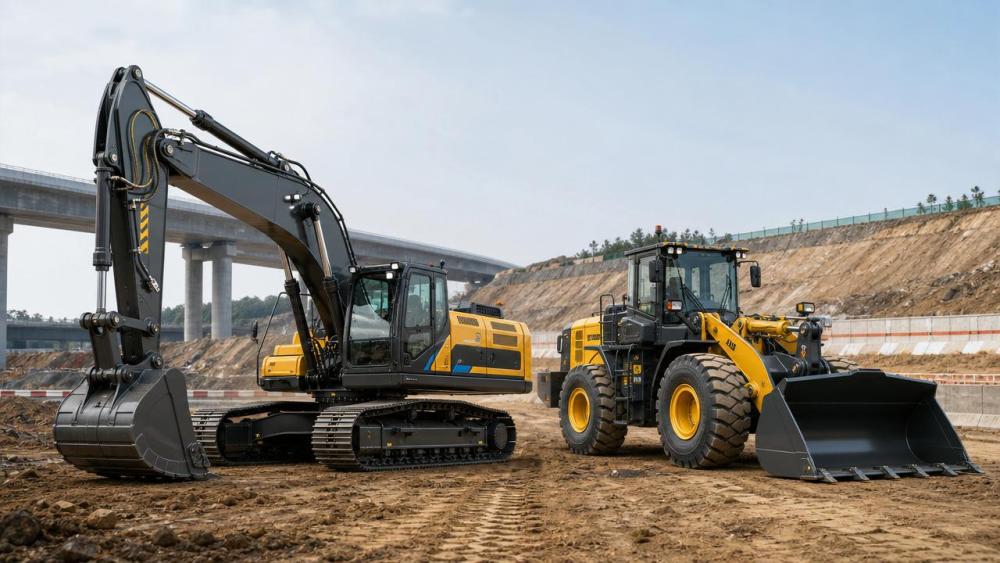
The core search intent behind hydraulic machinery trends in 2026 is practical, not academic. Decision-makers want to know which technologies will reduce operating costs and improve project performance soon.
They are also evaluating risk. New hydraulic systems promise precision and automation, but buyers need to understand whether those gains justify higher acquisition cost, training demands, and maintenance complexity.
In this environment, the winners are not necessarily the most advanced machines. They are the fleets that match hydraulic innovation to job mix, operator skill levels, and regional compliance pressures.
That is especially true across crawler excavators, wheel loaders, graders, bulldozers, and skid steer loaders, where work cycles, duty intensity, and attachment use strongly affect technology payback.
Trend 1: Electro-Hydraulic Control Is Replacing Purely Mechanical Responsiveness
One of the biggest shifts in hydraulic machinery is the widespread move toward electro-hydraulic control architectures. These systems translate operator input into digitally managed hydraulic response with greater precision.
For contractors and fleet owners, the value is more than smoother operation. Electro-hydraulic systems can reduce wasted motion, improve cycle repeatability, and help less experienced operators achieve better output.
In excavators, this means more refined boom, arm, and bucket coordination. In loaders and skid steers, it supports more accurate lifting, attachment management, and material placement in confined environments.
For graders and bulldozers, electro-hydraulic control improves blade response and grading consistency. That matters because small accuracy gains across long production hours can significantly reduce rework and fuel waste.
Executives should ask suppliers for evidence in three areas: cycle time improvement, fuel savings under comparable duty conditions, and operator productivity across mixed skill levels, not only expert demonstrations.
Trend 2: Fuel Efficiency and Energy Optimization Are Now Board-Level Priorities
Hydraulic machinery trends in 2026 are being shaped by tighter margins, volatile energy costs, and growing emissions pressure. As a result, hydraulic efficiency is becoming a strategic purchasing criterion.
Modern systems increasingly use load-sensing hydraulics, electronically managed pumps, and smarter flow distribution. These improvements ensure hydraulic power is delivered only when needed, reducing parasitic losses.
For fleet managers, the impact appears in lower fuel consumption per operating hour and per ton moved. Over time, these reductions can materially improve total cost of ownership across high-utilization fleets.
In heavy-duty machines like crawler excavators and bulldozers, even modest percentage savings produce meaningful annual cost reductions. In compact equipment, the same trend extends runtime and improves attachment economics.
Decision-makers should compare machines using job-specific metrics. Liters per hour is useful, but output-adjusted measures such as fuel per cubic meter handled or per finished grading segment are more revealing.
This is also where hydraulic design intersects with decarbonization strategy. More efficient hydraulic machinery helps companies lower emissions intensity immediately, even before full electrification becomes practical at scale.
Trend 3: Predictive Maintenance Is Turning Hydraulic Health Into a Managed KPI
Historically, hydraulic failures were often treated as unavoidable downtime events. In 2026, that mindset is changing as connected diagnostics make hydraulic health more visible and more manageable.
Sensor-based monitoring can track pressure irregularities, temperature patterns, contamination indicators, and component stress. This allows service teams to intervene before a hose, pump, valve, or actuator causes major disruption.
For business leaders, this matters because unplanned downtime is rarely just a repair issue. It affects crew scheduling, project sequencing, delivery commitments, rental substitution costs, and client confidence.
Machines with better hydraulic monitoring can support more disciplined maintenance planning. They also improve parts forecasting and reduce the chance of catastrophic failures that damage adjacent systems.
When evaluating suppliers, ask whether predictive maintenance tools are standard or optional, whether data can integrate into existing fleet systems, and whether alerts are actionable for field service teams.
A useful benchmark is not simply more data, but faster response. The strongest solutions help teams move from passive reporting to maintenance decisions that preserve uptime during active project windows.
Trend 4: Automation Is Improving Operator Consistency More Than Replacing Labor
Automation remains one of the most discussed hydraulic machinery trends, but its immediate value is often misunderstood. In most earthmoving applications, the real gain is consistency rather than full labor replacement.
Hydraulic assist functions, semi-automated digging cycles, grade-hold features, return-to-position settings, and attachment presets help reduce variation between operators and across shifts.
That is important for executives facing labor shortages and uneven operator experience. A machine that helps average operators perform closer to top-tier levels can create stronger returns than headline autonomy claims.
In grading and roadwork, automation linked to GPS, laser, and 3D control systems supports tighter tolerances with fewer passes. In excavation, it can improve trench accuracy and reduce unnecessary rehandling.
For compact equipment in urban projects, automation also improves safety and maneuvering precision. That can reduce property damage risk, shorten learning curves, and support higher machine utilization in dense sites.
Leaders should therefore evaluate automation through measurable outputs: reduced rework, faster cycle completion, better surface accuracy, lower wear from overcorrection, and improved retention among newer operators.
Trend 5: Hydraulic Machinery Is Being Designed for Attachment-Centric Versatility
Another major 2026 trend is the growing importance of hydraulic attachment ecosystems. Buyers increasingly want machines that can perform multiple roles instead of sitting idle between narrow task windows.
Skid steer loaders are the clearest example, but the same logic now applies to excavators, loaders, and even some dozers. Auxiliary hydraulic performance is becoming a serious productivity differentiator.
High-flow capability, easier attachment recognition, and integrated control presets can dramatically reduce setup time. They also allow operators to shift between tools with less error and less wear on components.
For companies balancing utilization targets against capital budgets, attachment-ready hydraulic machinery can improve asset productivity without requiring a proportional increase in fleet size.
However, versatility only creates value when matched to actual workflow. Executives should examine how often attachments are used, how much downtime occurs during changeovers, and which machines become bottlenecks.
The best investment case is usually found in mixed-use fleets serving urban infrastructure, utilities, road maintenance, demolition, and secondary development zones where task variation is high.
Trend 6: Low-Emission Compliance Is Influencing Hydraulic System Choices
Hydraulic machinery design is increasingly shaped by environmental regulation, particularly in regions tightening non-road emissions standards and public procurement requirements.
While engines remain central to compliance, hydraulic systems also play a role by reducing unnecessary load demand, improving idle management, and enabling more efficient power distribution across functions.
This means buyers should not treat emissions compliance as separate from hydraulic performance. A well-optimized hydraulic system can support both productivity goals and lower environmental impact.
In some cases, hybridization and electric actuation support selected hydraulic functions, especially where duty cycles allow energy recovery or reduced engine dependence during low-load operations.
For decision-makers bidding on public infrastructure or working in emissions-sensitive urban areas, this trend carries commercial implications. Machines with lower operating emissions may strengthen eligibility and client perception.
The procurement question is no longer only whether a machine meets today's rules, but whether it will remain commercially viable across the next regulatory cycle and resale horizon.
How to Evaluate Hydraulic Machinery Trends Without Overbuying
Not every trend deserves immediate adoption. The smartest procurement strategies begin with identifying where hydraulic performance most directly affects margin, schedule reliability, and bid competitiveness.
Start by segmenting your fleet by application. High-production excavation, fine grading, quarry loading, urban utility work, and hazardous site operations each benefit from different hydraulic capabilities.
Next, quantify current pain points. These may include fuel burn, unplanned downtime, operator inconsistency, rework, attachment delays, or emissions-related restrictions on certain projects.
Then evaluate technology against those specific issues. A contractor struggling with skilled labor shortages may gain more from electro-hydraulic assist features than from advanced remote operation capabilities.
Likewise, a company running intense multi-shift quarry operations may prioritize predictive maintenance and pump efficiency over multifunction attachment flexibility.
Supplier comparison should include not only machine specifications, but also dealer support, software update policy, hydraulic parts availability, telematics access, and training quality for operators and technicians.
For enterprise buyers, pilot deployment is often the best route. Testing hydraulic machinery in a limited but representative operating environment reveals whether promised efficiency gains survive real-world conditions.
Where the Strongest ROI Is Likely to Appear in 2026
The highest returns from hydraulic machinery upgrades in 2026 will likely come from use cases where downtime is costly, precision affects rework, and fuel or emissions pressure is rising.
Crawler excavators benefit where electro-hydraulic control and dig-assist functions improve trenching, loading, and structural excavation consistency. Wheel loaders gain from hydraulic efficiency in repetitive material transfer cycles.
Motor graders see strong returns when integrated control systems and responsive hydraulics reduce passes and improve finish accuracy. Bulldozers benefit where traction, blade precision, and hydrostatic efficiency support sustained heavy pushing.
Skid steer loaders often deliver outsized value in urban and compact jobsites, especially when hydraulic attachment versatility allows one platform to replace several narrower-use machines.
Across all categories, ROI is strongest when adoption is supported by operator onboarding, data review, preventive maintenance discipline, and a clear utilization strategy from the start.
Final Takeaway for Decision-Makers
The hydraulic machinery trends reshaping jobsite efficiency in 2026 are not about adding technology for its own sake. They are about converting hydraulic power into smarter, more predictable business performance.
Electro-hydraulic control, predictive maintenance, energy optimization, attachment versatility, and automation are now central to fleet competitiveness. But their value depends on fit, execution, and measurable operating outcomes.
For business leaders, the right question is not which machine looks most advanced. It is which hydraulic machinery solution will improve uptime, lower cost per unit of work, and strengthen bid performance over time.
Companies that make that shift in evaluation will be better positioned to increase jobsite efficiency, navigate emissions pressure, and build a more resilient equipment strategy for the years ahead.