
Related News
- 00
0000-00
How to size heavy-duty loaders for North American mining operations - 00
0000-00
How altitude affects mining excavator performance in Latin America - 00
0000-00
Caterpillar Launches New Cat 6060 and Upgraded Autonomous Mining System - 00
0000-00
When does eco-friendly construction equipment pay for itself? - 00
0000-00
Will a wheel loader quick coupler fit your existing attachments?
For technical evaluators, tracking construction equipment technology is no longer optional. It now shapes performance reviews, compliance planning, uptime expectations, and long-term asset value across fleets and infrastructure programs.
This year, the most meaningful upgrades center on electrification, electro-hydraulic intelligence, 3D grading precision, remote operation, and emissions optimization. These changes affect excavators, wheel loaders, motor graders, bulldozers, and compact machines alike.
For EMD, these developments matter because they connect machine force, digital control, and decarbonization. The result is a new benchmark for how construction equipment technology should be evaluated in real working conditions.
What does construction equipment technology mean in practical terms this year?
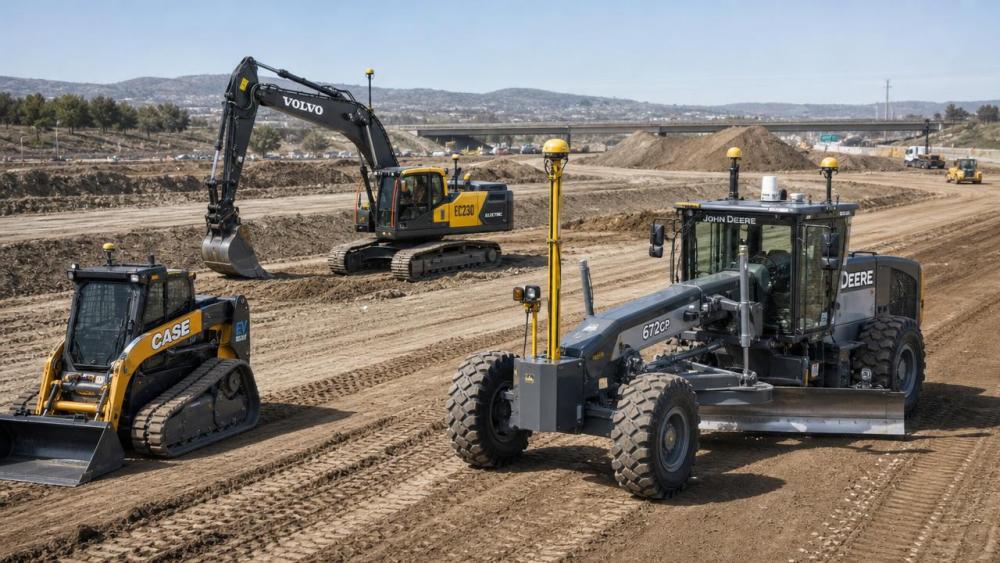
Construction equipment technology now goes far beyond horsepower, bucket size, or operating weight. The focus has shifted toward intelligent interaction between hydraulics, sensors, software, power systems, and machine control interfaces.
In crawler excavators, this means electro-hydraulic proportional control that improves motion accuracy. It also means better boom, arm, and swing coordination under variable digging resistance.
In wheel loaders, technology upgrades increasingly target cycle efficiency. Smart traction control, automated bucket functions, and payload guidance reduce wasted passes and cut fuel burn.
For motor graders, construction equipment technology is strongly linked to digital surface control. GPS, IMU, laser referencing, and machine guidance now support tighter finish tolerances with fewer rework cycles.
Bulldozers are also evolving through hydrostatic refinement, blade automation, and better grade-hold logic. These changes improve push consistency, slope control, and operator confidence in mixed terrain.
The key lesson is simple. Modern construction equipment technology should be judged as a system, not as a list of isolated features.
Which upgrades are delivering the strongest field impact?
Several upgrades stand out because they improve measurable outcomes. The best ones raise productivity while also helping with emissions, safety, precision, or maintenance predictability.
1. Electrification and hybrid power
Battery-electric compact equipment is advancing quickly in urban and enclosed worksites. Reduced noise, zero tailpipe emissions, and lower idle losses make these machines attractive in restricted environments.
Hybrid systems remain important for larger machines. They recover energy, smooth load peaks, and improve fuel economy where full electrification is still limited by duty cycle demands.
2. Electro-hydraulic control architecture
This is one of the most influential construction equipment technology upgrades today. Electronic valve management can reduce over-actuation, sharpen controllability, and improve combined motion efficiency.
It also supports programmable work modes. That makes the same machine more adaptable across trenching, truck loading, grading, and material handling tasks.
3. 3D guidance and grade automation
Precision grading is no longer limited to top-tier projects. More machines now integrate GNSS, base stations, onboard sensors, and automated blade or bucket correction functions.
This construction equipment technology upgrade reduces staking dependency, lowers rework risk, and improves surface consistency on roads, airports, and large site preparation jobs.
4. Remote operation and low-latency connectivity
Remote control is moving from niche use toward broader adoption. Hazardous mines, unstable slopes, demolition areas, and contaminated sites benefit most from this capability.
Its value depends on communication stability, camera placement, response speed, and fail-safe logic. Without those elements, remote operation can introduce new performance limits.
5. Emissions and aftertreatment optimization
Even where electrification is growing, advanced diesel platforms remain essential. Cleaner combustion strategies, smarter regeneration control, and better thermal management are still major upgrades worth tracking.
These improvements matter because compliance affects resale, market access, and operating continuity. Construction equipment technology is now deeply tied to environmental regulation readiness.
How should technology upgrades be compared across machine types?
Not every upgrade has equal value on every machine. Good evaluation starts with the work cycle, the terrain, the precision target, and the site’s infrastructure constraints.
For excavators, smooth hydraulic coordination and attachment intelligence often matter more than dashboard complexity. Digging force should be matched with controllability under fine or heavy work.
For wheel loaders, the biggest gains often come from payload systems, transmission response, and tire-slip management. Small cycle improvements can create major annual output gains.
Motor graders should be judged heavily on sensing accuracy, grade interface usability, and correction consistency. A strong 3D system without stable blade response delivers limited value.
Bulldozers need balanced evaluation. Traction, blade automation, and hydrostatic efficiency must be examined together, especially where pushing distance and slope variation change constantly.
Skid steer loaders often gain the most from attachment recognition, hydraulic flow control, and compact telematics. In dense urban work, versatility may outweigh peak performance.
What mistakes lead to poor technology decisions?
One common mistake is treating construction equipment technology as a marketing checklist. More screens, more modes, or more sensors do not automatically create better field performance.
Another mistake is ignoring site readiness. Electric charging, correction signals for grade systems, and stable communication links all require supporting infrastructure.
Overlooking training is also risky. Advanced control logic only creates value when operators and technicians understand calibration, mode selection, and fault interpretation.
A further problem is focusing only on acquisition cost. Some upgrades appear expensive at first, yet pay back through lower rework, less fuel, reduced wear, or stronger uptime.
- Do not separate software capability from hydraulic or mechanical reality.
- Do not assume one technology package fits every region or duty cycle.
- Do not ignore regulatory timelines affecting emissions and machine eligibility.
- Do not skip validation under real material, grade, and weather conditions.
How can long-term value be judged before adopting new construction equipment technology?
Start with measurable targets. Good benchmarks include fuel per cycle, pass count reduction, grade tolerance achievement, idle reduction, maintenance intervals, and fault occurrence rates.
Next, review integration depth. The strongest construction equipment technology upgrades connect machine controls, telematics, diagnostics, and service support into one coherent operating system.
Compatibility matters as well. Attachments, correction services, software updates, and spare parts access influence whether a technology package remains useful after initial deployment.
Reliability under harsh conditions is another deciding factor. Dust, vibration, thermal stress, moisture, and unstable signals can quickly expose weak digital architecture.
EMD’s perspective is that premium technology should strengthen both machine output and strategic resilience. That includes compliance adaptability, serviceability, and readiness for future autonomy layers.
What should be tracked next as construction equipment technology keeps advancing?
Watch how autonomy develops in repeatable tasks. Semi-autonomous digging, automatic haul support, and blade path optimization are likely to expand before full site autonomy becomes common.
Also monitor how emissions policy influences machine architecture. Regulations will continue to shape diesel optimization, energy storage choices, and the economics of electrified heavy equipment.
Data quality will become more important than raw data volume. Construction equipment technology only creates strategic value when information is clean, actionable, and linked to field decisions.
The most durable upgrades this year are the ones that connect precision, efficiency, compliance, and safety. That is where machine intelligence stops being optional and starts becoming foundational.
A practical next step is to build a short evaluation matrix for each machine category. Compare duty cycle needs, technology maturity, infrastructure readiness, and measurable return before expanding adoption.
In that process, construction equipment technology should be reviewed as a performance ecosystem. When force, control, sensing, and sustainability align, equipment value becomes far easier to defend.