
Related News
- 00
0000-00
How to size heavy-duty loaders for North American mining operations - 00
0000-00
How altitude affects mining excavator performance in Latin America - 00
0000-00
Caterpillar Launches New Cat 6060 and Upgraded Autonomous Mining System - 00
0000-00
When does eco-friendly construction equipment pay for itself? - 00
0000-00
Will a wheel loader quick coupler fit your existing attachments?
As 2026 reshapes global earthmoving, hydraulic machinery is entering a decisive phase where efficiency, electrification, and intelligent control directly influence fleet profitability and project delivery. For business decision-makers, understanding these shifts is essential to evaluating equipment strategy, supplier competitiveness, and long-term infrastructure investment in a market defined by performance, precision, and lower emissions.
Across crawler excavators, wheel loaders, motor graders, bulldozers, and skid steer loaders, the performance gap is no longer explained by engine power alone. It is increasingly determined by hydraulic circuit design, pump response speed, energy recovery capability, attachment compatibility, and software-driven flow management.
For executives managing procurement, fleet renewal, rental portfolios, or OEM supply strategies, hydraulic machinery has become a board-level issue. A 3% to 8% gain in fuel efficiency, a 10% reduction in idle losses, or a 15% improvement in cycle consistency can materially change project margins over a 24- to 60-month asset life.
Why 2026 Marks a Turning Point for Hydraulic Machinery
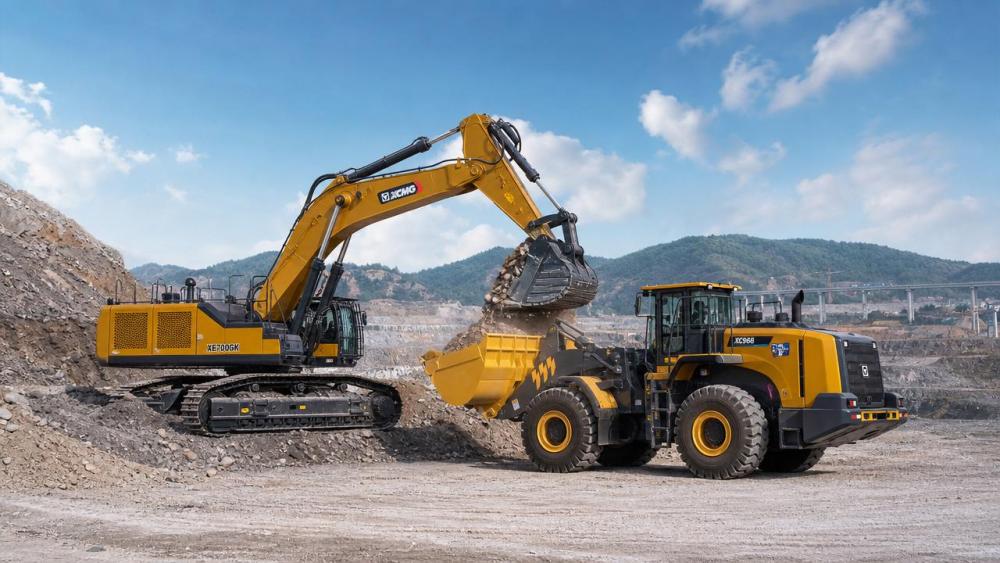
The next wave of earthmoving competition is shaped by three converging pressures: tighter emissions frameworks, higher labor costs, and greater demand for predictable output. In this environment, hydraulic machinery is expected to do more than move material. It must convert power into useful work with less heat loss, fewer unnecessary pressure spikes, and more stable control under varied loads.
For heavy-duty fleets, even small inefficiencies accumulate quickly. A 35-ton excavator operating 1,800 to 2,200 hours per year can expose hidden losses in swing circuits, boom regeneration, and auxiliary hydraulic routing. Similar patterns apply to loaders in quarry transfer cycles and graders working with GPS-guided finish tolerances within ±10 mm to ±20 mm.
Three forces changing equipment economics
- Electrification is pushing redesigns of pump packages, thermal systems, and energy management logic.
- Autonomy and remote operation require fast, repeatable electro-hydraulic response with lower latency.
- Ownership models are shifting toward lifecycle cost visibility over 3, 5, and 7 years.
This matters because decision-makers are now comparing machines by usable hydraulic efficiency, not just peak breakout force. In practical terms, that means evaluating how consistently a machine sustains digging force, lift speed, blade precision, or attachment output over a full shift rather than during a brief test cycle.
Where efficiency gains are actually coming from
The most meaningful improvements are emerging from load-sensing hydraulics, electronically controlled variable displacement pumps, smarter valve block design, and better matching between hydraulic flow and duty profile. In many applications, the result is not a dramatic headline gain, but a steady 5% to 12% increase in real operating efficiency.
Excavators benefit from improved boom-down regeneration and finer metering control. Wheel loaders gain through reduced pump oversupply in short-cycle loading. Bulldozers and graders see value in smoother traction-to-blade coordination, especially in finish work where rework can add 8% to 15% to project time.
Operational signals leaders should monitor
- Hydraulic oil temperature stability during peak shift hours
- Average cycle time under mixed load conditions
- Pressure fluctuation frequency during multi-function operation
- Idle-to-work transition smoothness in electro-hydraulic control
- Attachment changeover efficiency for multi-role machines
These indicators help separate marketing claims from fleet reality. A machine that performs well only in isolated demonstrations may still underdeliver in urban trenching, mine stripping, slope grading, or airport subgrade work where duty variability is high and downtime costs are immediate.
How Different Earthmoving Segments Are Rewriting Hydraulic Priorities
Not all hydraulic machinery faces the same efficiency challenge. The hydraulic architecture that creates value in a crawler excavator differs from what matters most in a grader or skid steer. Procurement teams should therefore evaluate performance by application, not by a single generic benchmark.
Segment-by-segment comparison
The table below outlines how hydraulic priorities differ across core earthmoving categories and where business buyers should focus during technical review.
The key takeaway is that hydraulic machinery should be specified around revenue-generating tasks. For example, a loader working 40-second cycles in aggregate handling should be assessed differently from a skid steer running 6 to 8 attachments over a single week in utility work.
Implications for OEMs, rental groups, and contractors
OEMs need hydraulic platforms that scale across machine classes without losing application specificity. Rental fleets need simplified serviceability and broad attachment compatibility. Contractors need measurable output gains that justify higher acquisition cost within a 12- to 36-month utilization window.
In all three cases, the winning hydraulic machinery strategy is not the one with the most features. It is the one that aligns pressure, flow, control software, and operator behavior with the actual production model of the business.
What Decision-Makers Should Measure Before Buying
Capital equipment decisions often fail when hydraulic performance is reduced to a brochure comparison. Business buyers should instead build a review process around at least 4 dimensions: efficiency, controllability, maintainability, and digital integration. Each dimension affects operating margin in a different way.
A practical evaluation framework
The following table can be used during supplier screening, field validation, or pre-tender review to compare hydraulic machinery options on a more decision-ready basis.
A disciplined framework reduces procurement bias. It also helps separate low upfront pricing from true value. In many fleets, a machine that costs 6% more but saves 4 liters of fuel per hour, shortens cycle time by 7%, and cuts service interruptions by 2 events per quarter can outperform a cheaper alternative within the first year.
Common purchasing mistakes
Mistake 1: Overweighting peak specs
Maximum pressure and breakout force matter, but they do not represent day-long productivity. Decision-makers should ask how the hydraulic machinery behaves at 60%, 80%, and 100% of normal workload, not just at peak output.
Mistake 2: Ignoring attachment hydraulics
For compact and urban fleets, auxiliary hydraulics can define utilization. If a skid steer or excavator frequently changes between breakers, augers, compactors, or grapples, flow stability and quick coupler compatibility may be worth more than marginal engine gains.
Mistake 3: Underestimating service access
Hydraulic machinery with cramped routing or poor diagnostics can add hours to each maintenance event. Over a 36-month period, even 1 extra hour per service cycle can erode labor efficiency and equipment availability.
Implementation Priorities for 2026 Fleet Strategy
The strongest equipment strategies are phased, not reactive. Enterprises planning fleet renewal or supplier realignment in 2026 should structure implementation in 3 stages: assessment, pilot validation, and scaled deployment. This approach reduces technical risk while preserving purchasing leverage.
Stage 1: Assess the current hydraulic baseline
Start by identifying the 20% of assets that generate the largest share of hydraulic-related cost or downtime. Review fuel intensity, hydraulic temperature alerts, hose failures, valve instability, and rework caused by poor control precision. A 60- to 90-day review period is often enough to spot persistent performance gaps.
Stage 2: Run controlled field pilots
Pilot hydraulic machinery in matched duty cycles rather than general demonstrations. Compare at least 2 machines across the same material type, operator mix, and shift length. Useful pilot metrics include liters per hour, tons moved per shift, finish-pass accuracy, and maintenance interventions per 100 operating hours.
Stage 3: Build supplier and service alignment
Before scale rollout, confirm parts lead times, diagnostic support, and hydraulic component availability. For critical fleets, businesses should ask whether common wear items can be delivered within 24 to 72 hours and whether remote fault support is available during project peaks.
Checklist for leadership teams
- Define the top 5 hydraulic performance KPIs by machine category.
- Segment machines by excavation, loading, grading, pushing, and multi-attachment use.
- Model total cost over 3 to 5 years, not purchase price alone.
- Require service response commitments for high-utilization sites.
- Prioritize telematics and fault transparency for future automation readiness.
For intelligence-driven organizations such as EMD’s audience, the real opportunity is not simply buying newer machines. It is building a hydraulic machinery roadmap that links force output, precision control, decarbonization goals, and digital observability into one investment logic.
In 2026, the most resilient earthmoving businesses will be those that treat hydraulic performance as a strategic asset. Better hydraulic efficiency improves production economics, supports lower-emission operations, and increases readiness for autonomy, remote control, and more demanding infrastructure standards.
If your organization is reviewing excavators, loaders, graders, bulldozers, or compact equipment for the next investment cycle, now is the right time to benchmark hydraulic machinery choices against application reality, lifecycle cost, and control-system readiness. Contact us to discuss your fleet priorities, request a tailored evaluation framework, or explore more earthmoving intelligence solutions.