
Related News
- 00
0000-00
How to size heavy-duty loaders for North American mining operations - 00
0000-00
How altitude affects mining excavator performance in Latin America - 00
0000-00
Caterpillar Launches New Cat 6060 and Upgraded Autonomous Mining System - 00
0000-00
When does eco-friendly construction equipment pay for itself? - 00
0000-00
Will a wheel loader quick coupler fit your existing attachments?
Before placing large-volume orders, procurement teams must look beyond list prices and evaluate the hidden risks behind heavy machinery parts sourcing. From raw material volatility and freight fluctuations to supplier consistency, lead times, and aftermarket support, every factor can affect total cost and project uptime. This guide helps buyers identify pricing risks early and make more confident, cost-controlled purchasing decisions.
For procurement teams, the biggest pricing risk is rarely the quoted unit cost alone. The real danger is buying heavy machinery parts that appear competitive upfront but create delays, quality issues, warranty gaps, or higher lifecycle costs later.
The core search intent behind this topic is practical risk reduction. Buyers are not looking for generic market commentary. They want a clear way to evaluate supplier quotes, compare offers fairly, and avoid expensive mistakes before committing budget to large orders.
That means the most useful analysis focuses on total landed cost, supply continuity, part reliability, lead-time certainty, and supplier accountability. Broad overviews of the heavy equipment market matter less than decision tools that help procurement teams purchase with confidence.
Why large-order pricing for heavy machinery parts is more risky than it looks
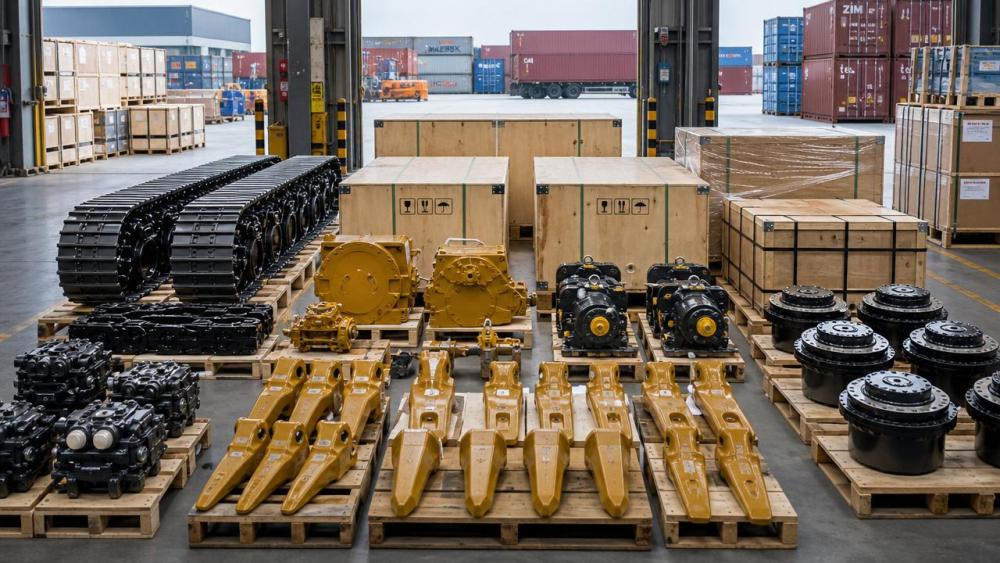
In heavy equipment procurement, a low quote can hide several layers of cost. A supplier may offer attractive pricing on buckets, undercarriage components, hydraulic parts, or filters, yet leave freight, packaging, duties, or inspection charges outside the base offer.
For buyers responsible for crawler excavators, wheel loaders, bulldozers, motor graders, or skid steer fleets, these hidden variables can become operational problems. A shipment that arrives late or fails quality checks can stop machines, delay projects, and increase total fleet cost.
Large-volume purchases amplify every weakness in a sourcing decision. Small quality deviations across a handful of parts are manageable. The same defect rate across hundreds of units can create widespread rework, warranty claims, and urgent replacement buying at premium prices.
That is why procurement should treat pricing as a risk signal, not just a negotiation outcome. When one offer is materially lower than the market range, the right question is not only “How cheap is it?” but “What assumptions make it cheap?”
What procurement teams are really trying to avoid
Most buyers are not simply trying to secure the lowest possible price. They are trying to avoid budget overruns, project downtime, emergency sourcing, and supplier disputes. In practice, these risks matter more than a small gap in nominal unit price.
The first concern is part performance consistency. Heavy machinery parts must survive harsh loads, abrasive environments, pressure cycles, and long operating hours. If batches vary in hardness, machining precision, sealing quality, or material composition, field failures can rise fast.
The second concern is schedule reliability. A quoted lead time means little if production capacity is unstable, raw materials are not secured, or export logistics are uncertain. Delays are especially costly when parts are tied to maintenance windows or project mobilization plans.
The third concern is commercial clarity. Procurement teams need confidence that specifications, incoterms, payment terms, warranty scope, and claims handling are all documented. Ambiguity in any of these areas can turn a good-looking quote into a costly dispute.
How to assess the real price behind a supplier quote
Procurement decisions improve when teams compare quotes using total landed cost instead of ex-works or FOB price alone. Landed cost should include freight, insurance, customs duties, inland transport, inspection, packaging, banking costs, and expected inventory carrying cost.
For heavy machinery parts, buyers should also factor in technical and operational cost drivers. These include expected service life, installation labor, compatibility with existing machines, rejection rates, and the likelihood of requiring expedited replacement shipments during operation.
A practical approach is to build a quote comparison sheet with standard line items for every supplier. If one vendor excludes export crating, testing, or documentation while another includes them, the price gap may narrow significantly after normalization.
It is also wise to ask suppliers which cost assumptions are fixed and which are variable. Steel, rubber, alloy inputs, machining energy costs, exchange rates, and freight can all move. Understanding what is locked helps procurement judge how stable the quote really is.
Raw material volatility can quickly change heavy machinery parts pricing
Many heavy machinery parts are exposed to fluctuations in steel, alloy metals, rubber compounds, and energy-intensive manufacturing processes. Undercarriage systems, cutting edges, wear parts, hydraulic cylinders, pins, bushings, and drivetrain components all carry raw material sensitivity.
If a supplier issues a low price without clarifying the validity period, buyers may face a revision before production starts. In volatile markets, quotes can become outdated quickly, especially when suppliers have not pre-booked material or hedge-covered major inputs.
Procurement teams should ask direct questions about material sourcing. Is the steel grade already secured? Are alloy surcharges fixed? Is the quoted resin or rubber input based on current spot levels? What triggers a price adjustment after purchase order confirmation?
Suppliers with stronger upstream control often offer better predictability, even if their initial quote is not the lowest. For large orders, predictability can be more valuable than a short-lived discount that later disappears through renegotiation or delivery instability.
Freight, duties, and regional logistics often decide the final cost
Heavy machinery parts are expensive to move, especially oversized, dense, or irregular components. A shipment of wear parts, tracks, buckets, grader blades, hydraulic assemblies, or cast housings can face freight swings that materially change the economics of a purchase.
Ocean freight volatility, container shortages, port congestion, inland trucking capacity, and customs clearance delays all create pricing risk. Even when freight rates soften, unexpected storage fees, demurrage, or destination handling charges can erode the savings from a low factory price.
Regional compliance rules add another layer. Incorrect HS classification, incomplete origin paperwork, or weak packaging documentation can trigger customs friction. Procurement teams should not assume logistics execution is routine simply because the supplier exports regularly.
For large orders, it is often worth requesting a delivered-cost scenario under multiple shipping assumptions. Comparing FOB, CIF, and DDP-style structures can reveal where responsibility sits and whether the supplier is genuinely capable of managing end-to-end logistics performance.
Quality inconsistency is one of the most expensive “hidden price” risks
In procurement, poor quality is not a technical issue alone. It is a pricing issue because it drives failures, returns, machine downtime, labor waste, and reputation damage. A part that costs less but fails earlier is usually the more expensive purchase.
This risk is especially high when buyers source replacement heavy machinery parts from unfamiliar manufacturers. Even if dimensions appear correct on paper, heat treatment quality, welding consistency, seal integrity, metallurgy, and surface finish can vary in ways that affect field life.
Ask suppliers for batch traceability, inspection plans, material certificates, dimensional control reports, and test history. For critical categories such as hydraulic components or undercarriage parts, pre-shipment inspection and sample validation are often cheaper than post-installation failure.
Procurement teams should also review quality consistency over time, not just pass-or-fail status on one batch. A supplier that performs well on samples but struggles on scale may still expose the buyer to risk when a large order goes into full production.
Lead-time risk can outweigh unit-price savings
Many buyers underestimate how strongly lead-time reliability affects total cost. A competitive quote is less meaningful if the supplier misses the delivery window and forces project teams into emergency purchases from local channels at much higher prices.
Lead-time risk often comes from limited capacity, outsourced sub-processes, weak production planning, or dependence on imported raw materials. It can also arise when the supplier accepts aggressive order volumes without a realistic understanding of throughput constraints.
To assess this risk, buyers should ask for a production timeline by stage: material procurement, machining, welding, coating, assembly, testing, packing, and dispatch. A detailed timeline shows whether the lead time is operationally grounded or commercially optimistic.
It also helps to ask what percentage of orders ship on time, what the supplier defines as on time, and how delays are communicated. Procurement teams need evidence, not only assurances, before tying maintenance schedules or project delivery to a large order.
Aftermarket support and warranty terms should be priced into the decision
When parts fail in service, the supplier’s response speed matters almost as much as the original product. A low-cost order becomes expensive if claims require long investigations, unclear documentation, or repeated arguments over application conditions and failure responsibility.
Buyers should study warranty scope carefully. Does it cover only manufacturing defects, or also early abnormal wear? Who pays freight for replacements? How fast are claims reviewed? What evidence is required? Are there local support partners or only remote communication?
For fleets operating across demanding environments, aftermarket responsiveness reduces risk. This is particularly important for high-utilization excavators, loaders, and bulldozers where every idle hour affects utilization targets, operator schedules, and downstream construction commitments.
If two suppliers offer similar heavy machinery parts at different prices, the one with stronger technical support, better documentation, and faster claims handling may deliver better commercial value over the life of the purchase.
Supplier concentration and dependency can increase pricing exposure
Large orders often push procurement toward a single source for volume discounts. While this can improve short-term pricing, it also creates dependency. If the supplier later raises prices, misses delivery, or suffers quality disruption, the buyer has limited fallback options.
Single-source risk becomes more serious for machine-critical categories, custom components, or parts with long qualification cycles. Once operations, inventory policies, and service teams are aligned around one supplier, switching becomes slower and more expensive.
Procurement teams should evaluate whether the order should be split across approved vendors, whether a backup source should be qualified in parallel, and whether technical drawings or tooling ownership terms allow future sourcing flexibility.
In many cases, the lowest-risk strategy is not full fragmentation or full concentration, but controlled dual sourcing. That approach can preserve leverage while reducing the operational shock if one supplier underperforms.
Questions buyers should ask before approving a large order
Before issuing a purchase order, procurement teams should ask several direct questions. What exactly is included in the quoted price? Which inputs are variable? How long is the quote valid? What are the quality checkpoints and acceptance criteria?
They should also ask where the supplier’s bottlenecks are. Is machining internal or outsourced? Are key materials stocked? How is export packaging handled? What happens if one production stage falls behind? How are replacement claims prioritized?
For heavy machinery parts, compatibility questions are equally important. Are the parts designed to OEM dimensions, application conditions, and wear expectations? Have they been used in similar fleets, climates, or duty cycles? Can the supplier provide references or case data?
These questions help reveal whether the supplier is prepared for a long-term commercial relationship or only trying to win the order on headline price. Serious suppliers usually answer clearly and provide documentation without hesitation.
A practical framework for safer pricing decisions
A strong procurement process usually combines five checks: commercial normalization, technical validation, supply-risk review, logistics planning, and post-sale support evaluation. This prevents teams from approving heavy machinery parts based on price alone.
Start by normalizing all quotes to the same incoterm and scope. Then verify specifications, materials, tolerances, and expected life. Review the supplier’s production capacity, on-time history, and sourcing resilience. Finally, test warranty responsiveness and claims procedures.
Procurement teams can score suppliers across these categories, with weighted importance based on part criticality. For example, lead time and quality consistency may matter more than small price differences when buying undercarriage parts for high-utilization crawler excavators.
This method also improves internal alignment. Finance sees landed cost, maintenance sees reliability, operations sees uptime risk, and procurement sees negotiation levers. Better decisions happen when all stakeholders evaluate the same structured picture.
Conclusion: the safest large order is not always the cheapest one
Before placing a large order, procurement teams should assume that every low price carries a reason. Sometimes that reason is genuine manufacturing efficiency. Just as often, it reflects weaker materials control, unstable logistics, narrow warranty coverage, or unrealistic lead-time promises.
The best purchasing decisions come from understanding total cost, not just quote value. Buyers who examine quality consistency, freight exposure, supplier capacity, aftermarket support, and commercial clarity are better positioned to avoid expensive surprises after order placement.
In the market for heavy machinery parts, pricing discipline means more than negotiation strength. It means identifying risk early, asking sharper questions, and selecting suppliers that protect uptime as well as budget.
For procurement professionals, that is the real goal: not simply buying cheaper parts, but securing dependable supply, predictable cost, and operational confidence at scale.