
Related News
- 00
0000-00
How to size heavy-duty loaders for North American mining operations - 00
0000-00
How altitude affects mining excavator performance in Latin America - 00
0000-00
Caterpillar Launches New Cat 6060 and Upgraded Autonomous Mining System - 00
0000-00
When does eco-friendly construction equipment pay for itself? - 00
0000-00
Will a wheel loader quick coupler fit your existing attachments?
For business evaluators managing short-term infrastructure or earthmoving assignments, the choice between heavy equipment rental and ownership directly affects cost control, utilization, and project agility. From crawler excavators to skid steer loaders, the right asset strategy can improve cash flow, reduce maintenance exposure, and align equipment capacity with project timelines. This article examines the financial and operational trade-offs to support sharper procurement and investment decisions.
The core search intent behind “heavy equipment rental” in this context is practical decision support. Readers are not looking for a generic definition. They want to know when renting is financially smarter than buying, how risk changes, and which model fits short-duration work.
For most short-term projects, renting is usually the stronger default. It preserves capital, reduces maintenance liability, and offers flexibility when project scope, duration, or machine requirements may change. Ownership becomes more attractive only when utilization is high, scheduling is predictable, and equipment can be redeployed quickly.
What business evaluators really need to decide first
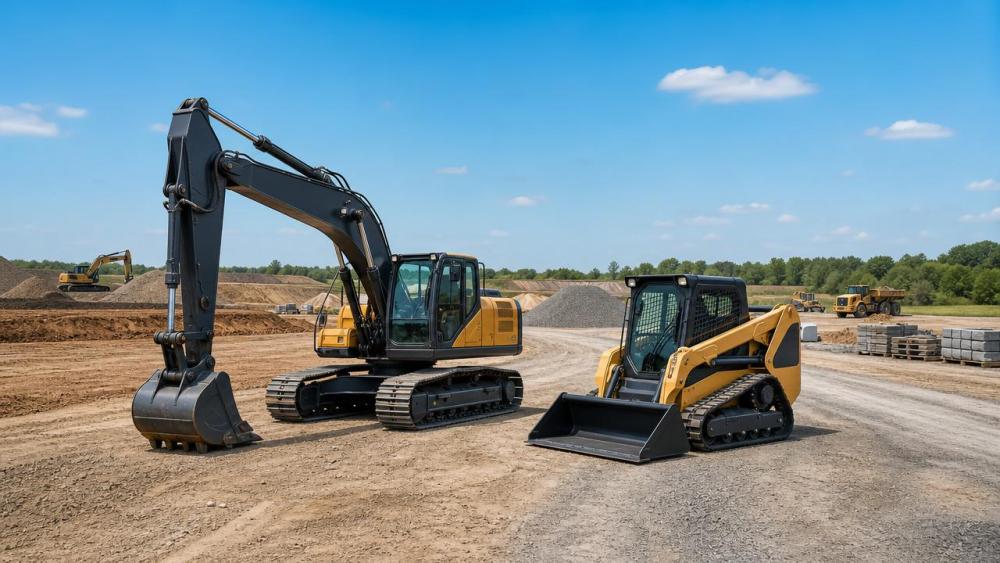
Before comparing monthly payments or day rates, evaluators should define the project profile. The most important variables are duration, machine intensity, mobilization timing, operator availability, and whether the equipment will sit idle between assignments.
Short-term projects often create an illusion that ownership lowers unit cost. That may be true on paper if the machine works continuously. In reality, many temporary jobs involve uncertain start dates, weather delays, phased site access, or changing production targets.
That uncertainty matters because owned equipment carries cost even when it is not producing. Financing, insurance, storage, inspections, preventive service, depreciation, and fleet management overhead continue whether a crawler excavator is digging or parked in the yard.
Rental shifts much of that burden into a variable operating cost. For evaluators focused on return on capital and project margin protection, that is often the decisive advantage. It turns equipment from a fixed asset commitment into a schedule-aligned expense.
Why rental is often the best fit for short-term projects
The strongest case for heavy equipment rental is flexibility. A short project may require a 30-ton excavator for two weeks, a wheel loader for one month, and a motor grader only during final surface preparation.
Buying each machine for temporary use rarely makes economic sense unless there is a clear pipeline of follow-on jobs. Rental allows companies to match machine class, attachment type, and production capacity to each stage without carrying long-term ownership exposure.
Cash flow is another major factor. Purchasing heavy equipment ties up capital that could be used elsewhere, such as labor expansion, site logistics, fuel reserves, or technology investments. For evaluators, opportunity cost is just as important as sticker price.
Rental also reduces technical risk. Modern earthmoving equipment increasingly depends on emissions compliance systems, telematics, electro-hydraulic controls, and software integration. For a short project, it is often better to access current-spec equipment without assuming long-term technology obsolescence.
In sectors facing tight deadlines, rental can improve speed to deployment. A qualified rental partner may deliver ready-to-work machines faster than an internal purchase approval, transport arrangement, inspection cycle, and commissioning process.
When ownership can outperform rental
Ownership is not automatically the wrong choice. It becomes compelling when utilization is consistently high across multiple projects and the organization can keep the machine generating revenue for most of the year.
If a contractor repeatedly performs similar work, such as trenching, loading, grading, or dozing, owning core fleet assets may lower long-run cost per operating hour. This is especially true when maintenance capability already exists internally.
Ownership also supports stronger scheduling control. During peak construction periods, rental fleets may be constrained, particularly for high-demand categories like crawler excavators, skid steer loaders, or specialty grading equipment.
For firms with established dispatch systems, operators, parts inventory, and service technicians, owned equipment may create strategic independence. That advantage grows when project volumes are stable enough to smooth downtime across a larger fleet.
Still, this ownership case depends on utilization discipline. A purchased machine that works only intermittently can quickly become an underperforming asset, no matter how favorable the purchase negotiation looked at the outset.
The real cost comparison: beyond rental rate versus purchase price
Business evaluators should avoid comparing a weekly rental invoice to a machine’s purchase price in isolation. The better approach is total cost of access versus total cost of ownership over the actual project horizon.
For rental, include transport, fuel, operator cost, damage waivers, overtime rates, attachment fees, standby charges, and any penalties for extended use. A rental agreement can look attractive until all usage conditions are modeled realistically.
For ownership, include acquisition cost, financing expense, depreciation, maintenance labor, parts, tires or undercarriage wear, insurance, licensing, storage, telematics subscriptions, and resale uncertainty. These are not side items; they determine real economic performance.
Residual value deserves special attention. Ownership models often assume an optimistic resale outcome. But used equipment values can fluctuate with interest rates, emissions regulations, local demand, and macro construction cycles.
A machine with excellent resale value can improve the ownership case. A machine facing weak secondary market demand, specification mismatch, or accelerated wear can erase expected savings. Evaluators should test both best-case and conservative exit scenarios.
Utilization is the single most important break-even variable
If there is one metric that decides the rental-versus-buy question, it is utilization. Not theoretical utilization, but the percentage of time the machine is productively working and generating value on contracted jobs.
Short-term projects rarely deliver perfect utilization. Mobilization delays, permit issues, weather interruptions, crew coordination problems, and sequential work phases can all reduce productive hours. Rental protects against paying for idle ownership during those gaps.
Ownership begins to make more sense when a machine can roll directly from one project to the next with minimal downtime. That requires a healthy backlog, accurate forecasting, and a fleet planning function that treats idle time as a cost, not an inconvenience.
For evaluators, a simple rule helps. If post-project redeployment is uncertain, rental is usually safer. If redeployment is highly probable and operational continuity is strong, ownership deserves a more serious financial model.
Risk exposure: what changes when you rent instead of own
Rental reduces several forms of risk that matter in short-term assignments. The most obvious is maintenance risk. If a machine develops an issue, the rental provider often handles service support or replacement, depending on contract terms.
There is also regulatory risk. Equipment standards continue evolving, especially around emissions, safety systems, and digital control architecture. Renting can help companies stay aligned with newer requirements without carrying aging fleet liabilities.
Demand risk is equally important. If a project is shortened, postponed, or canceled, the renter can usually return the unit according to the agreement. An owner remains responsible for an asset that may now have no immediate productive use.
However, rental is not risk-free. Availability risk can be significant during market peaks. If a critical machine is unavailable locally, rates rise and project timing may suffer. That is why short-term planning should include supplier qualification and reservation strategy.
Equipment category matters more than many buyers expect
Not all machines should be evaluated the same way. High-use, multi-project assets may justify ownership more often than specialized equipment used only at one stage of a short assignment.
For example, skid steer loaders often have broad utility across urban infrastructure, site cleanup, material handling, and attachment-based tasks. If a company uses them constantly, ownership can be practical.
By contrast, a large motor grader or a heavier crawler excavator with a specific bucket and grade-control package may be needed only for a narrow project window. In such cases, renting can align cost much more closely with actual use.
Bulldozers and wheel loaders also vary by application. In mining support, quarry stripping, or large-scale bulk movement, utilization may justify ownership. In episodic civil packages, rental often provides a cleaner financial fit.
How to build a smarter rental-versus-buy decision model
Evaluators should use a structured framework rather than intuition alone. Start with project duration, estimated operating hours, machine category, and production dependency. Then test at least three scenarios: base case, delay case, and extended-use case.
Next, calculate ownership cost on a monthly and hourly basis, including conservative assumptions for downtime and resale. Compare that with fully loaded rental cost, not just the advertised rate.
Then assess strategic variables. Will the machine be needed again within 30 to 90 days? Is the rental market tight? Does the job require specialized attachments, grade control, or compliance features that are expensive to maintain in-house?
Finally, consider organizational capability. A company without strong maintenance systems, transport coordination, or equipment planning may overestimate the benefits of ownership. In many short-term cases, execution simplicity has measurable value.
Practical decision guide for short-term earthmoving and infrastructure work
Choose rental when project duration is limited, scope may change, capital needs to stay liquid, or the machine type is specialized. Rental is also preferable when utilization after project completion is uncertain.
Choose ownership when the equipment is a repeat-use core asset, annual operating hours are high, internal maintenance capability is proven, and a reliable project pipeline supports continuous deployment.
Use a hybrid strategy when only part of the fleet has predictable demand. Many successful contractors own their essential baseline machines and rent peak-load or specialty units as needed. This balances control with flexibility.
For business evaluators, that hybrid model is often the most realistic answer. It avoids overcommitting capital while ensuring the company retains strategic control over the machines it uses most often.
Conclusion: the best choice is the one that protects utilization and flexibility
In short-term projects, the heavy equipment rental decision is rarely just about lower upfront cost. It is about matching asset strategy to project duration, utilization certainty, operational risk, and capital priorities.
For most temporary infrastructure and earthmoving assignments, renting is the better default because it improves agility, limits idle asset exposure, and reduces technical and maintenance burden. Ownership wins only when utilization is sustained and redeployment is highly credible.
Business evaluators should therefore focus less on headline rates and more on total economic fit. The most valuable machine strategy is not the one that looks cheapest at procurement stage, but the one that performs best across the full project and portfolio cycle.