
Related News
- 00
0000-00
How to size heavy-duty loaders for North American mining operations - 00
0000-00
How altitude affects mining excavator performance in Latin America - 00
0000-00
Caterpillar Launches New Cat 6060 and Upgraded Autonomous Mining System - 00
0000-00
When does eco-friendly construction equipment pay for itself? - 00
0000-00
Will a wheel loader quick coupler fit your existing attachments?
In 2026, the biggest threat to equipment profitability may not be fuel or labor—it may be hidden cost volatility in heavy machinery parts. For finance approvers balancing uptime, capex control, and supplier risk, understanding where pricing pressure, parts shortages, and compliance-driven upgrades are emerging is essential. This article outlines the cost risks worth watching before they erode margins across fleets, projects, and procurement plans.
Why 2026 creates a new cost-risk scenario for heavy machinery parts
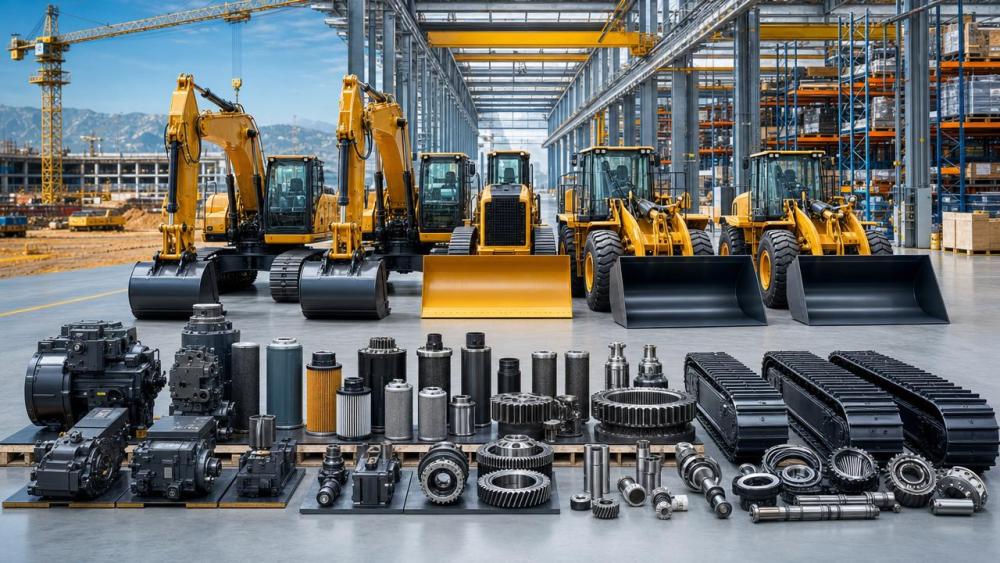
Heavy machinery parts costs are entering a more unstable phase in 2026.
The pressure is no longer driven by one factor alone.
Instead, several forces are converging across infrastructure, mining, logistics, and fleet renewal cycles.
At EMD, this pattern is visible across crawler excavators, wheel loaders, motor graders, bulldozers, and skid steer loaders.
Higher utilization rates increase wear on hydraulic, undercarriage, cooling, and electronic systems.
At the same time, emission regulation upgrades and digital control adoption raise component complexity.
That means heavy machinery parts are becoming both more expensive and more operationally critical.
The most important shift is that replacement decisions now affect availability, compliance, residual value, and project delivery speed.
Which operating scenarios face the highest heavy machinery parts exposure
Not every equipment environment faces the same heavy machinery parts risk.
Exposure depends on duty cycle intensity, terrain, idle patterns, emissions rules, and service network reach.
High-hour infrastructure fleets
Large road, rail, and utility programs usually create the fastest parts burn rate.
Excavators and loaders run long shifts, causing frequent demand for filters, pumps, hoses, bucket wear parts, and track assemblies.
In this scenario, even small price increases multiply quickly across a fleet.
Remote mining and quarry operations
Remote sites face a different heavy machinery parts problem: logistics cost and downtime cost.
A delayed final drive, hydraulic cylinder, or engine sensor can stop production far longer than the invoice suggests.
Freight premiums and emergency sourcing often turn one repair into a major budget event.
Urban compact equipment and rental-heavy use
Skid steer loaders and compact machines often see operator variability and attachment changes.
That increases wear on couplers, auxiliary hydraulics, tires, cooling modules, and control interfaces.
Here, heavy machinery parts costs rise through frequency rather than single-ticket severity.
Compliance-sensitive fleets in regulated markets
Fleets operating under stricter emissions and safety rules face hidden replacement obligations.
Aftertreatment components, sensors, telematics modules, and software-linked control parts become essential, not optional.
This scenario adds compliance risk to the normal heavy machinery parts budget.
The cost categories most likely to move in 2026
Several heavy machinery parts categories deserve closer monitoring because they combine price sensitivity with uptime impact.
- Undercarriage systems: tracks, rollers, idlers, and sprockets remain exposed to steel, labor, and freight volatility.
- Hydraulic components: pumps, valves, seal kits, and cylinders face precision manufacturing constraints.
- Electronic controls: ECUs, sensors, displays, and harnesses carry semiconductor and firmware dependency.
- Engine and aftertreatment parts: injectors, turbochargers, DEF systems, and DPF units reflect compliance-driven cost increases.
- Ground-engaging tools: cutting edges, teeth, shanks, and blades fluctuate with commodity input prices.
- Cooling and filtration components: radiators, oil coolers, filters, and fan drives are vulnerable during hot-weather demand peaks.
The key issue is not only list price.
It is the total cost of delayed availability, repeat failures, and unplanned labor tied to heavy machinery parts replacement.
How scenario differences change heavy machinery parts priorities
Different environments require different cost controls.
This comparison shows why a single procurement rule rarely works across all machine populations.
Heavy machinery parts planning must follow the operating scenario, not only the machine model.
Practical ways to reduce heavy machinery parts cost risk before it grows
2026 risk can be managed with earlier visibility and tighter decision rules.
- Rank critical heavy machinery parts by downtime impact, not purchase price alone.
- Separate wear parts from failure parts to improve stocking logic.
- Review multi-source options for hydraulics, filtration, and ground-engaging tools.
- Track lead time shifts quarterly, especially for electronic and aftertreatment components.
- Use telematics and inspection data to predict replacement windows more accurately.
- Bundle service, warranty, and parts support when negotiating machine acquisitions.
- Measure total installed cost, including freight, labor, lost utilization, and delay penalties.
These actions help convert heavy machinery parts spending from reactive purchasing into controlled asset planning.
That shift is especially valuable for mixed fleets with excavators, dozers, graders, and loaders working across different regions.
Common misjudgments that make heavy machinery parts budgets fail
Some of the biggest 2026 losses will come from planning errors, not market shocks.
Assuming the cheapest part is the lowest-cost choice
A lower invoice can still create higher lifecycle cost if fit, wear life, or failure rate is poor.
For heavy machinery parts, quality variation can trigger repeat labor and secondary damage.
Treating all machines as equal demand profiles
Two similar excavators may consume very different heavy machinery parts based on operator behavior, material density, and haul cycle conditions.
Using average assumptions often hides the most expensive outliers.
Ignoring software-linked component dependence
Modern control systems make some parts inseparable from firmware, calibration, or dealer tools.
That can extend repair time even when the physical heavy machinery parts are in stock.
Missing the residual value effect
Deferred replacement of visible wear components may save cash briefly.
However, undercarriage condition, hydraulic health, and emissions system records strongly influence resale outcomes.
What to do next if heavy machinery parts inflation is already appearing
Start with a 90-day review of the most volatile heavy machinery parts lines.
Compare unit price, lead time, failure frequency, and downtime cost by machine family.
Then map those findings against operating scenarios such as remote extraction, urban utility work, and long-cycle infrastructure deployment.
The goal is simple: identify which parts threaten uptime and margins first.
EMD’s industry tracking shows that better heavy machinery parts visibility supports stronger maintenance timing, smarter supplier positioning, and more reliable capital planning.
In 2026, the winning approach will not be buying less.
It will be buying heavy machinery parts with clearer scenario logic, better risk ranking, and faster operational response.