
Related News
- 00
0000-00
How to size heavy-duty loaders for North American mining operations - 00
0000-00
How altitude affects mining excavator performance in Latin America - 00
0000-00
Caterpillar Launches New Cat 6060 and Upgraded Autonomous Mining System - 00
0000-00
When does eco-friendly construction equipment pay for itself? - 00
0000-00
Will a wheel loader quick coupler fit your existing attachments?
As 2026 planning accelerates, the heavy machinery industry is sending clear signals that no business evaluator can afford to ignore. From electrification and autonomous control to shifting infrastructure demand and tighter emissions rules, strategic decisions now depend on sharper market intelligence. This article examines the forces reshaping crawler excavators, loaders, graders, bulldozers, and skid steers, helping decision-makers assess risk, capture opportunity, and plan with greater confidence.
Why 2026 planning in the heavy machinery industry is becoming scenario-driven
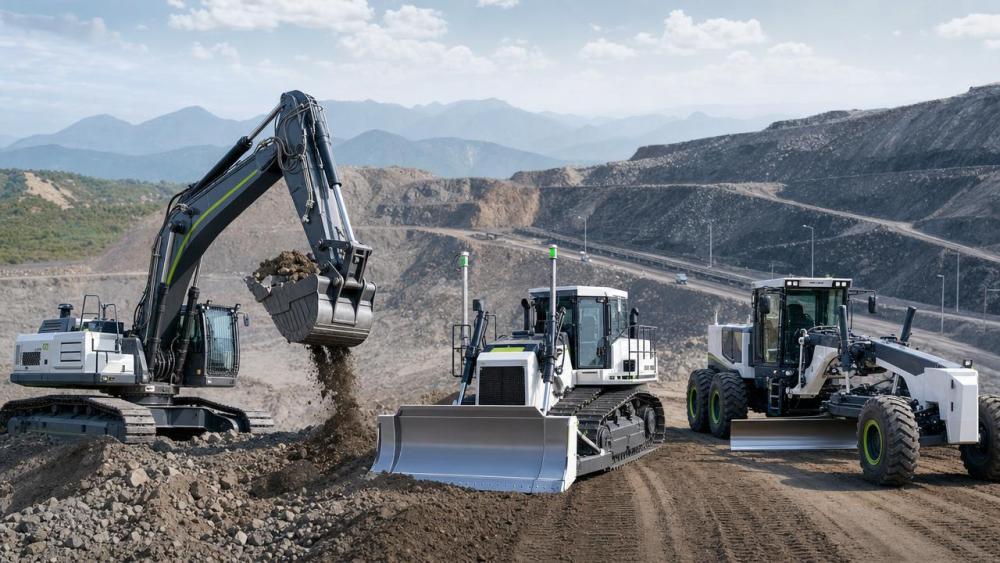
The heavy machinery industry no longer moves on one global cycle. It reacts to infrastructure funding, mining demand, emissions policy, labor shortages, and digital control maturity.
That means 2026 planning must be built around operating scenarios, not broad averages. A crawler excavator fleet in urban rail projects faces different triggers than bulldozers in mining expansion.
EMD tracks this shift through equipment performance, policy timing, and project execution patterns. The result is clearer judgment on where capital, technology, and service capacity should be concentrated.
For the heavy machinery industry, the key question is no longer whether change is happening. The question is which scenario will change first, and how fast.
Scenario one: urban infrastructure favors compact, precise, and lower-emission equipment
Secondary urbanization is creating dense project environments. Space is limited, noise restrictions are tighter, and project timelines are compressed across roads, drainage, utility repair, and site redevelopment.
In this setting, the heavy machinery industry is seeing stronger interest in mini-excavators, skid steer loaders, and compact wheel loaders. Flexibility often matters more than raw machine size.
Core judgment points for compact-city projects
Zero-radius maneuverability, attachment compatibility, and low transport friction become major decision factors. Electrified or hybrid solutions also gain weight where environmental approvals are stricter.
Precision grading tools with GPS and laser support matter more in municipal resurfacing and airport maintenance. Rework costs in these projects can erase margin very quickly.
Scenario two: mining and bulk earthmoving still reward durability and payload efficiency
Large extraction sites remain a powerful anchor for the heavy machinery industry. Here, the economic model still depends on uptime, hydraulic breakout force, fuel discipline, and wear-life predictability.
Crawler excavators, wheel loaders, and bulldozers remain central in mine stripping, overburden removal, and material transfer. However, digital monitoring is now as important as mechanical strength.
Core judgment points for high-intensity production sites
The strongest performers combine payload efficiency with predictive maintenance visibility. Remote diagnostics, tire or undercarriage life tracking, and thermal management are becoming baseline expectations.
Autonomous or remotely controlled systems gain priority in hazardous zones. Low-latency communication architecture is turning from an innovation topic into an operational requirement.
Scenario three: road, airport, and linear infrastructure reward precision more than brute force
Another major signal in the heavy machinery industry comes from grading-intensive environments. Road expansion, logistics corridors, and airfield modernization depend on surface quality and repeatable tolerances.
Motor graders and supporting earthmoving units now compete on digital control integration. Machine guidance, slope consistency, and pass-count optimization influence both productivity and compliance outcomes.
Core judgment points for precision-led infrastructure
The winning setup is usually not the largest machine. It is the machine system that reduces correction cycles, supports skilled operator consistency, and integrates cleanly with project data workflows.
This is where EMD’s intelligence lens matters. Precision equipment value is often unlocked by software, sensing, and control logic rather than steel mass alone.
Scenario four: regulation-heavy markets push electrification and smarter fleet decisions
Emissions standards for non-road equipment are tightening across many regions. This trend is reshaping the heavy machinery industry beyond engines and aftertreatment systems.
Equipment planning now has to account for battery range, charging access, duty-cycle fit, resale uncertainty, and future regulatory thresholds. Electrification is not one decision. It is a scenario filter.
Core judgment points for decarbonization-driven selection
Compact urban fleets often fit electrification first because duty cycles are shorter and environmental scrutiny is higher. Heavy mining fleets may transition through hybridization and efficiency upgrades before full battery adoption.
The heavy machinery industry will reward those who match energy pathways to site reality. Poor fit can increase idle risk, infrastructure cost, and utilization pressure.
How demand differs across heavy machinery industry scenarios
The table below summarizes how major scenarios create different evaluation priorities across the heavy machinery industry.
Practical adaptation strategies for 2026 planning
Scenario planning in the heavy machinery industry works best when equipment, policy, and site economics are reviewed together. Useful actions include the following.
- Map fleet demand by project type, not only by annual volume.
- Separate compact urban needs from high-duty extraction needs.
- Evaluate guidance, autonomy, and telematics as productivity tools, not optional extras.
- Test electrification against real duty cycles and charging limitations.
- Track emissions deadlines and tender specifications by region.
- Use intelligence sources that connect machine physics with market direction.
For EMD, this means connecting hydrostatic transmission efficiency, electro-hydraulic proportional response, and remote-control latency with the commercial rhythm of infrastructure spending.
Common misreads that can weaken heavy machinery industry planning
Several planning errors are becoming more costly as the heavy machinery industry grows more segmented and technology-led.
Mistaking overall demand for uniform demand
Headline growth can hide major differences between compact urban fleets and large mining units. One segment can rise while another softens.
Treating compliance as a late-stage issue
Emissions rules affect configuration, financing, infrastructure, and service planning. Waiting too long compresses options and raises cost.
Underestimating software-defined value
In parts of the heavy machinery industry, machine control, telematics, and remote operation now influence competitiveness as much as base hardware specifications.
Ignoring attachment and workflow ecosystems
Especially in skid steers and compact loaders, value often comes from multi-task capability. A machine without the right attachment strategy can underperform financially.
What to do next as heavy machinery industry signals sharpen
The heavy machinery industry is entering 2026 with stronger divergence between projects, regions, and machine categories. Better planning starts with better scenario recognition.
Use a structured review of urban works, mining intensity, grading precision, and regulation exposure. Then align equipment priorities, digital capabilities, and decarbonization pathways to each scenario.
EMD supports this process by stitching together market signals, technical evolution, and infrastructure momentum across excavators, loaders, graders, bulldozers, and skid steers.
When planning reflects real operating conditions, the heavy machinery industry becomes easier to read. That clarity is what turns uncertainty into advantage for 2026 and beyond.