
Related News
- 00
0000-00
How to size heavy-duty loaders for North American mining operations - 00
0000-00
How altitude affects mining excavator performance in Latin America - 00
0000-00
Caterpillar Launches New Cat 6060 and Upgraded Autonomous Mining System - 00
0000-00
When does eco-friendly construction equipment pay for itself? - 00
0000-00
Will a wheel loader quick coupler fit your existing attachments?
For finance decision-makers, heavy construction equipment is no longer just a capital expense—it is a long-cycle asset shaped by utilization, fuel strategy, maintenance risk, emissions compliance, and resale value.
In 2026, the cost of heavy construction equipment reflects a wider mix of technical, regulatory, and operational pressures. Better visibility into those drivers helps protect margins and improve project-level ROI.
Across excavators, wheel loaders, graders, bulldozers, and skid steer loaders, cost performance now depends on more than purchase price. Lifecycle discipline matters more than sticker savings.
Heavy Construction Equipment Costs in 2026: Core Definition and ROI Logic
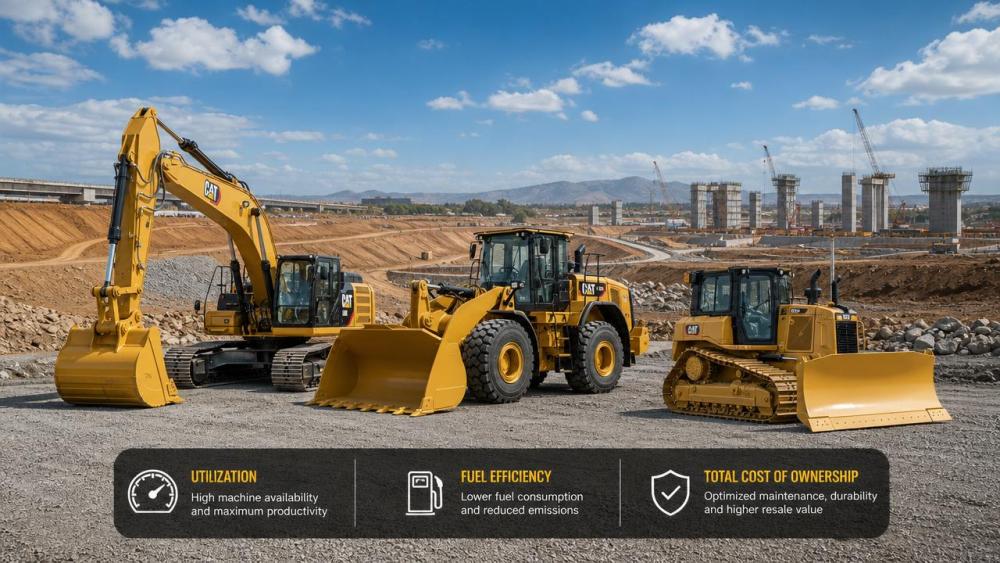
Heavy construction equipment cost is the total economic burden of owning, operating, maintaining, financing, and disposing of high-value machinery across its useful life.
For ROI analysis, the right measure is total cost per productive hour, not simply acquisition cost. This is especially true in earthmoving and infrastructure fleets.
A lower-priced machine may generate weaker returns if fuel burn rises, uptime drops, or resale value collapses after tighter emissions rules take effect.
By contrast, premium heavy construction equipment can outperform if telematics, hydraulic efficiency, and component durability increase asset utilization over multiple project cycles.
Main cost layers behind ROI
- Acquisition price, taxes, freight, and commissioning
- Financing cost, lease terms, and interest exposure
- Fuel or electricity consumption under real workloads
- Routine maintenance and unplanned repair events
- Operator efficiency, idle time, and attachment matching
- Compliance cost tied to emissions and safety rules
- Residual value and remarketing speed
Market Conditions Increasing Heavy Construction Equipment Costs
In 2026, heavy construction equipment pricing is shaped by supply chain normalization, energy volatility, labor scarcity, and accelerated regulatory upgrades.
These conditions affect both new machine economics and used equipment competitiveness. Cost comparisons must therefore include market timing and regional policy shifts.
EMD’s sector intelligence perspective is useful here. Equipment economics increasingly connect hydraulic performance, autonomy pathways, and decarbonization readiness.
That means cost forecasting should consider not just today’s utilization, but tomorrow’s regulation, software support, and compatibility with connected jobsite systems.
The Cost Drivers That Most Strongly Shape ROI
1. Utilization rate and productive hours
Heavy construction equipment delivers value only when productive. Low annual hours spread fixed ownership cost across too little output.
Idle-heavy fleets often appear affordable on paper, yet produce poor ROI because finance, depreciation, and insurance continue regardless of utilization.
2. Fuel efficiency and powertrain fit
Fuel remains one of the largest variable costs in heavy construction equipment. Differences in hydraulic tuning and engine mapping can materially shift hourly expense.
The most efficient machine is not always the smallest. Matching machine class to material density and cycle demand is critical.
3. Maintenance structure and downtime risk
Preventive maintenance is predictable. Unplanned downtime is not. A failed pump, undercarriage issue, or aftertreatment fault can erase expected margin quickly.
Machines with better service access, stronger dealer support, and proven component life usually offer more stable heavy construction equipment ROI.
4. Financing environment
Interest rates, lease structures, and payment timing change the true cost of heavy construction equipment even before the first working hour is logged.
Longer terms may preserve cash flow, but can weaken flexibility if utilization assumptions fail or market values soften.
5. Residual value and resale liquidity
Resale value is often underestimated. Yet residual recovery strongly affects total ownership cost, especially for crawler excavators and wheel loaders.
Brand reputation, service records, emissions tier, and regional demand all influence resale speed and final price realization.
How Heavy Construction Equipment Costs Differ by Machine Category
Not all heavy construction equipment follows the same cost pattern. Duty cycle, attachment use, travel load, and wear points vary significantly by machine type.
This category view matters because the best heavy construction equipment investment strategy depends on workload profile, not generic fleet averages.
Business Value of Better Cost Control Across Modern Fleets
When heavy construction equipment costs are monitored accurately, project pricing becomes more realistic and capital planning becomes more resilient.
Better cost discipline can improve bid quality, reduce downtime exposure, and support replacement timing before maintenance curves become destructive.
It also creates a stronger foundation for decarbonization decisions. Hybrid and electric machines should be judged on duty-cycle economics, not headline appeal.
For intelligence-led operations, telematics data can link engine hours, fuel use, payload behavior, and repair frequency into clearer lifecycle decisions.
Operational benefits of disciplined tracking
- More accurate total cost of ownership models
- Earlier detection of poor-performing assets
- Stronger replacement and rebuild timing
- Improved compliance planning for emissions transitions
- Better alignment between machine class and project demand
Practical Steps for Managing Heavy Construction Equipment ROI in 2026
A useful approach starts with hourly cost transparency. Every major asset should be measured by ownership cost, operating cost, and revenue contribution.
- Track actual utilization, not planned utilization.
- Separate idle fuel burn from productive fuel burn.
- Review undercarriage, tire, and hydraulic wear trends monthly.
- Include emissions compliance and software support in replacement analysis.
- Model resale value under multiple market scenarios.
- Compare buy, lease, rent, and rebuild options by lifecycle cost.
It is also wise to segment heavy construction equipment by strategic role. Core production assets require different investment logic than seasonal or backup units.
For advanced fleets, data from machine control systems, remote diagnostics, and service histories should inform capital allocation decisions.
Next-Step Framework for Smarter Equipment Decisions
In 2026, heavy construction equipment ROI depends on disciplined evaluation across acquisition, operation, maintenance, compliance, and exit value.
The strongest decisions combine market intelligence with machine-level data. That is where cost control becomes a competitive advantage rather than a reporting exercise.
Use a structured review of fuel strategy, uptime risk, financing terms, and residual value assumptions before any major fleet commitment.
For ongoing insight into heavy construction equipment trends, technology evolution, and infrastructure machinery economics, EMD’s intelligence-driven perspective offers a practical starting point.