
Related News
- 00
0000-00
How to size heavy-duty loaders for North American mining operations - 00
0000-00
How altitude affects mining excavator performance in Latin America - 00
0000-00
Caterpillar Launches New Cat 6060 and Upgraded Autonomous Mining System - 00
0000-00
When does eco-friendly construction equipment pay for itself? - 00
0000-00
Will a wheel loader quick coupler fit your existing attachments?
On May 16, 2026, Indonesia’s Ministry of Public Works and Housing (PUPR) launched the National Earthmoving Modernization Program — a 1,200-unit procurement of intelligent bulldozers. The initiative signals intensified infrastructure acceleration across Southeast Asia and carries direct implications for construction equipment exporters, tropical-terrain engineering service providers, and supply chain actors supporting heavy machinery deployment in volcanic and rainforest environments.
Event Overview
On May 16, 2026, Indonesia’s Ministry of Public Works and Housing (PUPR) officially initiated the National Earthmoving Modernization Program. The first phase calls for the procurement of 1,200 smart bulldozers. Technical specifications require ISO 11783-10–compliant 3D GPS automatic grading systems, low ground pressure (LGP) track configurations, and Indonesian-language human-machine interface (HMI) displays. Bidding is open to Chinese manufacturers, provided they submit verified field performance reports — covering the past three years — from operations in tropical rainforest or volcanic ash soil conditions.
Which Subsectors Are Affected
Direct Exporters of Construction Equipment
Manufacturers exporting earthmoving machinery to ASEAN face immediate specification alignment requirements. The mandatory inclusion of ISO 11783-10–certified 3D GPS systems and LGP tracks introduces a new technical threshold for market access — particularly for mid-tier OEMs without pre-certified tropical-deployment variants.
Aftermarket & Localization Service Providers
Companies offering HMI localization, on-site calibration, or tropical-condition validation services are positioned to support bidders. The requirement for Indonesian-language interfaces and documented field performance in specific geotechnical settings elevates demand for localized technical documentation, operator training materials, and third-party terrain validation partnerships.
Supply Chain Firms Supporting Track & Hydraulic Systems
Suppliers of LGP track assemblies, high-tolerance hydraulic leveling components, and GNSS antenna integration modules may see increased tender-linked demand. The explicit linkage between LGP configuration and operational suitability in volcanic ash soils implies tighter material-specification scrutiny during bid evaluation — beyond standard ISO compliance.
Engineering Contractors with ASEAN Infrastructure Portfolios
Contractors engaged in Indonesian public works projects — especially those involving land clearing, road base preparation, or flood mitigation earthworks — will encounter revised equipment interoperability expectations. The rollout of standardized 3D GPS grading systems may accelerate adoption of digital twin–enabled site planning and automated progress verification protocols across PUPR-supervised contracts.
What Relevant Enterprises or Practitioners Should Focus On Now
Monitor official tender addenda and certification guidance from PUPR
The program’s technical annexes — particularly definitions of ‘verified field performance’ and acceptable test methodologies for volcanic ash/rainforest conditions — remain pending formal publication. Stakeholders should track updates via PUPR’s e-procurement portal and verify whether third-party lab reports or contractor-submitted logs qualify as compliant evidence.
Validate existing product certifications against ISO 11783-10 and LGP design standards
Manufacturers must cross-check current model certifications: ISO 11783-10 conformance relates specifically to ISOBUS-based task data exchange for grade control, not general GNSS positioning accuracy. Similarly, LGP compliance requires published ground contact area and weight distribution metrics — not merely ‘off-road’ labeling. Preemptive gap analysis is advised before submission.
Distinguish between policy signal and near-term procurement volume
While the first phase targets 1,200 units, PUPR has not disclosed delivery timelines, payment terms, or phased rollout schedules. The program functions primarily as a capability benchmark at present; actual order conversion remains subject to budgetary appropriation and vendor qualification outcomes — both of which require ongoing monitoring beyond the initial announcement.
Prepare terrain-specific validation documentation proactively
Chinese and other non-Indonesian OEMs must compile and translate verifiable operational records — including GPS log files, maintenance reports, and site photos — from deployments matching the specified soil conditions. Retrospective compilation may delay bid readiness; firms lacking such records should consider partnering with local contractors for joint validation pilots ahead of future tenders.
Editorial Perspective / Industry Observation
Observably, this initiative functions less as an immediate procurement wave and more as a technical standard-setting milestone for ASEAN infrastructure modernization. Its emphasis on interoperable 3D grading systems and terrain-adapted mobility reflects a broader regional shift toward data-driven civil works execution — where equipment is evaluated not only on durability but on its capacity to feed into centralized project management platforms. Analysis shows that while the headline figure (1,200 units) attracts attention, the enduring impact lies in the precedent it sets: tying national infrastructure contracts to certified digital functionality and location-specific operational proof. From an industry perspective, this is better understood as a signal of tightening technical governance — one that prioritizes system integration over standalone machine performance.
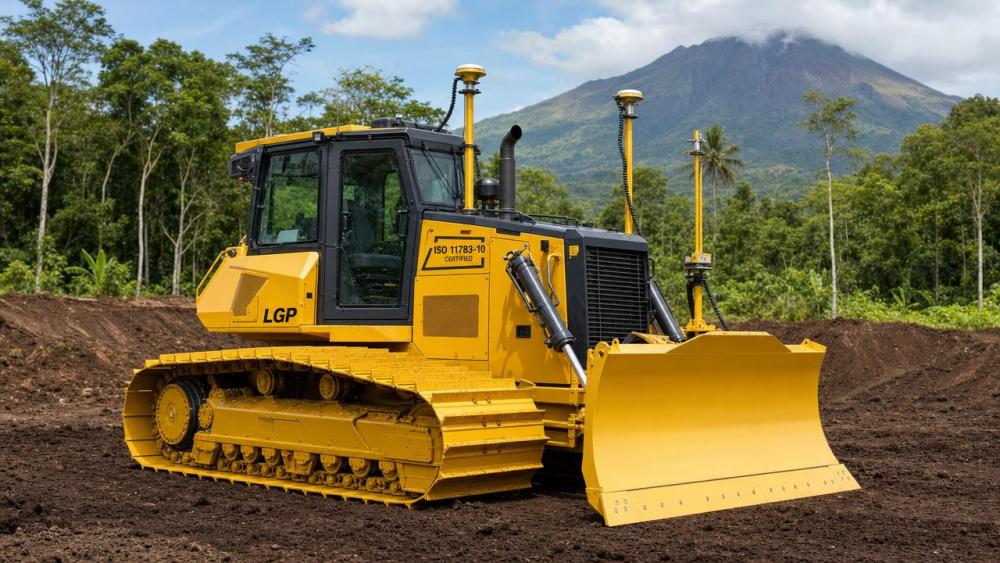
Conclusion: This tender does not represent a short-term sales surge, but rather a calibrated step toward institutionalizing digital and environmental performance criteria in public infrastructure equipment procurement. It is more accurately interpreted as a framework-setting action — indicating where technical compliance thresholds are moving in tropical infrastructure markets — rather than a discrete commercial opportunity. Current readiness depends less on bid response speed and more on demonstrable alignment with ISO 11783-10 workflows, LGP engineering validation, and documented adaptation to geotechnically complex operating environments.
Source: Indonesia Ministry of Public Works and Housing (PUPR), official announcement dated May 16, 2026.
Note: Certification interpretation guidelines, tender timelines, and validation methodology details remain pending official release and are subject to ongoing observation.