
Related News
- 00
0000-00
How to size heavy-duty loaders for North American mining operations - 00
0000-00
How altitude affects mining excavator performance in Latin America - 00
0000-00
Caterpillar Launches New Cat 6060 and Upgraded Autonomous Mining System - 00
0000-00
When does eco-friendly construction equipment pay for itself? - 00
0000-00
Will a wheel loader quick coupler fit your existing attachments?
Before approving capital expenditure, financial decision-makers need a clear view of mining equipment lifecycle costs—not just purchase price, but fuel efficiency, maintenance, uptime, resale value, and regulatory risk. This article outlines how to evaluate mining equipment as a long-term asset, helping approvers reduce hidden costs, strengthen ROI projections, and support more resilient investment decisions.
For finance teams reviewing crawler excavators, wheel loaders, bulldozers, graders, and related support fleets, the central question is rarely whether the machine can work. The real issue is whether the asset can deliver predictable production, manageable operating cost, and acceptable residual value over 5 to 10 years.
In mining and heavy earthmoving environments, a low purchase price can quickly be offset by 8% to 15% higher fuel burn, shorter component life, or repeated downtime events. That is why mining equipment approval should be based on total lifecycle economics rather than invoice value alone.
What Lifecycle Cost Really Means in Mining Equipment Approval
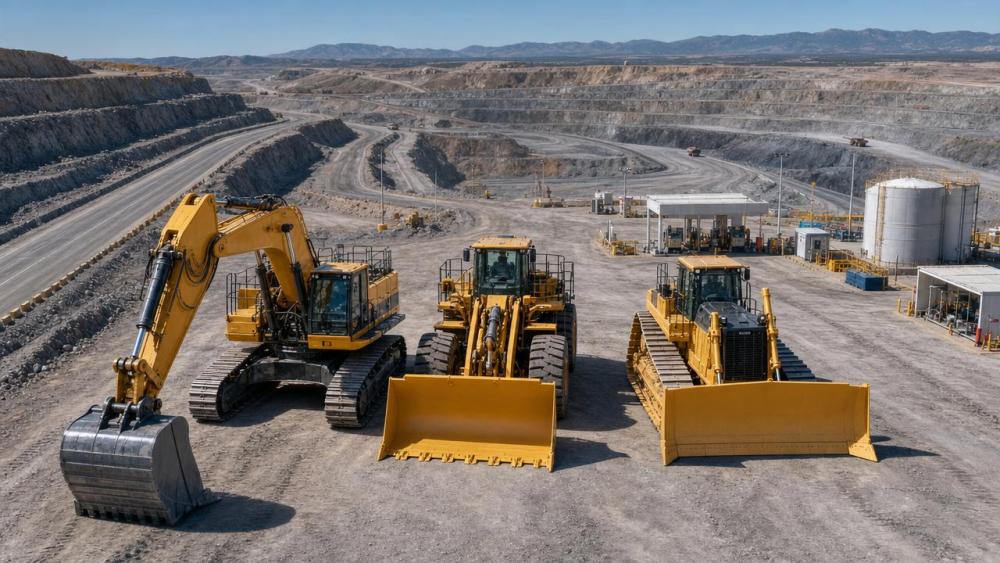
Lifecycle cost is the full economic footprint of mining equipment from acquisition to disposal. For most approval workflows, it includes at least 7 cost layers: purchase, freight and commissioning, fuel or energy, planned maintenance, unplanned repairs, operator-related efficiency, and end-of-life recovery.
For financial approvers, this framework matters because mining equipment often works in high-load duty cycles of 2,000 to 6,000 operating hours per year. Small differences in fuel rate, tire or track wear, and component rebuild intervals can materially shift payback and internal rate of return.
The 7 Cost Buckets That Deserve Board-Level Attention
A useful approval model should separate visible and hidden costs. Visible costs are easy to quote. Hidden costs usually emerge after commissioning, when availability drops or maintenance labor rises faster than expected.
- Acquisition cost: machine price, attachments, taxes, inland transport, and setup
- Operating cost: fuel, lubricants, ground engaging tools, tires, tracks, and wear parts
- Maintenance cost: scheduled servicing every 250, 500, or 1,000 hours
- Repair cost: failures in hydraulics, undercarriage, powertrain, electronics, or cooling
- Downtime cost: lost production per hour, standby labor, and delayed stripping or hauling
- Compliance cost: emissions upgrades, safety retrofits, site reporting, and training
- Residual value: resale, redeployment, rebuild potential, or scrap recovery
Why Purchase Price Alone Distorts the Decision
A machine that costs 6% less up front may consume 10 to 12 liters more fuel per hour or require a major hydraulic rebuild 1,500 hours earlier. Across a 5-year period, that can exceed the initial saving by a wide margin, especially in remote mines where service logistics are costly.
This is particularly relevant for high-intensity loading machinery and crawler excavators, where utilization rates above 75% are often assumed in financial models. If actual availability falls to 62% or 65%, production plans and cash flow projections weaken quickly.
The table below provides a practical lifecycle cost checklist for mining equipment approvals. It can help finance teams challenge supplier quotes and align operating assumptions with site reality.
The key takeaway is that mining equipment approval improves when each cost bucket is validated separately. Finance teams should require vendors and site managers to state assumptions in operating hours, fuel rate, and maintenance intervals rather than general claims about performance.
The Operating Drivers That Most Affect Long-Term ROI
Not every variable has equal financial impact. In most mine and quarry settings, 4 drivers shape lifecycle economics more than any others: fuel efficiency, mechanical uptime, component life, and application fit. These factors are measurable, comparable, and highly relevant to capital approval.
Fuel Efficiency: The Most Repeated Cost Every Shift
Fuel is often the largest recurring operating cost for diesel mining equipment. On machines running 3,500 hours per year, a difference of 5 liters per hour can translate into 17,500 liters annually. Multiply that by a 5-year ownership period, and the cost delta becomes substantial.
Finance approvers should ask for fuel data under matched duty cycles: loading density, haul distance, idle ratio, ambient temperature, and operator profile. A machine tested at 20% idle and flat ground may not reflect a mine with 35% idle and steep bench movement.
Uptime and Availability: Where Production Loss Hides
A mining equipment fleet can appear efficient on paper while losing significant value through low availability. For approval purposes, planned availability above 85% may look acceptable, but actual site availability below 70% can erode production targets, labor productivity, and contractor performance.
Financial models should distinguish among three measures: mechanical availability, operational availability, and utilization. A machine may be mechanically sound yet underutilized due to operator shortages, delayed parts, or mismatched bucket and truck pass design.
Component Life in Harsh Duty Cycles
Undercarriage wear, cutting edge consumption, hydraulic hose life, and engine cooling performance vary sharply by material type and terrain. In abrasive stripping or hard overburden conditions, actual wear life may be 20% to 40% lower than standard project assumptions.
This is why mining equipment should be evaluated by application class, not only machine size. A bulldozer pushing over short distances in soft spoil faces a different cost structure than one working on rocky, high-slip haul road support.
Application Fit Often Matters More Than Maximum Power
Larger machines do not always produce lower unit cost. An oversized excavator may burn more fuel during partial loading. An undersized wheel loader may need extra cycles, increasing tire wear and queue time. The best mining equipment choice is the one that fits target output with the fewest avoidable losses.
- Match bucket size to truck body and pass count targets
- Check engine power against altitude and ambient heat
- Review hydraulic flow for attachment-intensive applications
- Validate track or tire selection against ground conditions
A Finance-Friendly Framework for Comparing Mining Equipment Options
Approvals move faster when technical and financial teams use a shared evaluation structure. Instead of debating isolated specifications, compare mining equipment across a fixed matrix covering capital cost, hourly cost, availability risk, and end-of-life value.
Build a 5-Part Approval Model
- Define the operating profile: hours per year, material class, haul support, climate, and shift pattern.
- Estimate direct operating cost: fuel, filters, lubricants, wear parts, and operator inputs.
- Estimate maintenance profile: routine service, planned rebuilds, and likely failure categories.
- Assign downtime cost: lost tonnage, subcontractor delay, and standby labor exposure.
- Estimate asset exit value: resale timing, rebuild condition, and compliance relevance.
This 5-part structure helps financial approvers compare dissimilar machines on a consistent basis. It also reduces the risk of overvaluing horsepower or nominal capacity while missing the variables that affect full ownership cost.
The comparison table below shows how finance teams can score mining equipment proposals using practical approval criteria rather than promotional language.
A disciplined scorecard turns subjective discussion into auditable approval logic. It also helps procurement, operations, and finance align on the same threshold values before negotiation begins.
Set Thresholds Before Vendor Comparison
Before reviewing proposals, define acceptable thresholds such as maximum fuel consumption, minimum availability, service response within 24 to 72 hours, and parts lead time below 7 to 14 days for critical wear items. Clear thresholds make supplier comparisons more objective.
This method is especially useful in integrated fleets that include excavators, loaders, graders, and dozers. When one machine class underperforms, its effect can cascade across haulage, road conditioning, stripping progression, and plant feed continuity.
Regulatory, Technology, and Residual Value Risks Approvers Should Not Ignore
Capital approval for mining equipment is no longer just a mechanical decision. Emissions regulation, digital monitoring, remote operation capability, and electrification pathways increasingly affect asset life, finance assumptions, and resale attractiveness across international markets.
Emissions and Compliance Risk
Non-road emissions rules are tightening in many jurisdictions. Equipment configured for one regulatory environment may face export or redeployment constraints later. Finance teams should ask whether the machine remains commercially usable across at least 2 or 3 target markets at disposal time.
Compliance costs can also include software updates, exhaust aftertreatment maintenance, and operator retraining. These are rarely large as one-time items, but over a 5 to 8 year ownership period they can influence total cost and downtime planning.
Telematics, Autonomy Readiness, and Data Visibility
Modern mining equipment increasingly generates telematics data on idle time, fault codes, fuel trends, and operator behavior. For financial approvers, data visibility matters because it improves variance control. A machine that is 3% more expensive but provides better operational monitoring may reduce waste and speed corrective action.
In high-risk or remote mine settings, readiness for remote diagnostics or semi-autonomous workflows can reduce service delays and improve safety. These features should not be valued as marketing extras alone; they should be reviewed as tools for extending asset productivity.
Residual Value Is a Strategic Finance Variable
Residual value is often treated as a rough estimate, yet it can meaningfully improve or weaken the business case. A machine with strong rebuildability, broad parts support, and acceptable emissions relevance may retain better value at year 5 or year 7 than a cheaper but less transferable alternative.
Approvers should review 4 resale factors: installed hours, documented maintenance history, structural condition, and market compatibility. For some mining equipment categories, a complete service record can be almost as important as the original purchase specification.
Common Approval Mistakes and How to Avoid Them
Even experienced organizations make avoidable errors during heavy equipment approval. Most of them come from incomplete assumptions, not poor intent. Recognizing these patterns can protect cash flow and reduce post-purchase disputes.
Mistake 1: Using Generic Rather Than Site-Specific Duty Cycles
A generic estimate may assume moderate load, clean haul roads, and normal ambient conditions. Real mining environments often involve dust, impact loads, slopes, and extended idling. Approval models should reflect actual site patterns over 12 months, not idealized conditions.
Mistake 2: Ignoring the Cost of Downtime
Downtime should be valued in production terms, not only repair invoices. If one loader outage affects truck queueing or one excavator stoppage delays blasted material removal, the cost may exceed the replacement part many times over.
Mistake 3: Underestimating Support Infrastructure
Mining equipment does not operate alone. Workshop tools, technician skill, spare inventory, telemetry access, and operator training all affect performance. A financially attractive machine can become expensive if the support system is weak or distant.
Mistake 4: Treating All Suppliers as Operationally Equivalent
Two suppliers may offer similar machine weight and rated power, but differ sharply in service coverage, rebuild capability, and parts response. For mines operating 24/7, these support variables can influence lifecycle cost more than a modest difference in capital price.
A Practical Approval Checklist for Financial Decision-Makers
Before signing off on mining equipment, approvers should request a decision package that is both technical and financial. The most effective packages are concise, evidence-based, and built around operational assumptions that can be audited later.
Minimum Items to Request Before Approval
- A 5 to 7 year total cost of ownership model
- Fuel consumption range by application and load factor
- Planned maintenance schedule with 250 to 1,000 hour intervals
- Critical parts lead-time list and service response commitment
- Expected availability target and assumptions behind it
- Residual value scenario at at least 2 disposal points
Questions That Improve Approval Quality
Ask what happens if utilization drops by 10%, fuel rises by 15%, or a major component rebuild arrives 1,000 hours earlier than planned. Scenario testing reveals whether the mining equipment investment remains resilient under realistic stress rather than perfect execution.
For organizations following global heavy machinery trends, including decarbonization, remote operation, and precision control, approvals should also consider upgrade flexibility. An asset that can adapt to future operating models may justify a stronger business case than one optimized only for today.
Mining equipment approval is strongest when finance, operations, and procurement evaluate the same lifecycle picture: acquisition cost, hourly operating burden, uptime risk, compliance exposure, and exit value. That wider lens helps decision-makers avoid false savings and support more durable returns from heavy earthmoving assets.
If your team needs a more structured way to compare crawler excavators, loaders, bulldozers, graders, or other mine-support assets, EMD can help frame the decision with practical intelligence focused on asset utilization, reliability, and future-readiness. Contact us to get a tailored evaluation framework, discuss equipment selection criteria, or learn more solutions for capital-efficient fleet planning.