
Related News
- 00
0000-00
How to size heavy-duty loaders for North American mining operations - 00
0000-00
How altitude affects mining excavator performance in Latin America - 00
0000-00
Caterpillar Launches New Cat 6060 and Upgraded Autonomous Mining System - 00
0000-00
When does eco-friendly construction equipment pay for itself? - 00
0000-00
Will a wheel loader quick coupler fit your existing attachments?
In high-duty construction, mining, and grading operations, hydraulic machinery is pushed to its limits every hour—where a small leak, pressure spike, or delayed response can escalate into downtime, quality defects, or serious safety incidents. For quality control and safety managers, understanding failure risks is no longer just a maintenance concern; it is central to asset reliability, operator protection, and project continuity. This article examines the critical failure points, warning signals, and risk-control priorities behind heavy hydraulic systems in demanding jobsite environments.
Hydraulic Machinery Failure Risks in High-Duty Jobs
Hydraulic machinery converts fluid pressure into controlled force, motion, lifting power, steering response, and attachment precision.
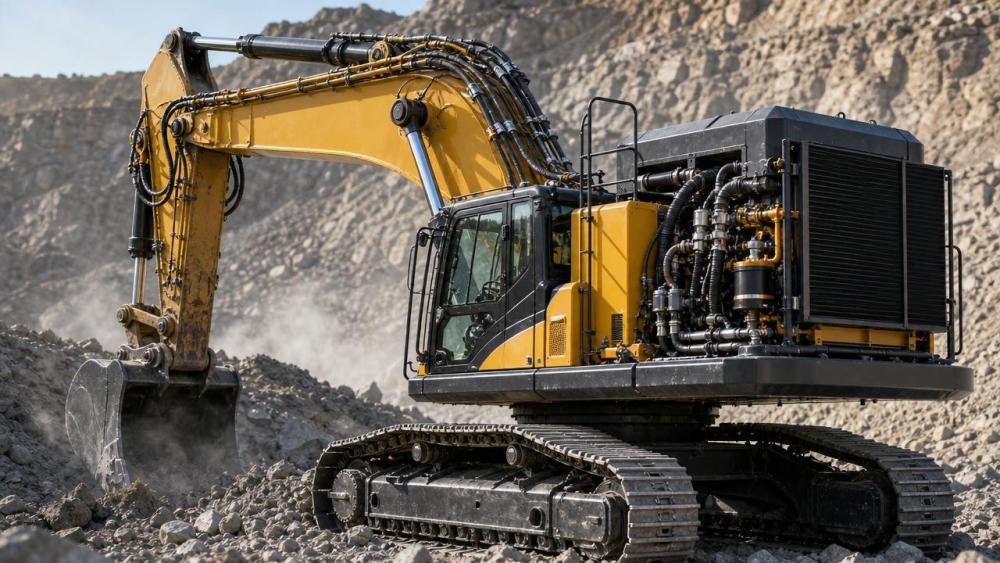
In crawler excavators, wheel loaders, bulldozers, graders, and skid steer loaders, this system carries the workload of the machine.
High-duty jobs create continuous stress on pumps, valves, cylinders, motors, hoses, seals, filters, sensors, and electronic controls.
When hydraulic machinery fails, the effect is rarely isolated. One weak component can influence digging force, travel control, braking, and attachment stability.
The core risk is energy. Pressurized oil can store immense force, especially in heavy earthmoving equipment working under shock loads.
Failure may appear as slow movement, overheating, noise, fluid loss, unstable control, or sudden loss of function.
For modern fleets, hydraulic machinery reliability also depends on software, electro-hydraulic valves, telematics, filtration discipline, and contamination control.
Why High-Duty Environments Increase Hydraulic Risk
Heavy jobsites combine vibration, dust, extreme temperature, repeated loading, uneven ground, and long operating cycles.
These conditions accelerate wear inside hydraulic machinery, even when equipment appears structurally sound from the outside.
Mining loaders face abrasive contamination and impact cycles. Excavators face breakout shock, swing load, and attachment pressure spikes.
Motor graders require fine hydraulic control, where a small delay can affect slope accuracy and surface quality.
Bulldozers and compact loaders often work near the edge of traction, hydraulic temperature, and attachment duty limits.
These signals should not be treated as routine inconvenience. They are early indicators of hydraulic machinery degradation.
Critical Failure Points in Hydraulic Machinery
Most severe incidents begin in a limited set of components. Knowing these points supports faster diagnosis and stronger prevention.
Pumps and Motors
Pumps are the heart of hydraulic machinery. Cavitation, aeration, poor inlet conditions, and contaminated oil can destroy internal surfaces.
A failing pump may show whining noise, temperature rise, reduced speed, low pressure, or metal particles in oil samples.
Hoses, Fittings, and Seals
Flexible hoses are exposed to abrasion, bending, heat, ultraviolet damage, and pressure pulsation.
Leaks in hydraulic machinery are not only cleanliness issues. High-pressure injection injuries can occur through tiny fluid streams.
Oil mist near hot surfaces can also raise fire risk, especially around engines and exhaust structures.
Control Valves and Spools
Valves direct force and speed. Wear, sticking, or contamination can make hydraulic machinery slow, unstable, or unpredictable.
Electro-hydraulic proportional valves add another layer. Sensor faults or poor calibration can distort operator commands.
Cylinders and Actuators
Cylinders transform pressure into movement. Rod scoring, seal extrusion, internal leakage, and side loading reduce holding power.
On excavators and graders, cylinder drift can affect trench profile, slope accuracy, and attachment positioning.
Operational Consequences Beyond Repair Cost
The cost of hydraulic machinery failure extends beyond parts replacement. It reaches production, safety, quality, and contract performance.
- Downtime interrupts earthmoving sequences, hauling cycles, and dependent machines.
- Unstable motion increases collision risk near people, slopes, and structures.
- Poor hydraulic response causes overcutting, undercutting, and grading defects.
- Fluid leakage creates environmental exposure and cleanup obligations.
- Repeated overheating shortens pump, seal, hose, and valve life.
In autonomous or remote-controlled machines, hydraulic machinery failure can also compromise command execution and emergency stop behavior.
The shift toward decarbonized and electrified equipment does not remove hydraulic risk. It changes the failure profile.
Electric-driven hydraulic pumps may improve control efficiency, but they still require thermal management, clean oil, and pressure discipline.
Typical Machines and Risk Priorities
Different machines expose hydraulic machinery to different stress patterns. Risk review should reflect the work cycle, not only the model.
This classification helps define inspection intervals, spare parts planning, oil sampling, and telematics thresholds.
Early Warning Signals That Deserve Immediate Attention
High-duty hydraulic machinery often gives warnings before failure. The challenge is separating normal aging from critical deterioration.
- Unusual pump noise, especially whining, growling, or rhythmic knocking.
- Slower cycle times without visible overload or operator change.
- Oil temperature above normal range during comparable work.
- Foaming, milky oil, dark oil, or burnt odor.
- Hose cover cracking, bulging, abrasion, or wet fittings.
- Attachment chatter, blade vibration, or unstable lift holding.
- Repeated filter clogging or bypass warnings.
A single warning may not confirm failure. Several together can indicate hydraulic machinery approaching unsafe operation.
Visual checks should never involve hands near suspected pinhole leaks. Cardboard or approved detection tools are safer.
Practical Risk-Control Measures
Risk control should combine inspection, data, maintenance discipline, and operating limits. No single method protects hydraulic machinery alone.
Control Fluid Cleanliness
Contamination is a major root cause of hydraulic machinery failure. Dirt, water, and air damage precision components.
Use correct filtration, sealed transfer containers, scheduled oil analysis, and clean breather systems.
Manage Heat and Pressure
Excessive heat reduces viscosity and weakens seals. Pressure spikes stress hoses, fittings, and pump components.
Cooling systems, pressure relief settings, attachment compatibility, and duty-cycle planning should be reviewed together.
Inspect Hoses as Safety Components
Hoses should not be viewed as minor consumables. They are safety-critical parts of hydraulic machinery.
Replacement decisions should consider age, routing, abrasion, bend radius, impulse cycles, and environmental exposure.
Use Data for Predictive Maintenance
Telematics can track pressure, temperature, fault codes, idle time, cycle load, and abnormal patterns.
Oil sampling adds evidence through particle counts, water levels, viscosity trends, and wear metal analysis.
Together, these tools help identify hydraulic machinery risk before the machine stops in the work zone.
Business Value of Strong Hydraulic Reliability
Reliable hydraulic machinery improves asset utilization, fuel efficiency, work quality, and scheduling confidence.
For infrastructure projects, stable hydraulics protect productivity across excavation, loading, hauling, grading, and compaction interfaces.
For mining and quarrying, fewer hydraulic interruptions support consistent material movement and safer shift planning.
For precision grading, responsive hydraulic machinery helps preserve design surfaces produced by GPS, laser, and 3D control systems.
Reliability also supports decarbonization. Efficient hydraulic circuits reduce wasted energy, overheating, and unnecessary replacement of major components.
EMD’s intelligence perspective connects these risks with broader equipment evolution, including autonomy, electrification, and high-precision control architecture.
Implementation Checklist for High-Duty Fleets
A disciplined checklist turns hydraulic machinery risk awareness into daily control. It should be simple, visible, and measurable.
- Define normal pressure, temperature, and cycle-time baselines for each machine class.
- Record leaks by severity, location, and recurrence, not only by repair date.
- Sample oil at intervals matched to duty severity and environment.
- Verify attachment flow and pressure requirements before field deployment.
- Train operators to report noise, drift, heat, lag, and unusual vibration.
- Review hose routing after repairs, rebuilds, or attachment changes.
- Use failure records to update preventive maintenance intervals.
The goal is not to eliminate all wear. The goal is to prevent uncontrolled hydraulic machinery failure during critical work.
Action Priorities for Safer Hydraulic Performance
Start with the highest-risk machines, harshest duty cycles, and most expensive downtime consequences.
Build a baseline using oil analysis, pressure checks, thermal readings, inspection records, and operator feedback.
Then prioritize hoses, filters, cooling capacity, pump health, valve response, and control calibration.
Hydraulic machinery will remain central to heavy earthmoving, even as machines become cleaner, smarter, and more autonomous.
The strongest reliability programs treat hydraulic performance as a strategic asset, not a background maintenance task.
For deeper equipment intelligence, monitor failure trends, component upgrades, and control-system advances across the global earthmoving sector.