
Related News
- 00
0000-00
How to size heavy-duty loaders for North American mining operations - 00
0000-00
How altitude affects mining excavator performance in Latin America - 00
0000-00
Caterpillar Launches New Cat 6060 and Upgraded Autonomous Mining System - 00
0000-00
When does eco-friendly construction equipment pay for itself? - 00
0000-00
Will a wheel loader quick coupler fit your existing attachments?
In 2026, earthmoving attachments are moving from optional tools to strategic productivity assets. They now shape cycle times, fuel use, grading accuracy, operator safety, and fleet flexibility across infrastructure, mining, utilities, and urban construction.
For intelligence-led platforms like EMD, the shift is clear. Attachment decisions now connect hydraulics, digital control, emissions strategy, and machine utilization. Better pairing of tools and carriers is becoming a direct source of competitive advantage.
Why jobsite scenarios now determine earthmoving attachments value
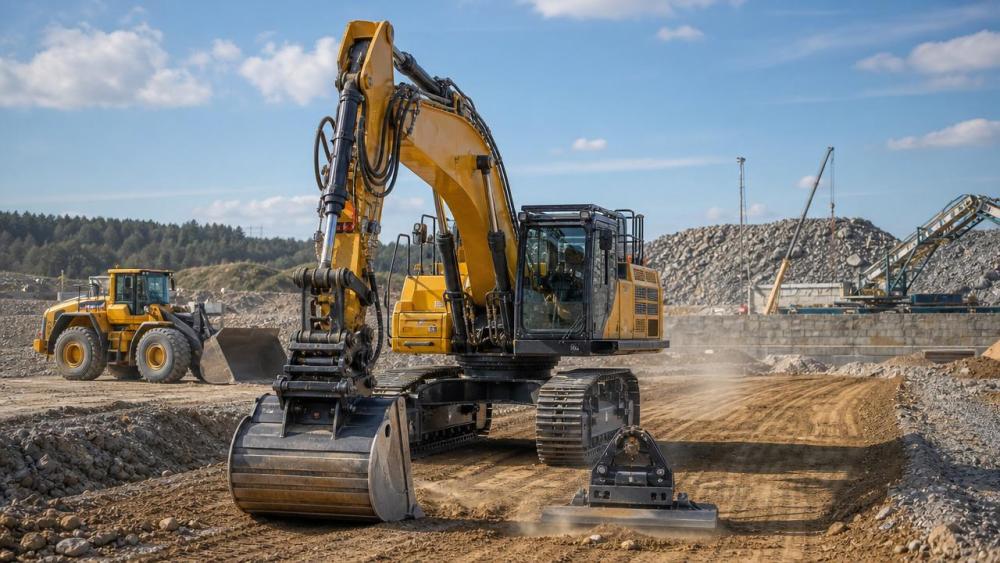
Not every site needs the same attachment strategy. A quarry bench, an airport grading corridor, and a dense urban trench impose different demands on breakout force, visibility, precision, and attachment change frequency.
That is why earthmoving attachments must be evaluated by scenario, not by catalog description. The best results come from matching tool geometry, hydraulic flow, sensor integration, and material conditions to real operating patterns.
In 2026, five forces are driving this scenario-based approach:
- higher pressure to reduce idle time and tool change delays
- tighter fuel and non-road emission expectations
- growing use of machine control and 3D grading systems
- mixed fleets serving multiple project types
- labor constraints pushing toward easier, safer workflows
Where earthmoving attachments are reshaping productivity first
High-volume excavation and bulk loading sites
On large excavation programs, bucket fill efficiency is still the first profit lever. But 2026 trends go beyond bucket size. Smarter lip profiles, wear packages, and payload-aware designs are reducing passes and shortening truck loading cycles.
Earthmoving attachments in this setting must support consistent penetration under variable material density. Poor bucket-carrier matching can waste hydraulic energy, accelerate pin wear, and increase fuel burn over long shifts.
Precision grading and roadbase preparation corridors
Motor graders and excavators equipped with grading buckets, tilt couplers, and machine control interfaces are changing finish work. Accuracy is no longer only operator-dependent. Attachment stability and sensor compatibility now matter just as much.
For airports, highways, and logistics parks, earthmoving attachments that maintain edge control and smooth material flow can cut rework significantly. This matters where specification tolerance is tight and surface uniformity affects downstream paving quality.
Urban utility, demolition, and confined access projects
In compact jobsites, versatility becomes more valuable than pure breakout force. Quick couplers, compact trenching buckets, hydraulic breakers, grapples, and multi-purpose skid steer tools allow one machine to complete multiple sequences without relocation.
Here, earthmoving attachments support schedule control by reducing support equipment needs. They also improve safety by limiting manual handling and minimizing machine repositioning in traffic-sensitive or pedestrian-adjacent zones.
Harsh mining, quarry, and abrasive material environments
Abrasive rock and high-impact work expose weak attachment design immediately. Reinforced cutting edges, abrasion-resistant liners, and optimized tooth systems are becoming standard selection criteria rather than premium extras.
In these scenarios, earthmoving attachments must preserve uptime above all. A lower purchase price means little if rebuild intervals shorten and unscheduled stoppages disrupt haulage coordination.
How 2026 technology trends change attachment decisions by scenario
Smarter coupler systems reduce changeover losses
Automatic and semi-automatic couplers are becoming central to fleet efficiency. They shorten tool exchange time, improve locking verification, and help machines shift faster between digging, grading, lifting, and material handling tasks.
This is especially valuable for mixed-use fleets. Earthmoving attachments deliver more value when switching friction disappears from daily operations.
Data-enabled attachments support better machine utilization
Sensor-equipped earthmoving attachments are entering mainstream adoption. Wear monitoring, hydraulic performance tracking, and attachment identification systems help operators and service teams avoid mismatch, overload, and preventable downtime.
For EMD-style intelligence users, this data also improves asset planning. Attachment-level insights now contribute to decisions about fleet standardization, spare inventory, and project pricing accuracy.
Electrification raises new hydraulic efficiency questions
As compact and mid-size machines electrify, attachment efficiency becomes even more important. Heavy or poorly tuned tools drain battery range faster and can reduce the practical shift window for urban and indoor work.
That is why 2026 earthmoving attachments increasingly emphasize lighter structures, lower drag, and optimized hydraulic demand without sacrificing durability.
Different jobsite scenarios demand different earthmoving attachments priorities
Practical guidance for matching earthmoving attachments to site needs
A useful selection process should begin with the job, not the tool. The following checks help improve attachment fit and lifecycle returns.
- Map the dominant material type, moisture range, and expected abrasion level.
- Review carrier hydraulic flow, pressure limits, and coupler compatibility.
- Estimate actual attachment change frequency during a normal shift.
- Check if machine control, payload, or telematics integration is required.
- Compare total cost of ownership, not just initial purchase price.
- Standardize wear parts where possible to simplify support.
For fleets spanning crawler excavators, wheel loaders, graders, bulldozers, and skid steers, attachment planning should also reflect machine role overlap. Shared logic across fleets helps reduce complexity and improve training consistency.
Common misreads that reduce returns from earthmoving attachments
One frequent mistake is assuming a larger attachment always raises productivity. Oversized earthmoving attachments can reduce breakout effectiveness, destabilize machine balance, and increase cycle variability in dense material.
Another mistake is treating couplers as convenience items only. On multi-task sites, slow changeovers silently erode utilization and push operators toward suboptimal tool use.
A third oversight is ignoring digital compatibility. Attachments that cannot communicate with control systems may limit grading accuracy, maintenance visibility, or autonomous workflow readiness.
Finally, some fleets underinvest in wear analysis. In abrasive environments, the wrong wear package can turn earthmoving attachments into recurring downtime triggers instead of performance enhancers.
What to do next as 2026 earthmoving attachments trends accelerate
The most resilient approach is to build an attachment roadmap by scenario. Separate high-volume excavation, precision grading, urban utility, and abrasive-duty requirements, then rank each by utilization impact and downtime risk.
Next, audit existing earthmoving attachments for hydraulic fit, wear cost, changeover efficiency, and digital readiness. Small upgrades in couplers, bucket geometry, or sensing often create larger gains than adding another carrier.
EMD’s market lens suggests the winners in 2026 will be those linking attachment choices to broader fleet intelligence. That means balancing force, precision, autonomy readiness, and decarbonization targets in one operating model.
Earthmoving attachments are no longer secondary accessories. They are frontline tools for higher utilization, tighter quality control, and stronger infrastructure execution. The right scenario-based decisions made now will shape jobsite efficiency well beyond 2026.