
Related News
- 00
0000-00
How much does a 3D grader guidance system cost fully installed? - 00
0000-00
How to verify capacity before sourcing equipment from manufacturers - 00
0000-00
When to choose LGP dozers for infrastructure site preparation - 00
0000-00
How to size heavy-duty loaders for North American mining operations - 00
0000-00
How altitude affects mining excavator performance in Latin America
Tags
Tin metal prices have reportedly reached RMB 200,000 per metric ton by early June 2026, with the available data stated as of the early morning of June 2. The development deserves attention from hydraulic attachment manufacturers, welding material buyers, PCB touch-control module suppliers, and companies involved in electro-hydraulic proportional valve components, because tin is used in solder, touch panels, and sealing-related materials within several hydraulic attachment products.
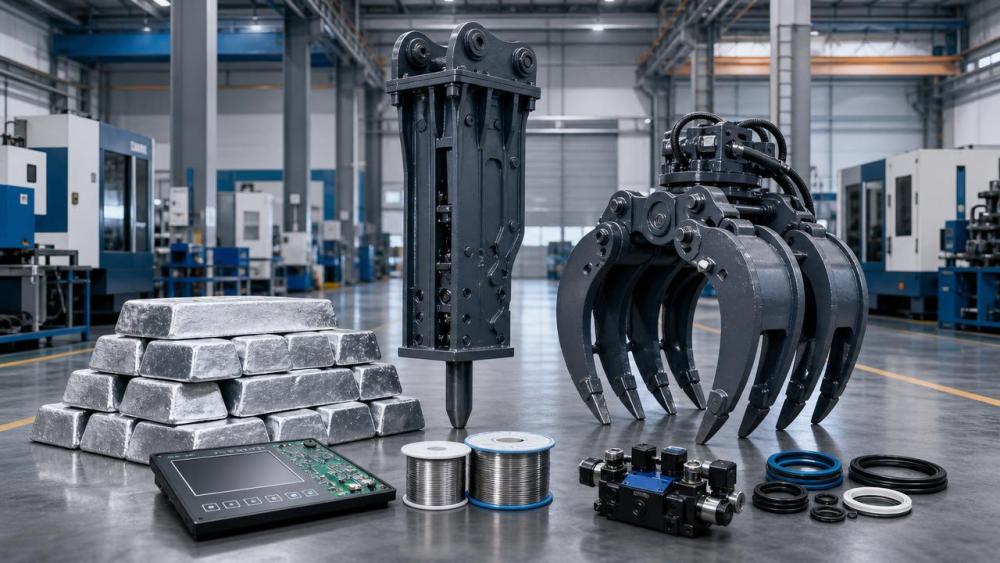
Event Overview
According to the supplied market information, tin metal prices have moved sharply, with the current reported level at RMB 200,000 per metric ton as of the early morning of June 2, 2026. The information also states that the price movement has been linked to demand from AI computing infrastructure.
The same information identifies tin as a key material in several hydraulic attachment-related applications, including solder, PCB touch-control boards, and sealing materials used in electro-hydraulic proportional valves.
The reported cost impact has already appeared in selected quick-change hydraulic breakers and multi-tine grapples, where bill-of-materials costs are said to have increased by 12% to 18%. Some Chinese manufacturers have reportedly started substitute alloy testing and tiered price-adjustment mechanisms.
Which Sub-Sectors Are Affected
Raw Material Procurement Companies
Raw material procurement teams are directly exposed because tin is part of the cost base for solder and related material inputs used in hydraulic attachment production. From an industry perspective, the main pressure is not limited to the spot price itself, but also to how quickly that price is reflected in procurement quotations and supplier payment terms.
The impact is mainly reflected in purchasing budgets, supplier negotiation cycles, and the need to reassess whether existing material supply arrangements can absorb or pass through the change.
Hydraulic Attachment Manufacturers
Manufacturers of hydraulic attachments are affected where tin-containing solder, PCB touch-control boards, and electro-hydraulic proportional valve sealing materials are used in product assemblies. The supplied information specifically mentions quick-change hydraulic breakers and multi-tine grapples as product categories where BOM costs have risen by 12% to 18%.
Analysis shows that this creates pressure on production costing, product quotation validity periods, and margin control for orders that were priced before the latest material cost movement was reflected.
PCB Touch-Control Module and Component Suppliers
Suppliers of PCB touch-control boards and related electronic control modules are affected because tin is identified as a key component in solder applications. Observably, any cost change in solder-related materials can affect the pricing of control modules supplied to hydraulic attachment manufacturers.
The impact is likely to appear in component quotations, lead-time discussions, and communication between module suppliers and equipment manufacturers regarding cost pass-through arrangements.
Welding Material and Solder-Related Suppliers
Welding material and solder-related suppliers are also positioned close to the price movement because tin is directly connected with solder usage in the affected product chain. From an industry perspective, these suppliers may face more frequent quotation updates and stronger scrutiny from buyers over formula stability, substitute material feasibility, and delivery commitments.
The main impact lies in quotation management, inventory valuation, and the ability to support customers that need stable input costs for hydraulic attachment production.
Channel and Distribution Companies
Channel companies handling hydraulic breakers, grapples, or related spare parts may be affected after manufacturers adjust prices. It is more appropriate to understand this as a downstream transmission risk rather than an immediate confirmed impact on every distributor.
The impact may appear in price-list updates, customer communication, order timing, and inventory strategy for products already affected by higher BOM costs.
What Companies and Practitioners Should Watch and How to Respond
Track Price Updates and Supplier Statements Closely
Companies should pay close attention to subsequent tin price updates and supplier quotation notices, especially for solder, PCB touch-control boards, and valve-related sealing materials. Currently, what deserves more attention is whether the reported RMB 200,000 per metric ton level continues to affect new purchase orders and whether suppliers adjust quotation validity periods.
Procurement teams should avoid relying only on older cost assumptions when preparing new hydraulic attachment quotations.
Review Product Categories With Higher Tin Exposure
Businesses should identify which products are most exposed to tin-containing materials. Based on the supplied information, quick-change hydraulic breakers and multi-tine grapples deserve particular attention because their BOM costs have reportedly increased by 12% to 18%.
Analysis shows that companies should separate affected product lines from less-exposed models when reviewing pricing, rather than applying a uniform adjustment across all hydraulic attachments.
Assess Substitute Alloy Testing With Technical Caution
Some Chinese manufacturers have reportedly started substitute alloy testing. From an industry perspective, this should be treated as a technical and supply-chain response, not as an immediate guaranteed replacement for tin-related materials.
Companies should follow test results, compatibility with existing product structures, and any impact on quality requirements before adopting alternative materials in production or after-sales components.
Prepare Tiered Pricing and Customer Communication Plans
The reported start of tiered price-adjustment mechanisms indicates that some manufacturers are already preparing commercial responses. Observably, companies handling orders, distribution, or long-cycle quotations should prepare clear communication around which costs are changing, which products are affected, and when new prices apply.
This is especially relevant for orders involving hydraulic breakers, grapples, PCB control modules, and electro-hydraulic proportional valve-related components.
Editor View / Industry Observation
Analysis shows that this development is important because it connects a non-construction demand driver, AI computing infrastructure, with cost pressure inside hydraulic attachment manufacturing. The reported tin price movement is not only a raw material issue; it is also a signal that electronic control modules, solder materials, and valve-related components can become cost-sensitive links in equipment production.
It is more appropriate to understand the current situation as both an emerging cost result and a continuing market signal. The reported 12% to 18% BOM increase for selected products indicates that part of the impact has already appeared, while substitute alloy testing and tiered price adjustments suggest that the final business response is still developing.
Currently, what deserves more attention is whether the cost pressure remains concentrated in selected product categories or spreads further through component quotations, manufacturing contracts, and distribution price lists.
Conclusion
The reported rise in tin metal prices to RMB 200,000 per metric ton has direct relevance for hydraulic attachments because tin is used in solder, PCB touch-control boards, and electro-hydraulic proportional valve sealing materials. The most immediate impact is visible in selected quick-change hydraulic breakers and multi-tine grapples, where BOM costs are reported to have increased by 12% to 18%.
From an industry perspective, this news should be viewed as a practical cost-pressure signal rather than a short-term market headline alone. Companies should focus on exposed product categories, supplier quotations, substitute alloy testing progress, and transparent price-adjustment communication.
Information Source Statement
Main source: Supplied industry brief on tin metal price movement, hydraulic attachment material exposure, BOM cost changes, and manufacturer response measures.
Information requiring continued observation: subsequent tin price changes, further public statements from manufacturers, progress of substitute alloy testing, and the actual implementation of tiered price-adjustment mechanisms.