
Related News
- 00
0000-00
How to size heavy-duty loaders for North American mining operations - 00
0000-00
How altitude affects mining excavator performance in Latin America - 00
0000-00
Caterpillar Launches New Cat 6060 and Upgraded Autonomous Mining System - 00
0000-00
When does eco-friendly construction equipment pay for itself? - 00
0000-00
Will a wheel loader quick coupler fit your existing attachments?
For project managers under pressure to deliver smoother surfaces, tighter schedules, and lower operating costs, choosing the right road construction machinery can directly determine grading speed and finish quality. From motor graders with precision control to integrated smart systems that improve site coordination, this guide explores how modern equipment helps infrastructure teams accelerate grading performance while maintaining accuracy, productivity, and long-term project value.
In road building, grading is more than a finishing step. It affects drainage, base stability, asphalt performance, fuel burn, rework rates, and the overall handover timeline. When the wrong machine mix is used, even a 2–3 cm surface deviation across a long stretch can create downstream delays in compaction, paving, and quality inspection.
For infrastructure leaders comparing equipment investments, the real question is not simply which machine moves material fastest. It is which road construction machinery combination can deliver target grade, maintain production across shifting ground conditions, and support predictable project control over 8-hour, 10-hour, or even 24-hour operating cycles.
Why Faster Grading Depends on the Right Machine System
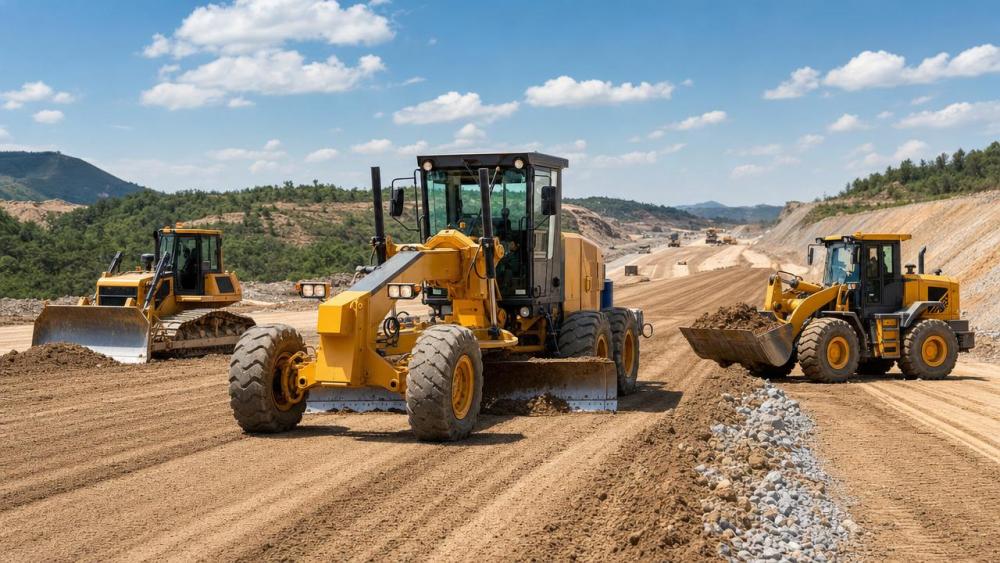
On modern infrastructure sites, grading speed is the result of system design rather than a single machine specification. Motor graders, bulldozers, wheel loaders, excavators, compact support machines, and digital control tools all influence production. A well-balanced fleet can reduce idle overlap, shorten material transfer distances, and improve first-pass accuracy.
For project managers, the biggest gain often comes from reducing rework. If a team cuts one extra pass from each grading cycle and trims correction work by 10%–20%, total schedule savings can be more meaningful than adding raw engine power alone. This is especially true on highway subgrade, airport shoulder, industrial yard, and urban road widening projects.
Core equipment roles in a grading workflow
Each machine contributes to grading speed in a different way. Bulldozers handle rough cut and bulk push, excavators shape difficult edges and drainage lines, wheel loaders keep material flow continuous, and motor graders refine the final profile. Skid steer loaders can support tight access areas, utility interfaces, and clean-up zones where larger machines lose efficiency.
The table below shows how common road construction machinery supports different grading stages and where project managers usually see the fastest productivity gains.
The key takeaway is that faster grading rarely comes from replacing one machine in isolation. It comes from sequencing the fleet correctly, assigning each unit to the right tolerance band, and minimizing stop-start handoffs between rough grading and final grade control.
What slows grading on real projects
- Insufficient blade control precision for finish work over long distances
- Material spread inconsistency causing high and low spots every 20–50 meters
- Poor site coordination between dozer, loader, and grader operators
- Rework from drainage slope errors, especially on shoulders and side ditches
- Downtime linked to attachment wear, tire issues, or hydraulic response lag
These delays are expensive because they compound. A 30-minute pause in rough spread can create a 2-hour knock-on effect once compaction and paving teams are waiting. For high-pressure sites, operational consistency is often more valuable than occasional peak output.
How to Select Road Construction Machinery for Grading Speed and Accuracy
Equipment selection should match the project’s material conditions, grade tolerance, haul pattern, and production target. A municipal resurfacing package and a greenfield highway job may both need road construction machinery, but the ideal grader size, blade control package, and support fleet can be completely different.
Four selection factors project managers should prioritize
- Grade tolerance requirement: Fine base work may require tighter control than rough subgrade, often pushing teams toward GPS, laser, or total-station-supported grading.
- Material type: Wet clay, mixed fill, crushed aggregate, and stabilized material all affect traction, blade load, and pass efficiency.
- Jobsite length and width: Long corridor projects benefit from machines optimized for steady travel speed and low repositioning time.
- Support availability: Access to parts, field service, and trained operators can matter as much as machine specifications over a 6–18 month project timeline.
Motor grader features that directly affect output
For finish grading, blade stability and control repeatability are critical. Articulation response, moldboard reach, hydraulic smoothness, frame balance, and visibility all influence how quickly operators can hold the design surface. On high-spec projects, 2D or 3D grade control can significantly improve pass consistency and reduce staking dependency.
In practical terms, managers should evaluate whether the grader can work efficiently at both rough shaping and fine trimming speeds. A machine that performs well only in one mode may create bottlenecks during transition phases. Transmission behavior across low-speed precision work and medium-speed travel work should also be reviewed.
The comparison below helps decision-makers align machine features with common grading requirements.
When comparing suppliers, managers should avoid focusing only on purchase price. A lower-cost unit that causes one extra correction cycle per day can become more expensive over a 3-month grading package. The better benchmark is cost per finished linear meter or cost per accepted square meter.
Common purchasing mistakes
One frequent mistake is overspecifying horsepower while underspecifying control technology. Another is choosing a grader without considering local technician response times, especially when projects run in remote zones. If the site loses 1–2 days waiting for parts or calibration support, any theoretical productivity advantage disappears quickly.
A third mistake is treating all road construction machinery as independent assets. On real projects, the grader’s speed depends heavily on whether bulldozers spread material evenly, whether wheel loaders maintain feed rhythm, and whether excavators clear interference zones before final trimming begins.
Smart Grading Technology and Workflow Control
Digital tools are changing how grading performance is managed. For project teams under schedule pressure, machine guidance, telematics, and production tracking now support better control over daily output, fuel use, idle time, and final surface compliance. This shift is especially important on larger projects where manual surveying alone cannot keep pace with moving work fronts.
Where smart systems add measurable value
A connected grader can help operators maintain design elevation with fewer corrections. A connected dozer can improve pre-grade consistency before the grader arrives. Telematics can also identify if a machine is idling above a target threshold, such as 15%–20% of shift time, giving managers a clear basis for workflow adjustment.
- 3D grade guidance reduces dependence on repeated stake checks
- Remote monitoring highlights low utilization during shift changes
- Fuel and idle data support weekly operating cost control
- Machine location data improves dispatching across multiple work zones
Using data without overcomplicating the site
The goal is not to flood the team with dashboards. The goal is to track 4–6 practical indicators: daily finished quantity, pass count, idle ratio, fuel burn per hour, maintenance interruptions, and accepted grade compliance. These metrics give project leaders a workable picture of whether the chosen road construction machinery is truly accelerating grading or simply working harder without better outcomes.
For organizations following the global shift toward autonomy and lower-emission equipment, smart grading also creates a bridge to future fleet upgrades. Better machine data today supports more informed decisions on electrification, operator training, and remote-support readiness tomorrow.
Implementation, Maintenance, and Risk Control on Active Jobsites
Even the best road construction machinery underperforms if implementation is weak. Fast grading depends on operator readiness, pre-shift inspections, blade and cutting edge condition, hydraulic health, and a realistic service plan. On demanding sites, reliability discipline can protect more schedule value than chasing marginal top-speed gains.
A practical 5-step deployment approach
- Match equipment to the phase: Separate rough cut, shaping, and finish grading requirements before mobilization.
- Verify site control data: Confirm benchmarks, design files, and slope references before 3D-enabled machines begin work.
- Train operators by task: A 1-day familiarization is not enough when grade control systems and mixed fleet coordination are involved.
- Set inspection intervals: Daily walkarounds and weekly deeper checks help catch wear before production is interrupted.
- Review output weekly: Compare planned versus actual finish quantity, rework percentage, and downtime causes every 5–7 days.
Maintenance issues that affect grading quality
Wear parts matter. A blade edge that has gone beyond its useful profile can compromise surface uniformity even if the machine itself remains mechanically sound. Tire condition, articulation play, hydraulic leakage, and sensor cleanliness can also influence accuracy. Small deviations accumulate quickly on long alignment sections.
Service planning should consider typical lead times for consumables and common replacement items. On remote projects, holding critical stock for 2–4 weeks of operation can reduce exposure to logistics delays. That is especially relevant when projects have weather windows or strict milestone penalties.
Risk points managers should monitor
- Overreliance on one grader without backup support for critical path work
- Insufficient calibration checks after transport or harsh vibration conditions
- Mismatch between designed slope tolerance and field operator understanding
- Delayed service response during peak grading windows
- Fuel quality or contamination issues affecting hydraulic and engine performance
For engineering leaders, the strongest strategy is to treat grading as a controlled process, not a stand-alone machine task. Reliable output comes from disciplined planning, correct machine allocation, and a maintenance routine aligned with actual site intensity.
What Project Managers Should Ask Before Finalizing an Equipment Plan
Before approving a fleet or supplier package, managers should ask whether the proposed road construction machinery can meet both current and next-phase requirements. A machine that works for rough platform preparation may not be ideal for final layer trimming. Transition costs between phases should be visible from the start.
Decision checklist for procurement and operations teams
- Can the grader maintain target accuracy across full shift conditions, not only during short demonstrations?
- What support response window is realistic: same day, 24 hours, or 72 hours?
- Does the supplier support machine guidance integration and operator onboarding?
- Are daily service points accessible enough to keep inspection time below 20–30 minutes?
- Can the broader fleet of excavators, loaders, and dozers maintain the grader’s working rhythm?
Organizations that monitor global earthmoving trends increasingly view grading equipment as part of a connected infrastructure productivity strategy. Precision control, high equipment utilization, lower emissions, and more resilient maintenance planning are no longer separate goals. They are becoming part of one integrated purchasing logic.
Faster grading starts with choosing road construction machinery that fits the material, tolerance, and production rhythm of the project. For project managers, the best results usually come from a coordinated fleet, reliable grade control, disciplined maintenance, and clear performance tracking from day 1. If you are evaluating motor graders, support machines, or smart grading workflows for upcoming infrastructure work, now is the right time to review your operating model, compare equipment strategies, and identify where precision and speed can improve together. Contact us to discuss project-specific requirements, request a tailored equipment perspective, or explore more solutions for high-efficiency grading performance.