
Related News
- 00
0000-00
How to size heavy-duty loaders for North American mining operations - 00
0000-00
How altitude affects mining excavator performance in Latin America - 00
0000-00
Caterpillar Launches New Cat 6060 and Upgraded Autonomous Mining System - 00
0000-00
When does eco-friendly construction equipment pay for itself? - 00
0000-00
Will a wheel loader quick coupler fit your existing attachments?
Road construction machinery plays a decisive role in paving speed, surface quality, and project cost control. For project delivery, efficiency no longer depends on machine size alone.
Today, better paving results come from coordinated fleets, precise grading, lower idle time, and smarter use of jobsite data. The most effective road construction machinery works as an integrated system.
Across highways, municipal roads, industrial yards, and airport access routes, contractors are under pressure to finish faster without sacrificing density, smoothness, or safety.
That shift is changing how road construction machinery is selected, scheduled, and monitored. The question is no longer which machine is strongest, but which setup produces stable output every hour.
Why paving efficiency is being redefined across modern road projects
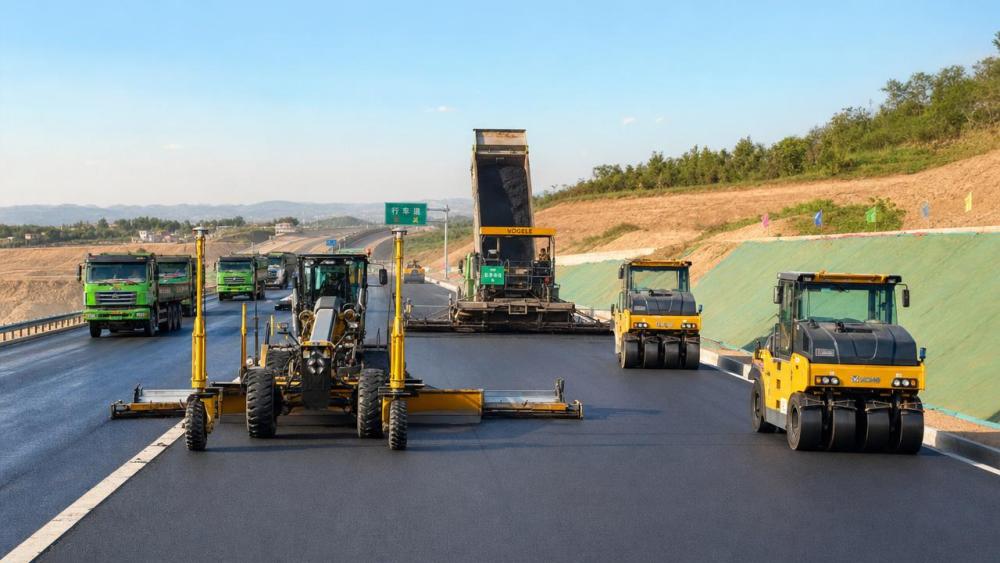
Paving efficiency used to be judged mainly by tons placed per day. That metric still matters, but it misses the full picture of modern road construction machinery performance.
Now, productivity is measured through cycle stability, grade accuracy, compaction consistency, fuel use, and rework avoidance. Small gains in each area create major schedule savings.
This trend is especially visible in projects using intelligent motor graders, connected pavers, and telematics-enabled rollers. Precision reduces waste, and consistency improves paving throughput.
EMD’s industry observation shows that high-performing fleets combine earthmoving strength with digital control. The winning formula links crawler excavators, graders, loaders, and compactors around one plan.
The strongest signals shaping road construction machinery efficiency
Several market and technical signals are pushing road construction machinery toward higher efficiency expectations. These signals affect both equipment use and project planning discipline.
- Tighter project timelines demand continuous paving windows with fewer stops.
- Higher material costs make overuse, segregation, and rework more expensive.
- Digital grade control increases expectations for smoother, more accurate surfaces.
- Emission and fuel efficiency targets reward optimized machine utilization.
- Labor constraints raise the value of intuitive controls and automation support.
Together, these pressures are moving the market away from isolated machine decisions. Efficient road construction machinery is now judged by fleet coordination and measurable output quality.
What actually improves paving efficiency on the jobsite
The best gains in paving efficiency come from controlling variation. When surface prep, material delivery, paving speed, and compaction timing stay aligned, performance rises quickly.
1. Precision grading before asphalt placement
A paver cannot consistently fix a poor base. High-accuracy motor graders with GPS, laser, or 3D machine control reduce thickness variation before paving begins.
That means less asphalt overconsumption, fewer correction passes, and better ride quality. Among all road construction machinery, graders often deliver the most underrated productivity gains.
2. Stable material flow to the paver
Interrupted feed lowers mat quality and creates stop-start paving. Wheel loaders, transfer equipment, and trucking schedules must support a steady asphalt supply.
Efficient road construction machinery planning keeps the paver moving at a consistent speed. That reduces surface marks, improves density control, and lowers thermal variation.
3. Fast, accurate compaction timing
Compaction efficiency depends on timing, temperature, pass pattern, and roller matching. Delayed rolling wastes the compaction window and forces extra passes.
Connected rollers and pass mapping help teams avoid missed strips and unnecessary overlap. This is where road construction machinery becomes a data-guided production system.
4. Lower downtime across the full fleet
One failed machine can slow an entire paving train. Preventive maintenance, spare part readiness, and operator checks are critical to maintaining paving rhythm.
High-uptime road construction machinery often outperforms larger fleets with poor maintenance discipline. Reliability is a direct contributor to paving efficiency.
The main drivers behind higher-performing road construction machinery
These drivers show why road construction machinery efficiency is increasingly tied to intelligence, not just horsepower. Better decisions now deliver the biggest production gains.
How these changes affect road quality, cost, and asset utilization
When road construction machinery operates with tighter coordination, the first visible benefit is surface consistency. Smoothness and uniform compaction improve because the process becomes more predictable.
The second impact is financial. Fuel burn, asphalt overuse, overtime hours, and repair interruptions decrease when the paving train runs without repeated corrections.
Asset utilization also improves. A well-scheduled grader, loader, excavator, and roller fleet spends less time waiting and more time contributing to productive flow.
For broad infrastructure programs, these effects compound across many jobsites. Road construction machinery with better visibility and control creates stronger long-term return on equipment investment.
Where attention should focus now for better paving outcomes
The next step is not simply adding more machines. It is identifying the pressure points that limit output and correcting them with process discipline and machine capability.
- Check whether base preparation accuracy supports target asphalt thickness.
- Measure paver stoppage frequency and identify supply bottlenecks.
- Track roller pass compliance and compaction window timing.
- Use telematics to compare idle hours against productive hours.
- Review maintenance planning before major paving sequences begin.
- Standardize operator workflows across shifts and project zones.
These checkpoints help road construction machinery deliver repeatable results. Efficiency improves fastest when teams remove hidden delays rather than chasing isolated speed gains.
A practical framework for evaluating the right improvement path
This framework turns road construction machinery decisions into measurable operational improvements. It supports better planning for both current projects and future fleet investments.
What to do next as road construction machinery becomes more intelligent
The most effective response is to treat paving as a connected production chain. Start with baseline data on grade accuracy, stoppages, compaction performance, and downtime.
Then prioritize the upgrades with the fastest operational return. In many cases, that means better grading control, telematics visibility, and stronger maintenance planning before adding fleet size.
Road construction machinery will continue moving toward automation, lower emissions, and integrated jobsite intelligence. The greatest advantage will belong to operations that combine machine power with process precision.
For anyone tracking the future of heavy equipment, EMD’s perspective is clear: paving efficiency improves when earthmoving dynamics, smart controls, and disciplined execution work together on the same surface.