
Related News
- 00
0000-00
How to size heavy-duty loaders for North American mining operations - 00
0000-00
How altitude affects mining excavator performance in Latin America - 00
0000-00
Caterpillar Launches New Cat 6060 and Upgraded Autonomous Mining System - 00
0000-00
When does eco-friendly construction equipment pay for itself? - 00
0000-00
Will a wheel loader quick coupler fit your existing attachments?
Earthmoving Machinery Technical Review: What Specs Matter Most
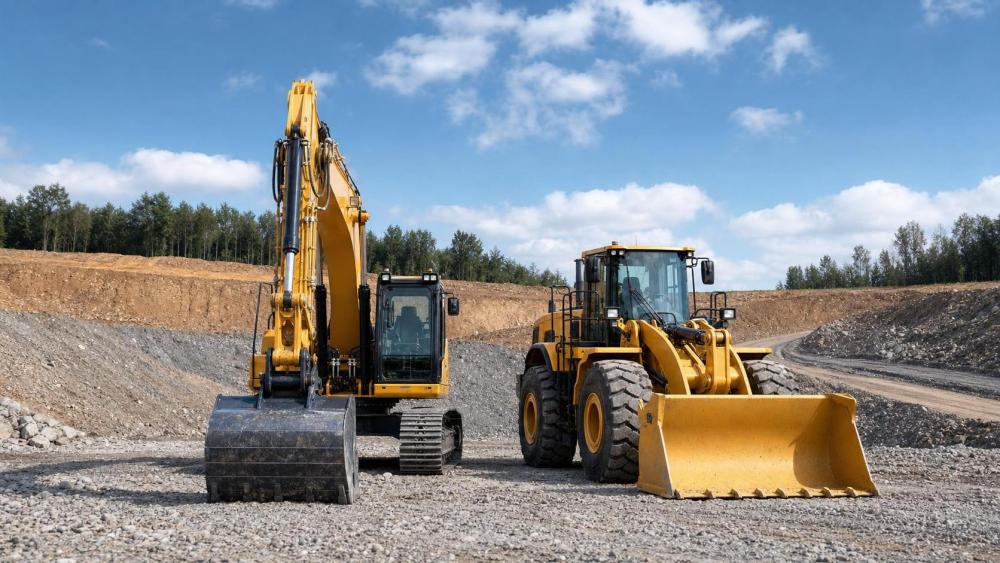
This earthmoving machinery technical review is built for evaluators who need to compare real performance, not just brochure claims.
From hydraulic breakout force and operating weight to grading precision and control logic, the right specs shape output, cost, and reliability.
In practice, the strongest machine on paper is not always the best machine in the field.
A useful earthmoving machinery technical review connects specifications to duty cycle, material conditions, operator behavior, and service access.
That is where many equipment comparisons become clearer.
Start With the Specs That Change Productivity
A serious earthmoving machinery technical review should begin with performance metrics tied to measurable jobsite output.
For excavators, breakout force, stick force, swing speed, cycle time, and pump flow usually matter more than cosmetic features.
For wheel loaders, bucket payload, lift arm geometry, traction, and full-cycle loading time should lead the review.
For bulldozers, drawbar pull, blade capacity, ground pressure, and transmission response define how much material moves per pass.
For motor graders, blade control resolution, articulation stability, and grade-hold accuracy often separate average machines from excellent ones.
Skid steer loaders need a different lens.
Rated operating capacity, auxiliary hydraulic flow, attachment compatibility, and turning stability usually decide real utility in tight worksites.
Why Output Specs Need Context
Published numbers can mislead when test conditions are not aligned with actual work.
A loader may show strong payload capacity, yet lose time in loose underfoot conditions because traction control reacts too slowly.
An excavator may deliver impressive breakout force, yet underperform if hydraulic heat causes flow derating during long trenching shifts.
This is why an earthmoving machinery technical review should always compare sustained output, not peak output alone.
Hydraulics, Powertrain, and Control Architecture
Hydraulics are still the center of machine behavior across most earthmoving categories.
In any earthmoving machinery technical review, pump type, system pressure, total flow, valve response, and electro-hydraulic tuning deserve close attention.
High pressure alone does not guarantee useful performance.
What matters is how smoothly the machine converts engine power into repeatable working motion under changing loads.
Key Questions to Ask
- Does the hydraulic system maintain response speed at high oil temperature?
- Can multiple functions run simultaneously without noticeable lag?
- Is power delivered progressively, or does the machine feel abrupt and tiring?
- How well does the transmission match torque delivery to ground conditions?
- Are software settings adaptable for fuel saving, precision work, or aggressive loading?
These questions matter because modern machines are increasingly software-shaped.
A grader with excellent sensors can still disappoint if blade response logic feels delayed or unstable.
A bulldozer with hydrostatic drive may save time on fine control, but only if the control map stays predictable across slopes.
Operating Weight, Ground Pressure, and Structural Durability
Another critical area in an earthmoving machinery technical review is the balance between weight, stability, and transport practicality.
Heavier equipment often brings better penetration, stronger traction, and improved stability during demanding cycles.
Still, more weight can raise haulage costs, increase soil disturbance, and limit site access.
Ground pressure is especially important on soft subgrades, wet clay, landfill surfaces, and reclaimed land projects.
Low ground pressure may protect the surface, but it should not come at the expense of structural rigidity.
Durability Signals Worth Checking
- Boom, arm, blade, and frame reinforcement details
- Track frame design and undercarriage wear life
- Axle and final drive protection in abrasive environments
- Pin, bushing, and joint sealing quality
- Cooling package resistance to dust loading and blockage
In real fleets, durability is not just about avoiding catastrophic failure.
It also affects resale value, service intervals, and the amount of unplanned downtime hidden inside total ownership cost.
Precision, Efficiency, and Emissions Performance
The next layer of any earthmoving machinery technical review involves efficiency metrics that stay relevant over the full asset lifecycle.
Fuel burn per cubic meter moved is usually more useful than hourly fuel consumption alone.
For graders and fine finishing equipment, grading precision per pass can be just as important as fuel performance.
This is also where decarbonization pressures become more visible.
Stage V, Tier 4 Final, and similar non-road standards continue to influence engine packaging, aftertreatment complexity, and operating cost.
What to Measure Beyond Basic Fuel Use
From a fleet perspective, efficiency should be reviewed together with uptime.
A machine that saves fuel but adds regeneration delays or sensor faults may still lose on overall economics.
Data, Automation, and Serviceability
A current earthmoving machinery technical review should also cover digital capability, because machine intelligence now influences value in practical ways.
Telematics, remote diagnostics, payload monitoring, grade control, and semi-autonomous functions can improve consistency across crews and shifts.
However, advanced features only help when they are reliable, understandable, and easy to support in the field.
Practical Review Checklist
- Confirm data accuracy for payload, fuel, idle time, and fault reporting.
- Check whether software updates require dealer intervention or can be deployed remotely.
- Review sensor placement in dusty, wet, and vibration-heavy operating conditions.
- Assess cab interface clarity, especially for grade control and work mode switching.
- Verify daily service points, filter access, and cooling system cleanout procedures.
This area is often underestimated.
A technically advanced machine can become expensive quickly if technicians need excessive time for basic diagnostics or routine maintenance.
How to Build a Better Comparison Framework
The most effective earthmoving machinery technical review does not rank machines by a single headline specification.
Instead, it scores equipment across production, precision, efficiency, durability, digital support, and serviceability.
Weighting should reflect the actual mission.
A quarry loader, a highway grader, and an urban skid steer should never be judged by the same priorities.
That also means test protocols should mirror material type, haul distance, slope, ambient heat, and shift length.
When the framework is disciplined, weak marketing claims become easier to spot.
At the same time, genuinely well-engineered machines stand out for the right reasons.
In the end, a strong earthmoving machinery technical review should help decision-making stay grounded in measurable field value.
Use the specs as evidence, not decoration, and the comparison will become far more useful for procurement, fleet planning, and long-term asset performance.