
Related News
- 00
0000-00
How to size heavy-duty loaders for North American mining operations - 00
0000-00
How altitude affects mining excavator performance in Latin America - 00
0000-00
Caterpillar Launches New Cat 6060 and Upgraded Autonomous Mining System - 00
0000-00
When does eco-friendly construction equipment pay for itself? - 00
0000-00
Will a wheel loader quick coupler fit your existing attachments?
Construction Machinery Spare Parts: Cost, Lead Time, and Quality Checks
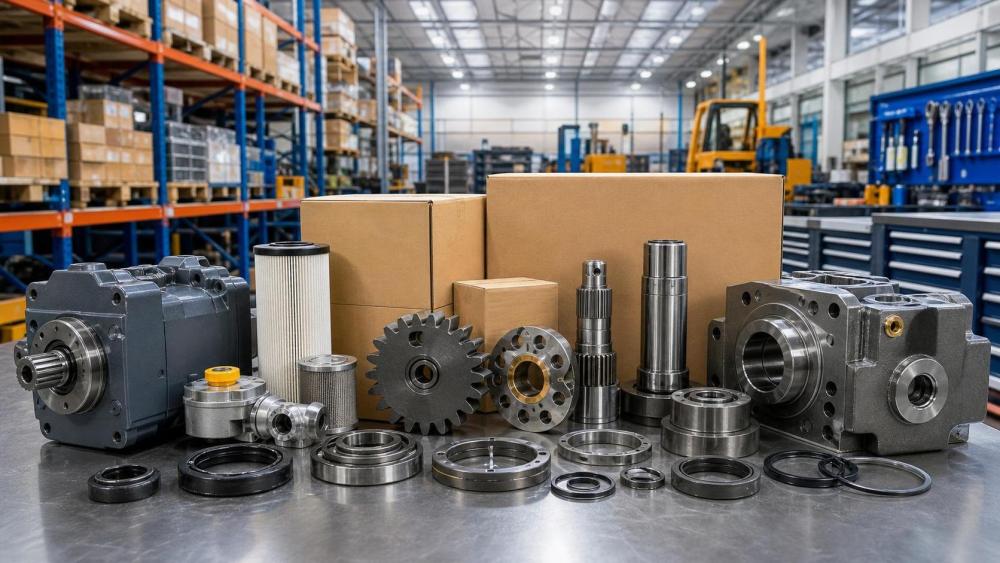
For procurement teams, sourcing construction machinery spare parts is a constant balance between cost control, lead time, and dependable quality.
In a market shaped by tight project schedules and rising performance demands, the right purchasing decisions can directly affect machine uptime and operating margins.
This guide explores how to evaluate suppliers, reduce sourcing risks, and build a more reliable spare parts strategy.
For buyers managing excavators, wheel loaders, graders, bulldozers, and skid steers, spare parts are never just replacement items.
They influence service intervals, project continuity, equipment resale value, and even safety exposure on demanding job sites.
That is why a strong construction machinery spare parts plan should connect price, delivery reliability, and technical fit in one process.
Why Spare Parts Purchasing Has Become More Complex
A few years ago, many buyers focused mainly on unit price and stock availability.
Today, the picture is wider.
Machines are more connected, more precise, and more sensitive to part quality.
At the same time, freight volatility and uneven factory capacity create longer replenishment cycles.
More noticeably, emission systems, hydraulic controls, and electronic assemblies now require tighter specification matching.
This means construction machinery spare parts sourcing now demands a more disciplined evaluation model than simple price comparison.
Common Cost Drivers Behind Construction Machinery Spare Parts
The quoted price is only one layer of total procurement cost.
In practice, the full cost often includes downtime risk, emergency shipping, warranty exposure, and installation failure.
- Material inputs such as alloy steel, seals, castings, and electronic components.
- Brand positioning between OEM, OEM-equivalent, and aftermarket suppliers.
- Order volume and packaging format.
- Import duties, local taxes, and inland transport.
- Part criticality for engines, hydraulics, undercarriage, and control systems.
When reviewing construction machinery spare parts, it helps to separate low-risk consumables from mission-critical assemblies before negotiating price targets.
How to Balance Cost Without Creating Hidden Risk
Not every category should be sourced with the same logic.
Filters, pins, bushings, and some wear parts can support broader supplier pools.
Hydraulic pumps, travel motors, ECUs, and emission-related components usually need stricter screening.
A useful approach is to build a part matrix based on value, failure impact, and replacement frequency.
That matrix helps teams decide where lower-cost alternatives are acceptable and where they are not.
A Practical Cost Review Framework
- Compare landed cost, not just ex-works price.
- Estimate downtime cost per machine per day.
- Check expected service life against purchase price.
- Review warranty terms and claim response time.
- Assess whether technical support is included.
This method often changes the result.
A cheaper part can become the most expensive option once rework, idle equipment, and rushed air freight are included.
Lead Time: The Factor That Disrupts Even Good Budgets
Lead time is often the difference between planned maintenance and an operational crisis.
For construction machinery spare parts, delays may come from raw material shortages, factory scheduling, export clearance, or weak distributor inventory control.
Long lead times also create forecasting errors.
By the time parts arrive, machine allocation or site priorities may already have shifted.
That is why reliable lead time data matters as much as pricing accuracy.
Questions Worth Asking Suppliers Early
- Is the part in stock, made to order, or assembled after purchase order release?
- What is the average lead time and the worst-case lead time?
- Which items depend on imported subcomponents?
- Can the supplier provide rolling inventory visibility?
- What are the escalation options for urgent machine-down cases?
These questions reveal whether a supplier truly understands aftermarket operations.
They also help buyers avoid promises based on ideal conditions rather than actual supply capability.
Ways to Reduce Lead Time Risk
There is no single fix, but several moves work well together.
- Dual-source fast-moving construction machinery spare parts where possible.
- Hold safety stock for high-failure and high-impact items.
- Use framework agreements with agreed replenishment cycles.
- Share maintenance forecasts with core suppliers each month.
- Track supplier on-time delivery as a formal KPI.
From a purchasing standpoint, predictability usually creates more savings than chasing the absolute lowest quote.
Quality Checks That Protect Uptime and Claims
Quality control is where many spare parts strategies either hold up or fail.
A part that fits loosely, wears early, or damages neighboring systems can trigger costs far beyond the original order value.
This is especially true for undercarriage components, hydraulic seals, pumps, cylinders, engine sensors, and electronic modules.
A disciplined inspection process is essential when sourcing construction machinery spare parts across multiple factories or distributors.
Core Quality Checks Before Approval
- Confirm part numbers, revision levels, and machine compatibility.
- Review material certificates where relevant.
- Check dimensional tolerances against drawings or approved samples.
- Inspect packaging integrity and labeling traceability.
- Verify test reports for hydraulic, electrical, or pressure-sensitive parts.
- Monitor early failure data after the first delivery batch.
Even a basic incoming inspection routine can catch obvious issues before they reach the workshop.
For higher-risk categories, sample validation and first-article approval are worth the effort.
Warning Signs During Supplier Evaluation
Choosing Suppliers for Long-Term Spare Parts Performance
Good suppliers do more than ship boxes.
They help stabilize maintenance planning, reduce claim friction, and improve forecast accuracy over time.
That is particularly valuable in fleets covering mixed brands and varied machine ages.
A supplier review should therefore include commercial, operational, and technical criteria together.
What Strong Suppliers Usually Provide
- Clear cross-reference support for part identification.
- Stable documentation and traceable batch control.
- Consistent response times for quotes and claims.
- Visibility into stock position and factory planning.
- Technical knowledge of equipment applications and failure modes.
This is where market intelligence also becomes useful.
Insights from platforms like EMD can help buyers read broader supply shifts, component bottlenecks, and product evolution across heavy equipment categories.
A Smarter Purchasing Model for Construction Machinery Spare Parts
The strongest results usually come from a structured model rather than one-off buying decisions.
Start by grouping construction machinery spare parts into critical, standard, and consumable categories.
Then assign sourcing rules, stock levels, and approval checks to each group.
This creates consistency across teams and reduces avoidable delays.
- Map annual demand by machine family and failure history.
- Define approved suppliers by part category.
- Set lead time thresholds and emergency sourcing triggers.
- Build incoming quality checklists for critical items.
- Review supplier performance quarterly using data, not impressions.
In real purchasing work, this level of discipline pays back quickly.
It lowers surprise costs, improves machine availability, and supports better negotiation positions over time.
Construction machinery spare parts should be managed as a performance category, not a routine reorder task.
When cost, lead time, and quality checks are evaluated together, purchasing decisions become far more resilient.
That is the practical path to stronger uptime, lower lifecycle cost, and a spare parts strategy that holds under pressure.