
Related News
- 00
0000-00
How to size heavy-duty loaders for North American mining operations - 00
0000-00
How altitude affects mining excavator performance in Latin America - 00
0000-00
Caterpillar Launches New Cat 6060 and Upgraded Autonomous Mining System - 00
0000-00
When does eco-friendly construction equipment pay for itself? - 00
0000-00
Will a wheel loader quick coupler fit your existing attachments?
Why Supplier Screening Has Become More Demanding
Choosing earthmoving equipment sourcing platform suppliers now requires more than checking listed brands and quoted prices.
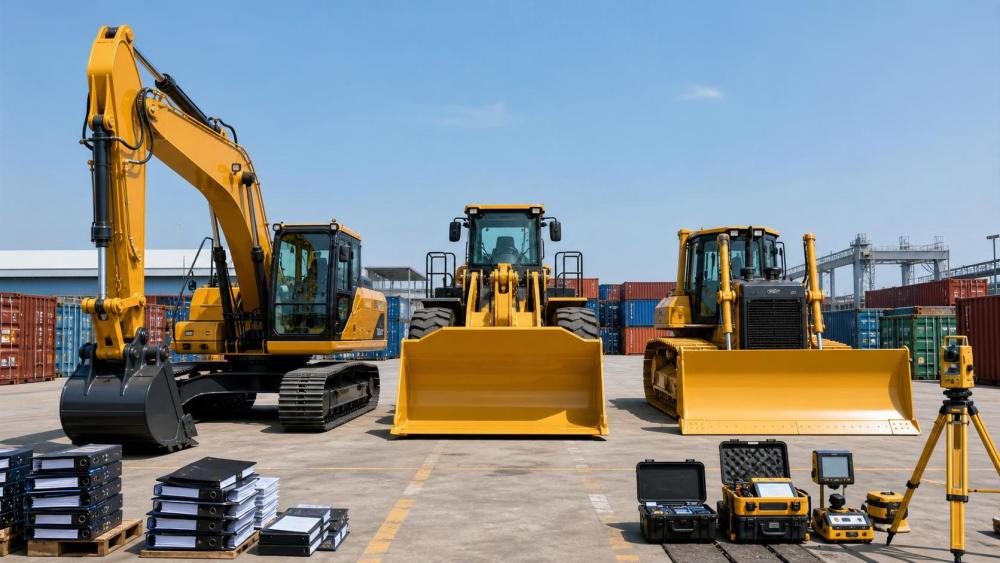
The decision sits at the intersection of equipment performance, emissions compliance, digital transparency, and long-term commercial risk.
That matters because the machines involved are not generic goods.
Crawler excavators, wheel loaders, motor graders, bulldozers, and skid steer loaders all serve different jobsite demands, duty cycles, and maintenance realities.
A sourcing platform may look credible on the surface, yet still lack product depth, verification discipline, or real after-sales support.
In today’s market, stricter non-road emission rules, automation features, and global infrastructure spending have raised the cost of a poor supplier decision.
For that reason, screening earthmoving equipment sourcing platform suppliers should be treated as a structured evaluation exercise, not a simple online comparison.
What A Reliable Sourcing Platform Should Actually Do
A serious platform does more than aggregate listings.
It should connect verified supply, technical data, compliance records, transaction clarity, and decision support in one usable environment.
This distinction is important when assessing earthmoving equipment sourcing platform suppliers.
Some platforms are media-heavy but operationally thin.
Others are procurement-oriented, but weak on machine specification accuracy or supplier traceability.
The stronger models combine market intelligence with practical sourcing controls.
That is where an intelligence background like EMD becomes relevant.
A portal focused on excavators, loaders, graders, bulldozers, and compact utility machines can often identify technical gaps that a general marketplace misses.
It also helps when the platform understands broader shifts such as decarbonization, telematics, remote-control architectures, and electro-hydraulic control trends.
Those factors increasingly affect procurement value, residual asset life, and cross-border usability.
The First Signals Worth Checking
Early screening should focus on visible indicators that reveal whether the platform is built for serious industrial sourcing.
Platform transparency
Look for named suppliers, physical business information, export history, response standards, and clear ownership of listings.
Anonymous inventories, vague location tags, or recycled product photos are immediate caution signs.
Technical completeness
Reliable earthmoving equipment sourcing platform suppliers should present model year, engine standard, operating weight, breakout force, attachment compatibility, and service history when relevant.
If key fields are missing, the platform may be optimized for lead capture rather than sourcing quality.
Verification logic
The platform should explain how supplier identity, machine condition, certificates, and shipment capability are checked.
A verification badge without process detail has limited value.
How Equipment Category Changes The Evaluation
Not all machine categories should be screened the same way.
The best earthmoving equipment sourcing platform suppliers recognize category-specific technical and operational risks.
A platform that uses the same sparse template for all five categories usually lacks sector maturity.
Compliance And Documentation Are No Longer Secondary
Many sourcing problems emerge after the commercial discussion appears complete.
The weak point is often documentation.
When screening earthmoving equipment sourcing platform suppliers, pay close attention to emissions stage declarations, serial number traceability, ownership proof, inspection records, and export document readiness.
This is especially important for cross-border transactions involving used or remanufactured equipment.
A machine that cannot satisfy local regulatory requirements may become a stranded asset, even if the purchase price looks attractive.
The same applies to automation-ready equipment.
If a platform promotes smart controls, GPS grading support, or remote operation compatibility, those claims should be backed by configuration detail and integration evidence.
EMD’s focus on emission regulation upgrades and machine control evolution reflects exactly why this layer now belongs in supplier screening.
Commercial Reliability Often Decides The Real Outcome
Technical credibility is essential, but it is not the whole picture.
Many earthmoving equipment sourcing platform suppliers fail under pressure because their commercial process is weak.
That weakness usually appears in four areas:
- Quotation inconsistency between listed and final pricing
- Unclear responsibility for inspection, loading, and freight coordination
- Limited dispute handling if delivered condition differs from listing
- Weak parts and service support after delivery
This is where platform process matters as much as supplier inventory.
A robust platform should define payment stages, document flow, inspection checkpoints, and escalation paths before the order is placed.
Commercial discipline is often the clearest difference between a marketplace and a sourcing partner.
A Practical Screening Framework
A useful review model is to score earthmoving equipment sourcing platform suppliers across five dimensions.
1. Supplier visibility
Check legal identity, operating history, and transaction footprint.
2. Machine intelligence
Review whether listings reflect true understanding of hydraulic systems, grading controls, attachments, and condition reporting.
3. Compliance strength
Confirm document availability for emissions, export, ownership, and inspection.
4. Transaction governance
Assess pricing transparency, contract logic, and issue resolution process.
5. Lifecycle support
Look beyond delivery to parts access, service channels, and machine uptime implications.
Used consistently, this framework makes comparisons more objective and easier to defend internally.
Where Better Judgement Usually Comes From
The strongest decisions rarely come from platform data alone.
They come from combining listing evidence with sector intelligence.
A source such as EMD is useful because it frames equipment sourcing within larger market signals.
Demand for mini-excavators, tighter urban jobsites, cleaner fleets, and more autonomous controls can change which suppliers remain relevant over the next few years.
That broader view helps separate short-term availability from durable sourcing value.
It also sharpens questions during evaluation.
Instead of asking only whether a machine is available, the better question is whether the supplier can support the machine’s technical, regulatory, and operational life in the target market.
That is the standard earthmoving equipment sourcing platform suppliers should now be measured against.
Turning Screening Into A Better Next Step
A disciplined shortlist should start with jobsite requirements, equipment category priorities, compliance thresholds, and acceptable commercial terms.
From there, compare earthmoving equipment sourcing platform suppliers using the same scorecard, not informal impressions.
Request missing technical details early, challenge vague verification claims, and test whether support remains strong once pricing discussions begin.
When intelligence, documentation, and execution quality align, supplier screening becomes less about avoiding mistakes and more about building a dependable sourcing base for future projects.
That is the point where platform research becomes a practical procurement advantage.