
Related News
- 00
0000-00
Earthmoving Technology Trends in 2026: What Will Change First? - 00
0000-00
Construction Machinery Components That Drive Repair Costs Up - 00
0000-00
Heavy Equipment Maintenance: Early Warning Signs You Should Not Ignore - 00
0000-00
Motor Graders vs AWD Models: Which Setup Fits Roadwork Better? - 00
0000-00
Crawler Excavators: 7 Factors That Matter Before You Compare Models
Under heavy loads, even the most advanced construction machinery components can become critical failure points that threaten uptime, safety, and operating costs. For quality control and safety management teams, understanding which parts fail first—and why—is essential for preventing breakdowns, reducing risk, and extending equipment life. This guide examines the earliest weak links across demanding jobsite conditions and what they reveal about reliability under pressure.
In excavators, wheel loaders, bulldozers, graders, and skid steer loaders, early failures rarely come from a single cause. They usually result from a combination of overload cycles, contamination, shock loading, poor lubrication, heat, and inspection gaps. For B2B teams responsible for machine acceptance, fleet risk control, and maintenance planning, knowing which construction machinery components fail first helps prioritize inspection resources before a minor defect turns into a safety event.
Heavy-load applications such as quarry loading, rock excavation, landfill pushing, and high-cycle material handling can increase stress by 20% to 60% compared with mixed-duty work. Under these conditions, a small pin crack, hose blister, bearing temperature rise, or seal leak often appears weeks before catastrophic damage. That early warning window is where quality and safety teams can make the biggest difference.
Why Certain Construction Machinery Components Fail Earlier Than Others
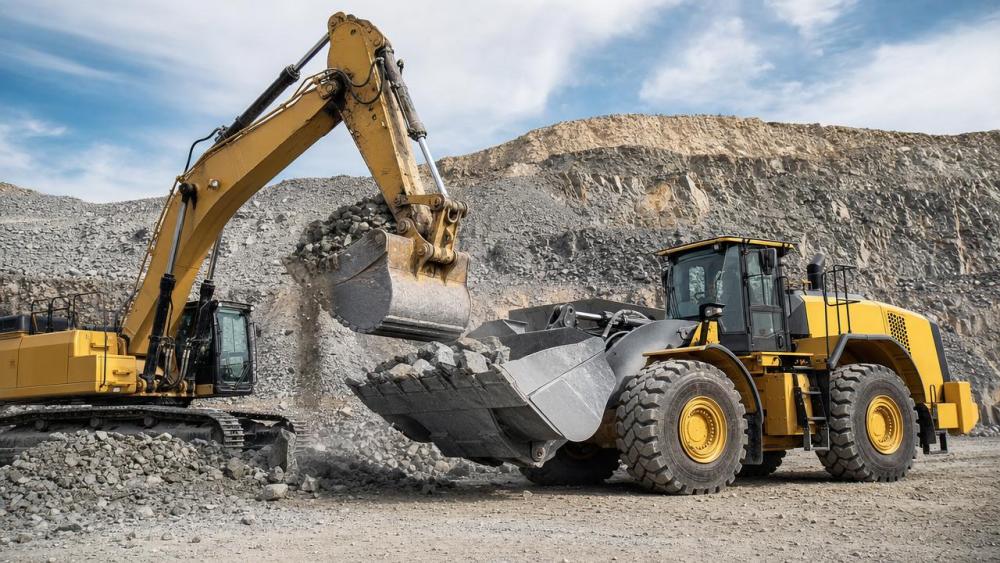
Not all construction machinery components age at the same rate. Parts exposed to combined mechanical force, hydraulic pressure, vibration, and abrasive contamination usually fail first. In heavy-duty fleets, the first weak links are often found in the hydraulic system, undercarriage, joints, bearings, wear interfaces, and cooling-related components.
A useful rule for quality control is to track failure by load path. The closer a component is to direct force transfer, the more likely it is to show accelerated wear. On a crawler excavator, bucket pins, boom foot pins, cylinder seals, and track components carry repeated shock loads. On a wheel loader, articulation joints, axle bearings, hydraulic hoses, and bucket edge systems often show the earliest degradation.
The 4 main stress mechanisms behind early failure
- Fatigue from repeated load cycles, often visible after 1,000 to 3,000 high-intensity operating hours.
- Shock loading from sudden impacts, common in rock handling, demolition, and frozen ground work.
- Contamination by dust, water, metal particles, or abrasive fines entering grease, oil, or seals.
- Thermal stress when fluid or bearing temperatures stay above normal operating range for extended shifts.
These mechanisms rarely act alone. For example, a hydraulic hose may survive pressure cycles but fail early when abrasion removes outer cover protection. A pin-bushing set may tolerate high load, yet fail in half its expected service life when grease intervals stretch from 8 hours to 24 hours. Early-failure analysis must therefore focus on the interaction between component design, maintenance discipline, and actual jobsite duty.
Components most likely to fail first by machine type
The table below gives a practical view for quality and safety teams auditing mixed fleets. It highlights which construction machinery components deserve front-line inspection when machines are exposed to heavy breakout force, full-bucket travel, steep grading loads, or prolonged dozing resistance.
A key takeaway is that wear parts are not the only concern. Many safety-critical failures begin in supporting construction machinery components such as seals, hoses, bearings, and joints. These parts are cheaper than structures or power units, but they can trigger expensive secondary failures if inspection intervals are weak.
The First Failure Zones Quality and Safety Teams Should Monitor
On most heavy equipment, first-failure zones can be grouped into six inspection categories. Building a checklist around these categories improves consistency across sites, especially when multiple brands, ages, and duty cycles are involved. A 15-minute pre-shift inspection and a deeper 50-point weekly inspection can prevent many unplanned stoppages.
1. Hydraulic hoses, seals, and fittings
Hydraulic parts are among the earliest failing construction machinery components under heavy loads because they face pressure spikes, heat, and contamination at the same time. A hose may be rated for normal service pressure, yet repeated peak events, hose twist, or clamp failure can shorten life dramatically. Small leaks around rod seals or fittings often appear 100 to 300 hours before a major loss-of-function event.
Early warning signs
- Oil misting, wet couplings, or dark dirt rings around fittings
- Hose cover abrasion exposing reinforcement
- Cylinder drift, slower attachment response, or unstable hold pressure
- Fluid temperatures consistently above normal operating range
2. Pins, bushings, and articulation joints
Pins and bushings carry direct load transfer in loaders, excavators, and skid steers. Under poor lubrication, heavy side loading, or contamination, clearance can increase quickly. Once joint play exceeds the service limit, stress shifts to adjacent structures. That is when cracked bosses, ovalized bores, and attachment misalignment begin to emerge.
For safety managers, the risk is not only wear. Excessive free play can reduce control precision, increase operator correction, and create unstable bucket or blade movement. In high-cycle fleets, checking pin movement every 250 hours and greasing at the correct shift interval can materially slow wear progression.
3. Undercarriage and travel components
In tracked machines, the undercarriage commonly represents 35% to 50% of maintenance-related wear cost over the life of the machine. Track chains, rollers, sprockets, idlers, and shoes degrade faster under constant turning, poor tension settings, hard rock, and packed debris. These are some of the most expensive construction machinery components to neglect because wear accelerates in a chain reaction.
4. Bearings and rotating assemblies
Wheel-end bearings, fan bearings, pump shaft bearings, and swing bearings are sensitive to contamination and lubrication quality. A temperature rise of 15°C to 20°C above baseline, recurring grease purge discoloration, or fine metallic particles in lubricant should trigger immediate investigation. These symptoms often appear before audible noise becomes obvious.
5. Wear parts that hide deeper problems
Bucket teeth, cutting edges, side cutters, blade edges, and ground-engaging tools are expected wear items. However, highly uneven wear can point to larger issues such as poor bucket angle, operator impact habits, incorrect material matching, or looseness elsewhere in the linkage. A wear part that disappears too quickly is often a symptom, not just a consumable cost.
6. Cooling and filtration components
Radiators, hydraulic oil coolers, air filters, and return filters are not always the first parts teams suspect, yet they strongly influence component life. Restricted airflow or dirty oil can reduce the service life of pumps, seals, and electronic controls. In dusty operations, filter inspection frequency may need to move from weekly to daily during peak production periods.
Failure Patterns, Root Causes, and Inspection Priorities
The most effective way to manage heavy-load reliability is to pair visible symptoms with probable root causes and action thresholds. This allows quality control personnel to standardize escalation, while safety teams can define what requires immediate shutdown, same-shift repair, or planned service at the next maintenance window.
The matrix below can be adapted into site inspection sheets, supplier audits, and incoming equipment acceptance protocols. It focuses on practical indicators rather than abstract condition labels.
This structure improves decision speed. Instead of relying only on operator comments, teams can classify construction machinery components by symptom severity, rate of change, and consequence of failure. That approach is especially valuable in remote sites where spare-parts lead times may range from 7 days to 6 weeks.
Root causes that are often missed
- Improper component matching after replacement, such as hose routing or hardness mismatch in bushings.
- Over-tight track tension, which accelerates chain, roller, and idler wear.
- Lubricant contamination introduced during service rather than during operation.
- Heat buildup caused by cooler blockage, not by the failing component itself.
- Operator technique that introduces repeated shock loading in one part of the duty cycle.
For procurement and maintenance planners, these hidden causes matter because replacing failed parts without correcting the mechanism only repeats the same problem. A component that fails at 600 hours, then again at 650 hours after replacement, is rarely a simple part defect. It usually indicates a system-level issue in alignment, contamination, lubrication, or duty abuse.
How to Reduce Early Failures in Heavy-Load Fleets
Reducing first-failure events requires more than routine maintenance. It requires a reliability framework that combines incoming quality checks, application-based inspection intervals, operator feedback, and failure history review. For companies running mixed earthmoving fleets, even a 10% reduction in premature component replacement can meaningfully improve availability and safety performance.
Build a component control plan around 5 checkpoints
- Define critical construction machinery components by machine type and task severity.
- Set inspection frequency by hours and environment, such as every shift, every 250 hours, and every 500 hours.
- Record measurable thresholds including temperature rise, pin clearance, leak rate, and tread or edge wear.
- Separate cosmetic wear from safety-critical degradation to avoid either overreaction or delay.
- Review repeated failures monthly to identify root cause trends and supplier or process issues.
Procurement and quality acceptance considerations
When sourcing replacement construction machinery components, price alone is a weak filter for heavy-load service. Quality teams should evaluate dimensional consistency, material traceability where available, seal quality, hardness consistency for wear interfaces, and packaging protection against contamination. For safety-sensitive parts, incoming inspection should include fit, finish, critical dimensions, and any visible transport damage.
It is also wise to classify spares into at least 3 categories: consumable wear items, operationally critical items, and safety-critical items. The higher the consequence of failure, the stricter the acceptance criteria should be. This is particularly important for hoses, joints, braking elements, steering-related components, and structural wear interfaces.
Maintenance practices that deliver measurable gains
- Shorten grease intervals in abrasive or wet conditions rather than keeping a fixed schedule year-round.
- Use baseline temperature checks to identify bearing and hydraulic distress before audible failure.
- Inspect hose routing after every major service to prevent rubbing and twist-induced fatigue.
- Trend undercarriage wear monthly instead of replacing only after visible end-stage damage.
- Train operators to reduce shock inputs during loading, travel, and blade engagement.
For organizations focused on reliability, the biggest improvement often comes from discipline, not complexity. A well-executed 6-point visual check performed every shift can outperform an irregular advanced monitoring program. The goal is to catch early movement in vulnerable construction machinery components before structural damage, fluid loss, or loss of control develops.
What Early Failures Reveal About Reliability Under Pressure
The first components to fail are rarely random. They reveal where the machine’s real operating stress is concentrated. If hoses fail first, pressure spikes, routing, or heat may be the issue. If bushings wear first, lubrication discipline or side loading may be the problem. If undercarriage parts disappear too quickly, travel practice, terrain, or tension setting usually deserves closer review.
For quality control managers, this information supports better acceptance criteria, spare-parts planning, and vendor evaluation. For safety managers, it supports targeted intervention before failure modes escalate into oil release, loss of braking, instability, or attachment control hazards. In other words, the earliest failing construction machinery components are not just repair items; they are operational intelligence.
EMD supports equipment decision-makers who need practical insight into excavators, wheel loaders, graders, bulldozers, and skid steers working under real heavy-load conditions. If you are reviewing fleet reliability, sourcing replacement parts, or improving jobsite inspection standards, now is the right time to refine your component-risk strategy. Contact us to discuss your application, request a tailored evaluation framework, or explore more heavy equipment reliability solutions.