
Related News
- 00
0000-00
How to size heavy-duty loaders for North American mining operations - 00
0000-00
How altitude affects mining excavator performance in Latin America - 00
0000-00
Caterpillar Launches New Cat 6060 and Upgraded Autonomous Mining System - 00
0000-00
When does eco-friendly construction equipment pay for itself? - 00
0000-00
Will a wheel loader quick coupler fit your existing attachments?
Under extreme load, the construction machinery components most likely to fail are rarely random. They are usually parts that carry repeated shock, heat, pressure, contamination, or misalignment. For quality control and safety managers, the priority is not just knowing which components break, but understanding why they fail first, how those failures escalate, and which inspection signals appear before a serious event. In heavy equipment, the highest-risk failures tend to cluster around hydraulic systems, undercarriage structures, pins and bushings, booms and arms, drivetrain elements, and braking or steering-related assemblies.
This matters because a failed seal or cracked pin boss is not only a maintenance issue. Under load, it can become a safety issue, a production loss event, and a root cause of secondary damage across the machine. A hose rupture may contaminate the site and disable boom control. A final drive issue may strand a tracked machine on a slope. A fatigue crack in a structural member may progress unnoticed until the equipment is operating at maximum breakout force.
For readers responsible for quality assurance or operational safety, the practical question is clear: which construction machinery components deserve the closest monitoring when load cycles are severe? The answer depends on machine type, site conditions, operator behavior, and maintenance discipline, but the same failure patterns appear again and again across excavators, loaders, bulldozers, graders, and skid steer loaders.
Which construction machinery components fail first when machines work at full load?
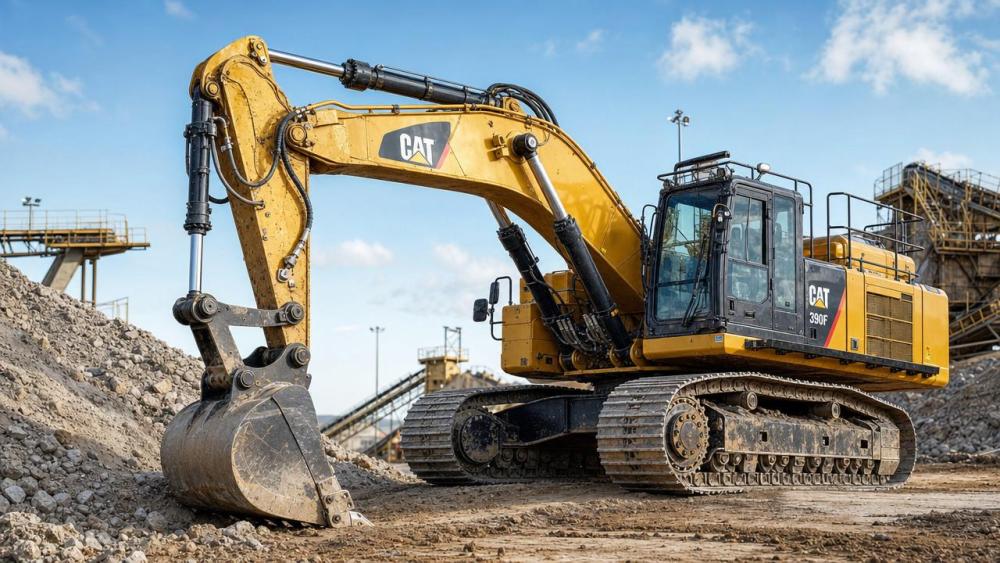
The parts most likely to fail under load are those exposed to concentrated stress and repeated duty cycles. In most fleets, hydraulic hoses and seals, cylinder rods, bucket linkage pins, bushings, slew bearings, track components, axles, final drives, cutting edges, and structural weld zones rank among the highest-risk items. These are not always the most expensive parts individually, but they are often the first to show the effects of overloading, impact shock, poor lubrication, or contamination.
From a quality and safety standpoint, these components matter because they sit at the interface between force generation and motion control. When a machine digs into hard strata, lifts near capacity, pushes heavy material, or travels over uneven terrain, load is transferred through hydraulic pressure, welded structures, rotating joints, and traction assemblies. Each transfer point is a potential failure origin. If a weak link is missed during inspection, it may trigger much larger damage in connected systems.
That is why the most effective inspection strategy does not treat all parts equally. High-risk components should be prioritized by load concentration, historical failure rate, failure consequence, and detectability. This risk-based approach gives safety managers a better way to allocate inspection time and gives quality teams a clearer basis for supplier evaluation and incoming part verification.
Why hydraulic components are among the most common load-related failure points
Hydraulic systems are central to heavy equipment performance, and they are also one of the most failure-prone groups of construction machinery components under high load. Hoses, seals, fittings, cylinders, pumps, and valve blocks all operate under intense pressure. When load increases, any weakness in material quality, routing, contamination control, or thermal management becomes more likely to show up as leakage, burst failure, drift, pressure instability, or loss of control.
Hydraulic hose failure is especially dangerous because it often develops from a combination of pressure pulsation, abrasion, bending fatigue, and heat. A hose may appear acceptable during a casual walkaround but still have internal reinforcement damage. Under a peak load event, that hidden weakness can become a rupture. Safety teams should treat hose condition, clamp position, protective sleeve wear, and rubbing contact points as critical inspection items, not cosmetic details.
Cylinder assemblies also deserve close attention. Rod scoring, seal extrusion, gland wear, and side-loading damage are common in machines that work on uneven ground or use attachments aggressively. If a cylinder does not extend or retract smoothly, if drift increases, or if metal particles are found in hydraulic oil, the problem may already be progressing beyond simple seal wear. For quality control, surface finish, rod hardness, chrome integrity, and seal compatibility should be verified carefully in both OEM and replacement parts.
Another overlooked issue is contamination-driven failure. Fine debris, water ingress, and degraded oil can shorten the life of pumps, spool valves, and proportional control components. Under load, these damaged parts may generate erratic response, pressure spikes, or overheating. In many failure investigations, the root cause is not “component weakness” alone, but poor filtration discipline combined with demanding duty cycles.
Structural joints, pins, and welded areas often fail before major castings do
Many serious machine incidents begin at small connection points rather than at large visible structures. Pins, bushings, retainers, bosses, and weld toes carry tremendous localized stress. On excavators and loaders, bucket linkage assemblies are exposed to impact, torsion, shock loading, and constant articulation. Once lubrication intervals slip or contamination enters the joint, wear accelerates quickly. Increased clearance then creates misalignment, which drives even more uneven loading into the surrounding structure.
For quality personnel, the key lesson is that joint wear is never isolated for long. A worn pin-bushing interface can lead to cracked lugs, ovalized bores, damaged retainers, and fatigue in nearby plates. Safety managers should be alert to audible knocking, visible movement, inconsistent bucket tracking, and grease purging that contains metallic debris. These are practical indicators that load is no longer being distributed as designed.
Welded areas on booms, arms, frames, and blade structures also rank high among construction machinery components likely to fail under load. The issue is not simply “bad welds.” Fatigue cracks usually originate from a combination of cyclic stress, abrupt geometry transitions, residual stress, corrosion, and overload events. Attachments, modifications, and unauthorized repairs can increase the problem by altering stress paths that the original structure was not designed to absorb.
Inspections should focus on known hot spots: weld toes, reinforcement terminations, attachment ears, cross-member junctions, and high-vibration brackets. Surface cracks, rust lines, paint lifting, or fresh oil and dust accumulation near joints may all indicate movement. Non-destructive testing methods such as dye penetrant, magnetic particle, or ultrasonic examination can be valuable in periodic inspections for high-hour machines or critical fleets.
Undercarriage and drivetrain failures rise sharply in abrasive, high-impact conditions
Tracked and wheeled machines both suffer load-related damage in their mobility systems, but the failure modes differ. In crawler equipment, chains, rollers, idlers, sprockets, track shoes, and tensioning systems operate in a harsh combination of shock, abrasion, mud, and misalignment. If track tension is wrong or wear becomes uneven, loads rise across the entire undercarriage. This not only reduces component life but can also increase fuel consumption and decrease machine stability.
Undercarriage wear often progresses gradually until one event exposes the accumulated damage. A seized roller, cracked shoe, damaged link, or failed recoil spring may not stop production immediately. But under a steep grade, a turn under load, or impact with rock, the weakened system can fail abruptly. For safety teams, undercarriage inspections should not be treated as lower priority simply because wear is expected. Predictable wear still becomes a safety hazard when it crosses critical thresholds.
On wheeled machines, axles, hubs, bearings, differentials, drive shafts, and final drives are common stress points. Repeated overloading, poor lubrication, seal failure, and contamination can generate heat and accelerate pitting or spalling. Early warning signs include abnormal vibration, noise changes during travel, metal in oil samples, wheel-end temperature differences, and visible leakage around seals. These are the kinds of indicators that quality and safety managers should integrate into routine condition monitoring.
Brake and steering-related components also deserve a place on the high-risk list. On loaders, graders, and skid steers, loss of braking stability or steering control under load can produce immediate site hazards. Heat buildup, hydraulic imbalance, worn friction materials, and neglected adjustments may all remain manageable under light duty yet become dangerous during loaded travel or downhill operation. Because the consequence is so high, these systems require tighter inspection criteria than non-critical wear items.
Why failure usually starts with overload, misalignment, heat, or poor maintenance discipline
Although different machines fail in different ways, most load-related damage can be traced to a short list of root causes. Overload is the most obvious, but not always in the form of a single extreme event. Repeated operation near capacity, aggressive attachment use, shock loading during digging, and travel with poor load distribution all create cumulative fatigue. A machine may remain productive for months while hidden damage grows at a critical point.
Misalignment is another major driver. If a pin bore wears out of round, if a hose routing path forces repeated twisting, if track alignment drifts, or if a cylinder takes side load, stress stops flowing through the machine as intended. The component may still function, but every cycle causes extra friction, heat, and distortion. That is why dimensional checks and fit verification are just as important as looking for visible cracks or leaks.
Heat is equally destructive. High oil temperature reduces viscosity, damages seals, and accelerates oxidation. Friction heat in bearings, brakes, and drives shortens fatigue life and can quickly turn a serviceable component into a failed one. In many fleets, thermal warning signs are missed because monitoring focuses only on dramatic alarms rather than gradual temperature trends. Infrared checks, temperature comparisons between similar machines, and trend-based alerts can reveal problems much earlier.
Poor maintenance discipline often connects all these factors. Delayed greasing, incorrect lubricant selection, contamination exposure, improper torque, unverified replacement parts, and weak failure reporting systems all increase the probability that stressed construction machinery components will fail under real operating loads. In other words, failures that appear sudden are often the final result of long-term control gaps.
What quality control and safety managers should monitor first
For this audience, the biggest value comes from prioritization. Start by classifying components according to three criteria: how likely they are to fail under load, how severe the consequence would be, and how easy it is to detect degradation early. This simple framework helps distinguish between normal wear items and components that need heightened surveillance because they can trigger injury risk, environmental release, or major secondary damage.
Next, build machine-specific watchlists. Excavators should emphasize boom and arm weld zones, bucket linkage joints, cylinder integrity, slew bearing condition, hydraulic hose routing, and travel drives. Wheel loaders should focus on articulation joints, lift arms, tilt cylinders, axle assemblies, braking systems, and wheel-end temperatures. Bulldozers require close attention to undercarriage wear, blade push arms, trunnions, hydraulic lines, and final drives. Motor graders and skid steers need equal attention to steering, attachment interfaces, and high-cycle hydraulic functions.
Inspection methods should also match failure mode. Visual checks are useful, but they are not enough on their own. Oil analysis, grease condition checks, torque verification, crack detection methods, temperature trending, vibration monitoring, and operator defect reports all contribute valuable data. A strong quality system links these inputs into a failure history that can be reviewed by component type, supplier, machine class, and operating environment.
Supplier and parts quality control is another area where many organizations can reduce risk. Replacement pins, seals, hoses, bearings, and welded repairs vary widely in quality. If procurement decisions are based only on unit price, the site may inherit more downtime and safety exposure later. Quality managers should define acceptance standards for critical replacement components, including material traceability where needed, dimensional tolerances, hardness, finish quality, pressure ratings, and certification records.
How to turn failure knowledge into a prevention program
Knowing which construction machinery components fail most often under load is useful only if it changes control measures. The best prevention programs combine design awareness, maintenance discipline, operator training, and failure feedback loops. Operators need clear guidance on shock loading, proper warm-up, load limits, travel technique, and what abnormal response feels like. Maintenance teams need checklists that emphasize high-risk components rather than generic walkaround routines.
For safety managers, near-miss reporting should include component distress signals, not just actual failures. A hose bulge, unusual articulation play, hot wheel hub, or visible crack stop-drill repair is information that should enter the risk system before the next incident happens. For quality teams, every failed part should be analyzed for mode, cause, operating hours, environment, and supplier origin. This is how recurring weaknesses become visible across a fleet.
A practical preventive strategy also includes threshold-based intervention. Do not wait for total failure if measurable limits can trigger action earlier. Set replacement or repair criteria for wear, leakage, temperature, crack length, backlash, contamination levels, and pressure deviation. These thresholds should be based on machine criticality and application severity, not only on generic handbook intervals. Heavy quarry service, demolition, mining support, and high-cycle loading demand tighter controls than lighter utility work.
When these practices are in place, the organization shifts from reactive repair to controlled reliability. That transition lowers injury exposure, reduces unplanned downtime, protects adjacent systems, and improves the life-cycle value of the fleet. For businesses working in demanding earthmoving conditions, that is not just a maintenance improvement. It is an operational advantage.
Conclusion: focus on failure concentration points, not just visible damage
The construction machinery components most likely to fail under load are the ones that combine high stress, frequent motion, contamination exposure, and poor tolerance for misalignment or heat. In real-world fleets, that usually means hydraulic hoses and cylinders, pins and bushings, welded structural joints, undercarriage parts, driveline assemblies, and braking or steering systems. These are the components that deserve the highest attention from both quality control and safety management.
The key takeaway is simple: high-load failures are rarely unpredictable. They usually leave clues in wear patterns, temperature, leakage, noise, movement, oil condition, or cracking long before a major incident occurs. Organizations that identify those clues early, verify part quality consistently, and prioritize inspections around actual risk will reduce downtime and improve site safety. For heavy equipment operating at the edge of its duty cycle, that disciplined focus is where reliability begins.