
Related News
- 00
0000-00
How to size heavy-duty loaders for North American mining operations - 00
0000-00
How altitude affects mining excavator performance in Latin America - 00
0000-00
Caterpillar Launches New Cat 6060 and Upgraded Autonomous Mining System - 00
0000-00
When does eco-friendly construction equipment pay for itself? - 00
0000-00
Will a wheel loader quick coupler fit your existing attachments?
As 2026 budget cycles tighten, the heavy machinery industry is becoming a decisive signal for investment planning. From crawler excavators and wheel loaders to grading and autonomous control systems, shifting demand, decarbonization rules, and digital intelligence are redefining asset value and competitive positioning. For business evaluators, understanding these trends is essential to identify resilient opportunities, manage risk, and align capital decisions with the next phase of global infrastructure growth.
Why is the heavy machinery industry becoming a sharper investment filter for 2026?
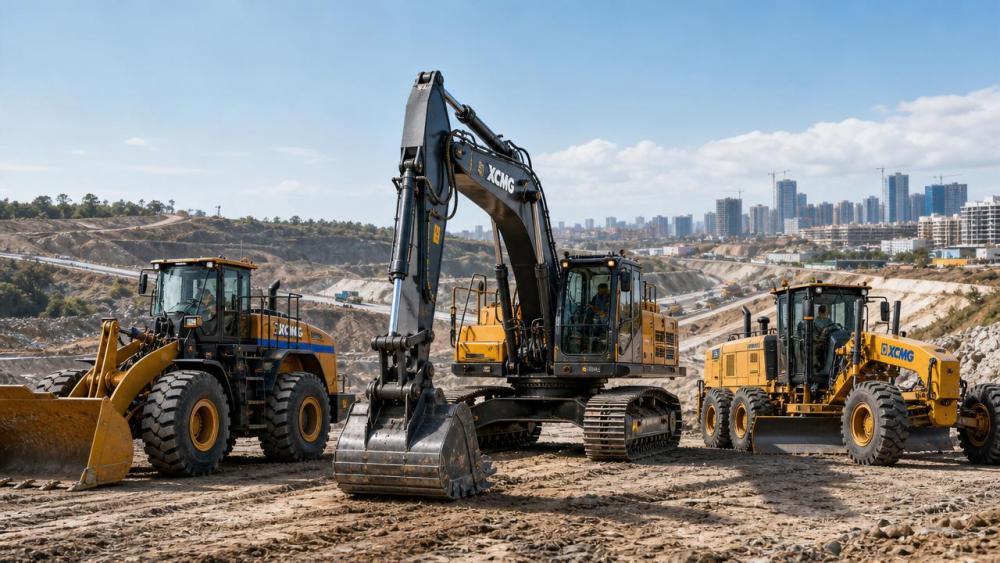
The heavy machinery industry no longer moves only with raw construction volume. It now reacts to funding discipline, emission policy, fleet digitization, labor shortages, mining expansion, and the speed of public infrastructure approvals.
For business evaluators, this changes the assessment model. The question is no longer whether demand exists, but which machine categories, technology stacks, and regional applications can protect margins and sustain utilization.
EMD tracks this shift through a sector lens that connects crawler excavators, wheel loaders, motor graders, bulldozers, and skid steer loaders with the deeper forces behind purchasing behavior. That matters when investment plans must be defended with evidence, not assumptions.
- Large earthmoving fleets are under pressure to reduce idle time, improve fuel efficiency, and meet tighter jobsite reporting requirements.
- Urban projects increasingly favor compact equipment, attachment flexibility, and lower-noise operation, especially where access and environmental constraints are strict.
- Remote and hazardous worksites are accelerating interest in autonomy, teleoperation, and machine control systems that reduce operator exposure and rework.
What this means for capital allocation
Investment committees should treat the heavy machinery industry as a mixed portfolio rather than a single cycle. High-capex machines with strong infrastructure exposure behave differently from compact multi-use platforms serving urban renewal and rental channels.
EMD’s strategic intelligence approach is valuable here because machine value depends on operating context. Breakout force, blade control accuracy, hydrostatic efficiency, hydraulic responsiveness, and remote communication architecture affect commercial outcomes in different ways.
Which market signals should business evaluators watch first?
The table below summarizes the leading indicators that most directly influence heavy machinery industry investment planning in 2026. These signals help evaluators distinguish short-term order noise from durable demand patterns.
These signals matter because they affect more than unit sales. They influence resale value, service economics, financing appetite, parts turnover, and the timing of fleet modernization decisions across the heavy machinery industry.
How EMD improves signal quality
EMD does not stop at headline market commentary. Its coverage connects macro investment cycles with machine-level technical realities such as excavator electro-hydraulic proportional response, grader positioning precision, and low-latency control architecture for remote operations.
That depth helps evaluators avoid a common mistake: assuming all growth segments create equal value. In practice, a machine category may show rising demand while still facing margin pressure from specification mismatch, regulatory friction, or poor field support.
Which equipment segments are reshaping the heavy machinery industry most strongly?
Different equipment classes respond to different investment drivers. A realistic 2026 plan must compare their roles, risk profiles, and technology direction instead of treating heavy equipment as one broad asset pool.
The comparison table below highlights where business evaluators should focus when screening machine classes in the heavy machinery industry.
A balanced reading of this table shows why compact and large-platform segments can both be attractive. The better opportunity depends on utilization certainty, support infrastructure, and whether the buyer values capacity, flexibility, or digital readiness.
Segment-specific judgment points
- Crawler excavators remain central because they sit at the intersection of force, precision, and broad application breadth.
- Wheel loaders gain importance where bulk movement efficiency and harsh-condition reliability drive project economics.
- Motor graders deserve renewed attention because finishing accuracy increasingly affects downstream paving quality and rework costs.
- Skid steers often outperform larger assets in urban contracting when attachment changeover and access limitations define productivity.
How decarbonization and autonomy are changing asset value
Two forces are reshaping the heavy machinery industry faster than many procurement teams expected: emissions compliance and machine intelligence. These are no longer branding themes. They directly alter lifecycle cost, bid eligibility, and future resale prospects.
Decarbonization is becoming a capital discipline issue
Business evaluators must account for engine transitions, aftertreatment complexity, energy sourcing, and maintenance implications. Cleaner equipment may involve higher upfront cost, but non-compliant fleets can lose access to regulated projects or face accelerated depreciation.
This is especially relevant in the heavy machinery industry where cross-border tendering and multinational contractor standards increasingly influence equipment acceptance. General alignment with recognized non-road emission frameworks can strengthen investment resilience.
Autonomy is moving from pilot projects to operational advantage
Autonomy does not always mean fully unmanned fleets. In many cases, the first value comes from assisted grading, remote monitoring, collision awareness, or teleoperated work in hazardous zones.
EMD’s focus on low-latency communication architecture and precision control logic is useful because the commercial success of autonomy depends on signal stability, machine responsiveness, and integration with site workflows rather than on software claims alone.
- Check whether the technology reduces rework, idle hours, or operator dependency in measurable ways.
- Review data compatibility with existing fleet management, machine control, or jobsite reporting systems.
- Confirm service readiness because advanced controls without field support can slow commissioning and reduce utilization.
What should procurement teams compare before approving 2026 purchases?
The most expensive mistake in the heavy machinery industry is not always buying the wrong machine. It is buying the right machine with the wrong specification, support plan, or deployment assumption.
The table below provides a practical selection framework for business evaluators who need to compare equipment options under budget pressure and tight delivery schedules.
This framework helps evaluators move discussions away from sticker price alone. In the heavy machinery industry, a slightly higher acquisition cost may be justified if it cuts downtime, expands project eligibility, or preserves residual value.
A practical review checklist
- Match machine size and configuration to forecasted utilization, not idealized peak demand.
- Request clarity on delivery window, pre-delivery inspection scope, and commissioning responsibilities.
- Review whether digital controls require extra sensors, subscriptions, training, or network infrastructure.
- Assess replacement parts exposure for undercarriage, cutting edges, buckets, tires, filters, and hydraulic components.
Where do cost, risk, and alternatives usually get misread?
Many evaluators enter 2026 planning with a narrow capex lens. Yet heavy machinery industry returns are often shaped more by utilization quality and support economics than by purchase price alone.
Common cost blind spots
- Underestimating the impact of operator training on precision systems, especially in grading and machine-control applications.
- Ignoring the service burden of advanced emission systems in remote or dusty worksites.
- Assuming compact machines are always cheaper when attachment use, wear rates, and rental intensity are high.
- Treating telematics as optional even when customers increasingly demand utilization and carbon reporting.
Alternative strategies worth comparing
Depending on project mix, some buyers may benefit from combining owned core assets with leased specialty machines. Others may prioritize highly versatile platforms such as skid steers and mini-excavators to reduce fleet fragmentation.
In sectors with uncertain workload timing, staged procurement can reduce risk. That means securing priority production slots for critical units while delaying optional smart-control packages until site requirements are confirmed.
FAQ: what do business evaluators ask most about the heavy machinery industry?
How should we choose between large earthmoving equipment and compact multi-use machines?
Start with jobsite conditions and revenue model. Large equipment is often better where cycle continuity, material volume, and ground stability support high utilization. Compact machines are stronger where access is limited, task variety is high, and attachments can replace multiple single-purpose assets.
What are the biggest procurement risks in the heavy machinery industry for 2026?
The main risks are compliance mismatch, delayed delivery, insufficient field service, and buying technology that the operating team cannot fully use. Evaluators should test supplier clarity on emissions alignment, commissioning support, and data system integration before approval.
Are autonomous and intelligent control features worth the extra cost?
They can be, especially in grading, hazardous mining support, and repetitive excavation where precision and safety affect rework and labor dependency. The key is to estimate value through lower error rates, steadier cycle performance, and reduced exposure to skilled-operator shortages.
How important is standards and compliance review during evaluation?
It is critical. Even when exact regional requirements differ, evaluators should review non-road emissions alignment, safety documentation, and import or project-specific compliance expectations early. Late discovery of compliance gaps can disrupt bids and inflate total ownership cost.
Why choose EMD when evaluating 2026 heavy machinery industry opportunities?
EMD is built for decision-makers who need more than general market headlines. Its intelligence framework links machine categories with the technical, regulatory, and commercial signals that actually influence procurement quality and investment timing.
Whether you are assessing crawler excavators for infrastructure packages, wheel loaders for harsh bulk handling, motor graders for precision roadwork, or skid steer platforms for dense urban deployment, EMD helps clarify what to compare and where the hidden risk sits.
- Ask for parameter confirmation on hydraulic performance, control logic, grading precision, or transmission configuration.
- Discuss product selection based on project type, utilization target, and budget structure.
- Review delivery timelines, commissioning needs, and support expectations before finalizing capex schedules.
- Explore customized solution paths for autonomy readiness, emissions compliance, attachment strategy, and tender-specific requirements.
- Open quotation discussions with a clearer view of lifecycle cost, application fit, and implementation risk.
For business evaluators facing tighter 2026 budgets, the heavy machinery industry rewards disciplined comparison and sector-specific intelligence. EMD is positioned to support that process with focused insights that turn technical complexity into investment clarity.