
Related News
- 00
0000-00
How to size heavy-duty loaders for North American mining operations - 00
0000-00
How altitude affects mining excavator performance in Latin America - 00
0000-00
Caterpillar Launches New Cat 6060 and Upgraded Autonomous Mining System - 00
0000-00
When does eco-friendly construction equipment pay for itself? - 00
0000-00
Will a wheel loader quick coupler fit your existing attachments?
Heavy Construction Equipment Trends Reshaping Project Bids
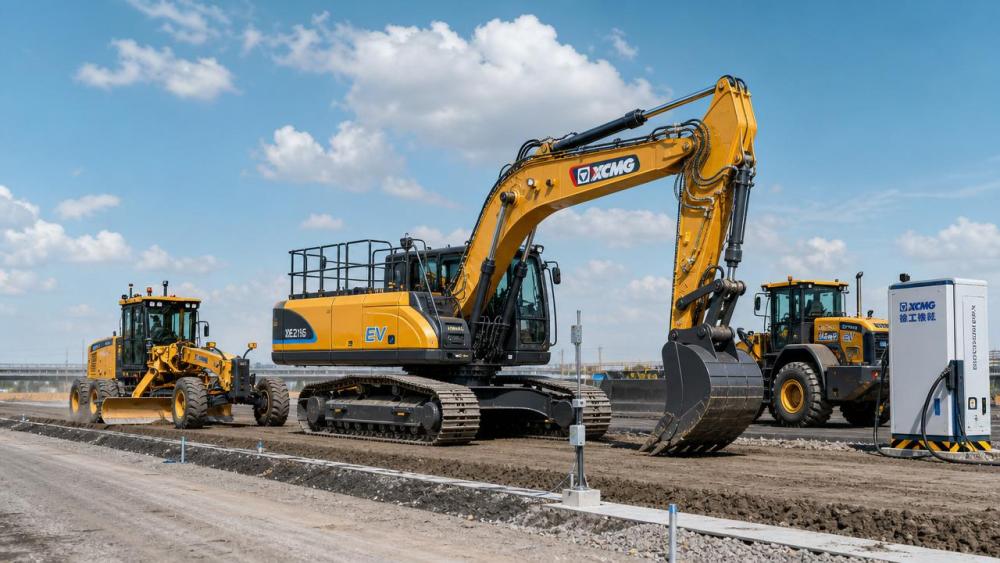
Project bids are no longer won on price alone.
Electrification, autonomy, telematics, emissions rules, and precision grading now reshape heavy construction equipment decisions across infrastructure markets.
Crawler excavators, smart graders, loaders, bulldozers, and skid steers directly affect productivity, compliance, lifecycle cost, and bid risk.
For earthmoving-intensive work, machinery strategy is becoming a measurable advantage inside every serious proposal.
What does heavy construction equipment mean in modern project bidding?
In bidding, heavy construction equipment means more than machine size, engine power, or hourly rental cost.
It now represents a productivity system combining hydraulic force, operator assistance, digital control, fuel strategy, and maintenance predictability.
A crawler excavator influences trenching output, breakout force, attachment versatility, and cycle time under changing ground conditions.
A wheel loader changes material transfer rates, stockpile efficiency, tire wear, fuel consumption, and site traffic planning.
A motor grader affects finish quality, rework exposure, pavement base accuracy, and acceptance risk on roads or airports.
Because of this, heavy construction equipment is now part of technical scoring, not only cost estimation.
A bid supported by advanced heavy construction equipment can justify shorter schedules, lower rework allowances, and stronger compliance confidence.
Why the definition has expanded
The definition expanded because jobsites became data-rich, regulation-heavy, and margin-sensitive.
Machine choice now determines whether a proposal can survive fuel volatility, labor constraints, and emissions documentation.
The strongest bids translate heavy construction equipment features into measurable commercial outcomes.
- Lower fuel burn through efficient powertrains and idle control.
- Higher utilization through telematics and predictive maintenance.
- Better accuracy through GPS, laser, and 3D machine control.
- Lower safety exposure through cameras, sensors, and remote operation.
- Improved compliance through cleaner engines or electric machines.
How is electrification changing heavy construction equipment bid calculations?
Electrification is changing bid calculations by shifting attention from fuel price to energy planning and charging availability.
Battery-electric heavy construction equipment can reduce local emissions, noise, and ventilation requirements in sensitive environments.
Urban redevelopment, tunnel work, indoor demolition, ports, and low-emission zones often benefit from electric loaders or compact excavators.
However, electric machines do not automatically lower every project cost.
Charging windows, grid access, battery duty cycles, and backup plans must be included in the bid schedule.
For heavy construction equipment working continuous double shifts, charging strategy may decide whether electrification supports or weakens the proposal.
Where electrification strengthens proposals
Electric machinery creates bid value when emission limits or community impact requirements are strict.
Quiet operation can extend allowable work windows near hospitals, schools, airports, or dense residential districts.
Lower maintenance needs can also improve availability for compact heavy construction equipment fleets.
Where caution is needed
Large earthmoving projects still require careful comparison between diesel, hybrid, hydrogen-ready, and battery-electric options.
A realistic proposal should include charging hardware, site power preparation, downtime buffers, and emergency energy alternatives.
Ignoring these items can make heavy construction equipment look cheaper than it actually is.
Why do autonomy and machine control matter in competitive bids?
Autonomy and machine control matter because they reduce variability in production and finish quality.
Modern heavy construction equipment can follow digital terrain models, limit over-excavation, and guide operators through complex cuts.
This is especially valuable for grading, road base preparation, landfill cells, drainage channels, and airport surfaces.
Precision grading equipment reduces survey interruptions and helps maintain tolerances across long work fronts.
Autonomous haulage, remote-controlled dozers, and semi-autonomous compactors also improve productivity in repetitive or hazardous zones.
For hazardous mines or unstable slopes, remote heavy construction equipment can reduce direct exposure while preserving output.
How machine control affects bid risk
Machine control helps convert uncertainty into predictable execution logic.
When digital models connect to excavators, graders, and dozers, the gap between design and field work narrows.
This can reduce claims linked to quantity errors, rework, survey delays, and rejected surfaces.
The bid should identify which heavy construction equipment uses 2D guidance, 3D control, automation, or remote operation.
What to verify before claiming autonomy benefits
- Accuracy of design files and terrain models.
- Connectivity reliability across the worksite.
- Compatibility between attachments, sensors, and control systems.
- Operator training requirements and support availability.
- Fallback procedures when automation is interrupted.
How do emissions rules reshape heavy construction equipment selection?
Emissions rules increasingly decide whether a machine can enter a project, city, port, or public infrastructure site.
Non-road diesel standards, carbon reporting, and low-emission procurement rules all affect heavy construction equipment planning.
Older machines may carry hidden costs through restricted access, retrofit needs, penalties, or lower technical scores.
Newer engines, aftertreatment systems, alternative fuels, and electric models can strengthen compliance narratives.
But compliance is not only about the engine label.
Documentation, maintenance records, fuel quality, idle management, and carbon data must align with the proposal.
Common compliance mistakes
One mistake is assuming current fleet availability equals regulatory suitability.
Another mistake is overlooking regional differences in emissions enforcement.
A machine accepted on one site may fail requirements on another project nearby.
Heavy construction equipment proposals should map equipment categories against every applicable environmental rule.
What role does telematics play in lifecycle cost and productivity?
Telematics turns heavy construction equipment from isolated assets into measurable production resources.
Usage hours, idle time, fuel burn, fault codes, location, payload, and maintenance status can support sharper bid assumptions.
Instead of relying only on past averages, proposals can reflect actual fleet behavior and site-specific utilization.
This matters when margins depend on daily output, machine availability, and repair timing.
Telematics also supports preventive maintenance before failures disrupt critical path activities.
For high-intensity loading machinery, payload monitoring can reduce overload damage and optimize truck matching.
Useful data for bid preparation
- Average fuel consumption by task and material type.
- True utilization by machine class and attachment.
- Maintenance intervals and failure history.
- Idle percentage during comparable projects.
- Payload accuracy for loaders and haulage cycles.
- Grade control performance on previous earthworks.
Reliable data makes heavy construction equipment estimates more defensible during tender clarification.
Which heavy construction equipment trends should be prioritized first?
Not every trend deserves equal investment on every project.
The right priority depends on project type, regulatory pressure, site complexity, labor availability, and lifecycle economics.
For mass excavation, crawler excavator productivity, fuel efficiency, and attachment readiness may matter most.
For roadwork, motor grader precision, 3D control, compaction data, and survey integration deserve higher attention.
For urban infrastructure, compact electric machines, skid steer attachments, and noise reduction may provide stronger value.
For mining support, remote operation, high-duty loaders, dozers, and uptime analytics often dominate the bid logic.
A practical prioritization method
Start with the risks that can disqualify the bid or damage margins fastest.
Then connect each risk to the heavy construction equipment capability that reduces it most directly.
Finally, test whether the claimed benefit is supported by data, records, and site execution plans.
FAQ: key answers for heavy construction equipment bid planning
Conclusion: how to turn equipment trends into stronger bids
Heavy construction equipment is becoming central to bid strategy, technical scoring, and margin protection.
The winning approach links machines to measurable outcomes: productivity, compliance, precision, safety, and lifecycle cost.
Start by auditing fleet capability against project risks, emissions rules, and schedule assumptions.
Then compare diesel, electric, hybrid, autonomous, and precision-controlled options with full operating context.
Finally, document the heavy construction equipment logic clearly inside the proposal.
When equipment intelligence supports every number, a bid becomes more than competitive pricing.
It becomes a credible plan for reshaping earth, controlling risk, and delivering infrastructure with higher confidence.