
Related News
- 00
0000-00
How to size heavy-duty loaders for North American mining operations - 00
0000-00
How altitude affects mining excavator performance in Latin America - 00
0000-00
Caterpillar Launches New Cat 6060 and Upgraded Autonomous Mining System - 00
0000-00
When does eco-friendly construction equipment pay for itself? - 00
0000-00
Will a wheel loader quick coupler fit your existing attachments?
As construction fleets face tighter margins, stricter emissions rules, and rising demand for precision, excavator technology is becoming a decisive factor in jobsite productivity. In 2026, technical evaluators must look beyond horsepower and bucket capacity to assess electro-hydraulic control, machine guidance, telematics, automation readiness, energy efficiency, and lifecycle performance. This article examines the key technology trends reshaping crawler excavators and related earthmoving systems, helping equipment decision-makers identify which innovations deliver measurable gains in uptime, accuracy, fuel savings, and long-term asset value.
For equipment teams, the challenge is no longer selecting the largest machine for the lowest acquisition price. The stronger question is how excavator technology supports repeatable production across 8-hour, 10-hour, or 24-hour operating cycles.
Technical evaluators now compare hydraulic response, digital grade accuracy, battery strategy, remote diagnostics, attachment compatibility, and operator assistance as one integrated productivity system.
Electro-Hydraulic Control Becomes the Productivity Baseline
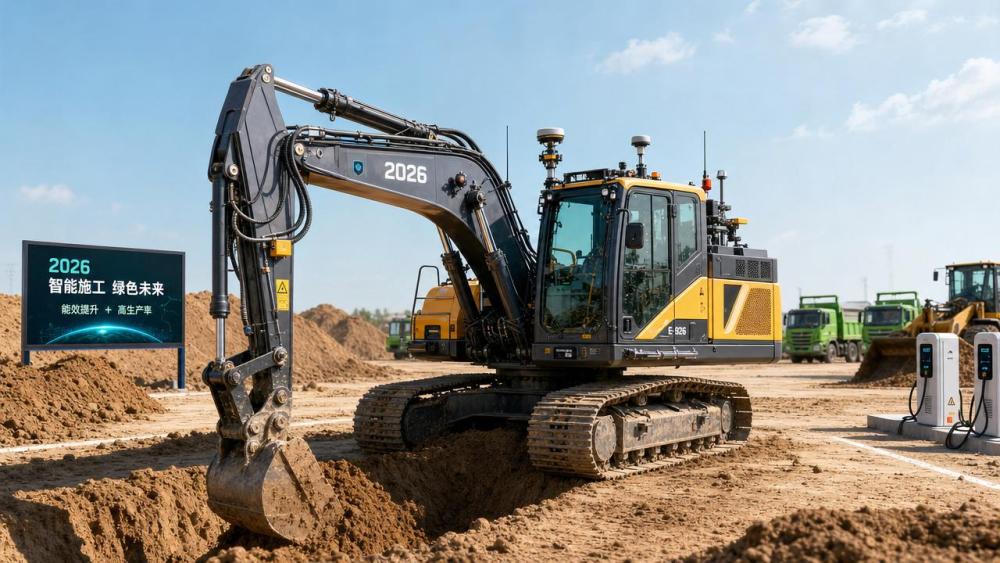
The most influential excavator technology trend in 2026 is the continued shift from purely mechanical control logic toward electronically managed hydraulic systems.
Electro-hydraulic proportional control allows the machine controller to coordinate pump flow, valve timing, engine speed, and attachment demand within milliseconds.
Why control response matters
In trenching, mass excavation, demolition, and precision loading, a 0.2-second delay at the joystick can create inconsistent bucket positioning and higher rework.
Modern excavator technology reduces this gap by using sensors on joysticks, cylinders, pumps, swing motors, and main control valves.
For evaluators, the practical benchmark is not only peak hydraulic pressure, often in the 30–38 MPa range, but how smoothly that pressure is delivered.
Key evaluation points
- Check whether flow-sharing remains stable during boom lift, arm-in, swing, and travel at the same time.
- Review response settings for at least 3 operating modes: economy, standard, and high-production.
- Confirm whether attachment presets store pressure and flow parameters for breakers, grapples, shears, and tiltrotators.
High-value excavator technology should help skilled operators work faster while also allowing less experienced operators to maintain consistent cycles.
Machine Guidance and 3D Spatial Intelligence Move Into Daily Production
Machine guidance is moving from premium earthwork projects into routine infrastructure, utilities, quarry preparation, and commercial site development.
For crawler excavators, 2D depth indication is useful, but 3D guidance linked with GNSS, inertial sensors, and digital terrain models changes planning accuracy.
This layer of excavator technology helps operators follow design surfaces without relying on continuous survey stakes or repeated manual grade checks.
From bucket teeth to digital design
A typical 3D system uses sensors on the boom, arm, bucket linkage, machine body, and sometimes tiltrotator assembly.
When calibrated properly, grade guidance can support common tolerance targets from ±20 mm for bulk excavation to tighter finishing requirements.
Technical teams should examine how the excavator technology integrates with project files, site localization, cloud updates, and motor grader finishing workflows.
The table below outlines practical guidance tiers for evaluators comparing machine control options across mixed fleets.
The key conclusion is simple: guidance value increases when excavator technology is connected to the broader earthmoving workflow, not treated as a display accessory.
Telematics, Fleet Data, and Predictive Maintenance Redefine Uptime
Uptime has become a financial metric, especially when one excavator supports loaders, trucks, compactors, and downstream grading equipment.
Advanced excavator technology uses telematics to capture utilization, idle time, fuel burn, fault codes, DEF consumption, hydraulic temperature, and service intervals.
From reporting to decision support
Basic telematics reports where a machine is. Stronger systems explain whether the asset is earning, waiting, idling, overheating, or approaching failure.
For example, idle rates above 25% may indicate poor truck matching, excessive waiting time, or operator habits that raise fuel consumption.
If hydraulic oil temperature exceeds normal operating range repeatedly, predictive alerts can trigger inspection before a pump or valve failure causes downtime.
Data fields worth requiring
- Hourly utilization by work mode, including travel, digging, swinging, attachment use, and idle.
- Fuel or energy use per hour, per cubic meter, or per truck loaded where available.
- Fault history with timestamp, severity level, sensor channel, and recommended service action.
- Maintenance schedule tracking for 250-hour, 500-hour, 1,000-hour, and 2,000-hour service events.
Technical evaluators should also review API access, data ownership terms, update frequency, and whether mixed-brand fleets can be monitored in one dashboard.
The best excavator technology reduces dependence on after-the-fact failure reports and enables planned service during low-production windows.
Electrification and Energy Efficiency Change Lifecycle Economics
Emissions regulations and fuel volatility are accelerating demand for hybrid, battery-electric, and highly optimized diesel excavators.
In 2026, energy-focused excavator technology is especially relevant for urban construction, tunnels, indoor demolition, ports, and low-emission infrastructure zones.
Not every site needs the same power strategy
Compact electric excavators may support 4–8 hours of intermittent duty, depending on battery size, ambient temperature, and hydraulic workload.
Large crawler excavators usually require a more cautious evaluation because charging infrastructure, duty cycle severity, and site logistics strongly influence economics.
Hybrid systems can capture swing energy or optimize engine loading, while diesel machines continue improving through smarter pump management and auto-idle logic.
For B2B procurement, the energy decision should compare total lifecycle cost over 3–7 years, not only purchase price.
The following matrix helps evaluators align excavator technology choices with duty profile, infrastructure constraints, and operating risk.
The strongest decision is rarely ideological. It is based on measured load cycles, site energy availability, maintenance capability, and regulatory exposure.
Automation Readiness and Remote Operation Enter Hazardous Jobsites
Autonomous excavators are not replacing operators at scale overnight, but automation readiness is becoming a strategic purchasing criterion.
Relevant excavator technology includes object detection, geofencing, remote operation, low-latency communication, assisted digging, and safety interlock systems.
Where remote systems create immediate value
Remote control is most practical in mines, demolition zones, unstable slopes, contaminated sites, and confined areas with elevated operator risk.
A responsive system typically requires stable communication, camera redundancy, emergency stop architecture, and latency low enough for precise bucket control.
For many tasks, operators need multiple video feeds, machine attitude data, bucket position information, and warning overlays on one console.
Automation maturity checklist
- Level 1: visual warning, proximity alert, and basic camera support.
- Level 2: assisted motion control for digging depth, swing limits, or wall avoidance.
- Level 3: supervised remote operation with redundant stop channels and diagnostic feedback.
- Level 4: task automation for repeatable cycles under defined site boundaries and human supervision.
Evaluators should avoid treating autonomy as a single feature. It is a layered architecture requiring sensors, software, communications, service support, and procedures.
When specified correctly, automation-focused excavator technology can improve safety while protecting production continuity in high-risk operating zones.
Attachment Intelligence and Multi-Machine Coordination Expand Versatility
Excavators increasingly operate as tool carriers, not only digging machines. This changes how technical teams evaluate hydraulic circuits and control software.
Breakers, pulverizers, shears, grapples, compactors, thumbs, tiltrotators, and screening buckets can demand very different pressure and flow behavior.
Attachment presets reduce setup errors
A strong excavator technology package allows operators or service teams to store 10–20 attachment profiles with flow limits and pressure settings.
This matters because incorrect hydraulic settings can shorten attachment life, overheat oil, increase hose failures, or reduce productivity during critical cycles.
Quick coupler monitoring, lock confirmation, return-line protection, and integrated weighing also support safer and more transparent production.
Coordination with loaders, graders, and dozers
Jobsite productivity depends on balance. An excavator producing faster than truck capacity simply moves the bottleneck to hauling.
Telematics-linked coordination helps match excavators with wheel loaders, dozers, skid steer loaders, and motor graders across the earthmoving sequence.
For example, a crawler excavator may cut and load, a bulldozer may push and spread, while a grader finishes the design surface.
The best excavator technology therefore supports interoperability, not isolated machine optimization. Mixed-fleet data visibility is now a serious procurement advantage.
A Practical Evaluation Framework for 2026 Procurement
Technical evaluators need a disciplined method to separate useful innovation from impressive but low-value specification claims.
A practical excavator technology review should combine field trials, lifecycle modeling, operator feedback, service analysis, and digital integration testing.
Five-step assessment process
- Define the duty cycle: trenching, truck loading, quarry work, demolition, grading support, or mixed attachment use.
- Measure baseline performance: fuel use, cycles per hour, idle rate, downtime, rework, and maintenance cost.
- Test critical functions over at least 2–3 operating shifts under normal site conditions.
- Validate digital integration with grade files, telematics dashboards, maintenance systems, and fleet reporting tools.
- Model total cost over 36–84 months, including residual value, training, software, service, and energy costs.
Common procurement mistakes
One mistake is comparing bucket size while ignoring cycle efficiency. Another is buying grade control without investing in calibration and operator training.
A third mistake is selecting advanced excavator technology without confirming local service capability, spare parts access, and software update policies.
Evaluators should request clear documentation, realistic commissioning timelines, and acceptance criteria before finalizing machine specifications or tender requirements.
Acceptance criteria that protect value
- Hydraulic response verified across 3 work modes and the required attachment set.
- Machine guidance calibrated to project tolerance, with documented operator handover.
- Telematics data visible within the agreed reporting platform within 7–15 days of commissioning.
- Service schedule, diagnostic access, and warranty boundaries reviewed before deployment.
This framework helps procurement teams evaluate excavator technology as a measurable productivity asset rather than a collection of optional electronics.
What Technical Evaluators Should Prioritize Next
The 2026 jobsite will reward fleets that connect hydraulic intelligence, digital design, energy strategy, telematics, and automation readiness into one operating model.
For technical evaluators, the highest-value excavator technology is practical, serviceable, measurable, and aligned with actual production constraints.
Global Earth-Mover Dynamics focuses on these decision points across crawler excavators, wheel loaders, motor graders, bulldozers, and skid steer loaders.
Its intelligence approach helps machinery stakeholders connect extreme hydraulic force, 3D spatial algorithms, decarbonization pathways, and autonomous systems with commercial outcomes.
If your team is benchmarking machines, preparing tender specifications, or reviewing lifecycle productivity, a structured technology assessment can reduce procurement risk.
To compare excavator technology options for your fleet, consult product details, request a tailored evaluation framework, or explore more earthmoving intelligence solutions today.