
Related News
- 00
0000-00
How to size heavy-duty loaders for North American mining operations - 00
0000-00
How altitude affects mining excavator performance in Latin America - 00
0000-00
Caterpillar Launches New Cat 6060 and Upgraded Autonomous Mining System - 00
0000-00
When does eco-friendly construction equipment pay for itself? - 00
0000-00
Will a wheel loader quick coupler fit your existing attachments?
In 2026, hydraulic machinery is no longer judged by raw power alone. For enterprise decision-makers, the real competitive edge lies in smarter electro-hydraulic control, lower emissions, higher uptime, and faster jobsite cycles. As infrastructure projects grow more complex, this article explores the trends redefining excavators, loaders, graders, and dozers—and why these shifts matter for productivity, asset value, and long-term strategic advantage.
Hydraulic Machinery in 2026: From Muscle to Intelligent Performance
Hydraulic machinery remains central to earthmoving, grading, loading, and heavy material handling across global infrastructure, mining, roadbuilding, and urban development projects.
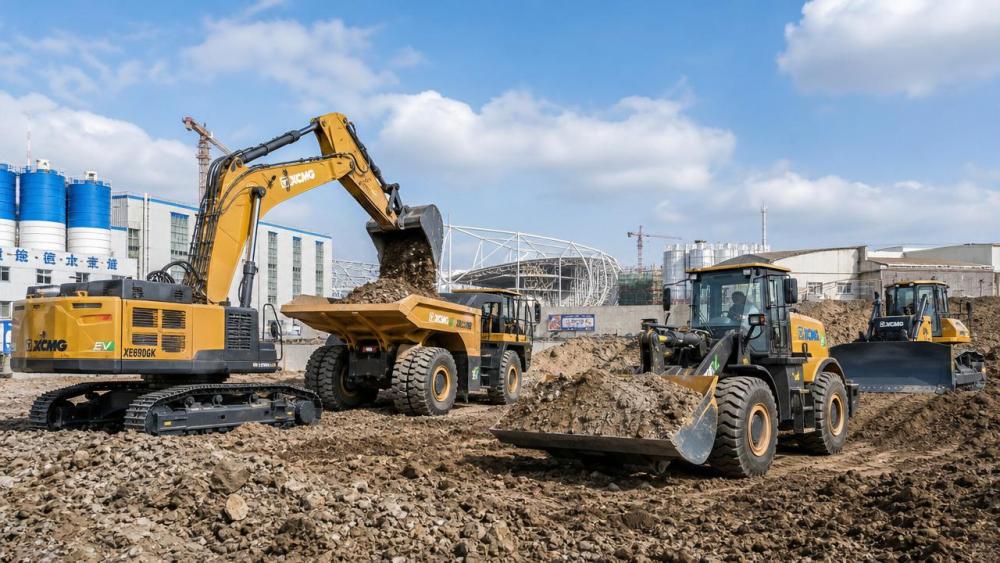
Yet the market now values balanced performance. Output matters, but so do fuel efficiency, software integration, operator assistance, and reliability under changing site conditions.
This shift is especially visible in crawler excavators, wheel loaders, motor graders, bulldozers, and skid steer loaders, where hydraulic machinery supports both brute force and precision motion.
Modern hydraulic machinery combines pumps, valves, actuators, sensors, and electronic controls into a unified response system. The result is faster cycle times with lower waste.
For the broader industrial machinery landscape, that integration defines equipment competitiveness more than peak specifications shown on a product sheet.
Market Signals Shaping Hydraulic Machinery Development
Several forces are accelerating change across hydraulic machinery portfolios. These signals explain why machine design, fleet strategy, and component sourcing are all evolving.
- Stricter non-road emission rules are pushing cleaner engines, hybrid systems, and electrified auxiliary functions.
- Large infrastructure projects require tighter grading accuracy, faster material movement, and reduced rework.
- Labor pressure increases demand for easier controls, semi-autonomous functions, and remote operation capability.
- Fleet owners expect longer service intervals, predictive maintenance, and stronger residual value.
- Urban jobsites favor compact hydraulic machinery with low noise and higher attachment versatility.
These pressures are not isolated trends. Together, they are changing how hydraulic machinery is designed, specified, financed, and deployed across mixed fleets.
Key 2026 trend signals
Core Hydraulic Machinery Trends Redefining Efficiency
The most important hydraulic machinery trends in 2026 center on control quality, energy management, data visibility, and machine adaptability.
1. Electro-hydraulic intelligence becomes standard
Mechanical response is giving way to software-managed hydraulic machinery behavior. Sensors now adjust flow, pressure, and actuator timing based on workload and operator input.
This improves trenching precision, smoother lifting, cleaner bucket fills, and more stable blade control. It also reduces unnecessary hydraulic losses during partial-load tasks.
2. Energy-efficient hydraulic architectures gain priority
Variable displacement pumps, load-sensing systems, and regenerative circuits are becoming more important across hydraulic machinery categories.
Better energy routing lowers fuel use while maintaining breakout force and lifting performance. On high-cycle jobs, the savings compound quickly over machine life.
3. Telematics moves from monitoring to decision support
Connected hydraulic machinery now provides more than location and service hours. Systems track idle time, hydraulic temperature, pressure anomalies, attachment usage, and cycle efficiency.
That data helps improve preventive maintenance, operator coaching, and job allocation. It also supports lifecycle planning for resale, replacement, and component overhaul.
4. Automation enhances repeatability
Grade control, dig assist, return-to-position functions, and payload feedback are now practical efficiency tools within hydraulic machinery fleets.
Automation does not remove human oversight. Instead, it reduces variation, cuts rework, and improves consistency during long shifts or complex terrain transitions.
5. Low-emission platforms reshape fleet selection
Hydraulic machinery must support decarbonization without sacrificing production. This is driving hybrid excavators, electric compact loaders, and smarter engine-hydraulic coordination.
The strategic value is not only compliance. Lower energy intensity improves operating economics and strengthens competitiveness in regulated project environments.
Why These Hydraulic Machinery Trends Matter for Business Value
The gains from better hydraulic machinery are measurable across output, cost, risk, and equipment longevity. Efficiency is no longer a narrow fuel metric.
- Higher uptime through early fault detection and more stable hydraulic performance
- Faster cycles with less operator fatigue and smoother attachment control
- Reduced rework in grading, trenching, and bulk handling applications
- Better fuel or energy efficiency across mixed duty cycles
- Stronger residual value for connected, efficient, regulation-ready equipment
For intelligence-led platforms such as EMD, these trends also reveal where technical prestige is now earned: in integrated system performance, not isolated component claims.
Typical Hydraulic Machinery Applications and Priority Needs
Different machine classes respond to the same trends in different ways. The table below highlights common application priorities for hydraulic machinery in 2026.
Practical Evaluation Points for 2026 Hydraulic Machinery
When comparing hydraulic machinery, a broader evaluation framework helps separate durable value from short-term specification appeal.
- Check hydraulic efficiency under real duty cycles, not only peak output numbers.
- Review telematics depth, data ownership, and integration with maintenance workflows.
- Assess compatibility with grade control, payload tools, and remote diagnostics.
- Compare attachment responsiveness and auxiliary hydraulic flexibility.
- Consider service access, parts availability, and software update pathways.
- Estimate residual value based on emissions readiness and digital capability.
These checkpoints are especially important where hydraulic machinery must operate across varied climates, unstable material conditions, or strict project timelines.
Strategic Direction for the Next Equipment Cycle
The future of hydraulic machinery will be shaped by convergence. Hydraulics, electronics, software, and low-carbon power systems are becoming one competitive architecture.
That creates a clear direction for the next equipment cycle. Prioritize machines that deliver productive force, precise control, transparent data, and compliance resilience together.
For organizations tracking earthmoving innovation through EMD, hydraulic machinery trends are not abstract forecasts. They are practical indicators of where jobsite efficiency will be won or lost.
The next step is straightforward: benchmark current fleet performance, identify hydraulic bottlenecks, and align future equipment decisions with intelligent, efficient, and low-emission machine platforms.