
Related News
- 00
0000-00
CBP Sets UL 62841-3-11 Filing Rule for Electric Excavators - 00
0000-00
How to Use Operating Weight for Better Equipment Selection - 00
0000-00
EU Requires EN IEC 63254-2 for Imported Electric Excavators - 00
0000-00
Construction Equipment Emissions Compliance: Key Standards, Costs, and Buying Risks - 00
0000-00
CBP Sets Fire-Test Filing Rule for Electric Excavators
Construction Equipment Market Outlook: why 2026 looks different already
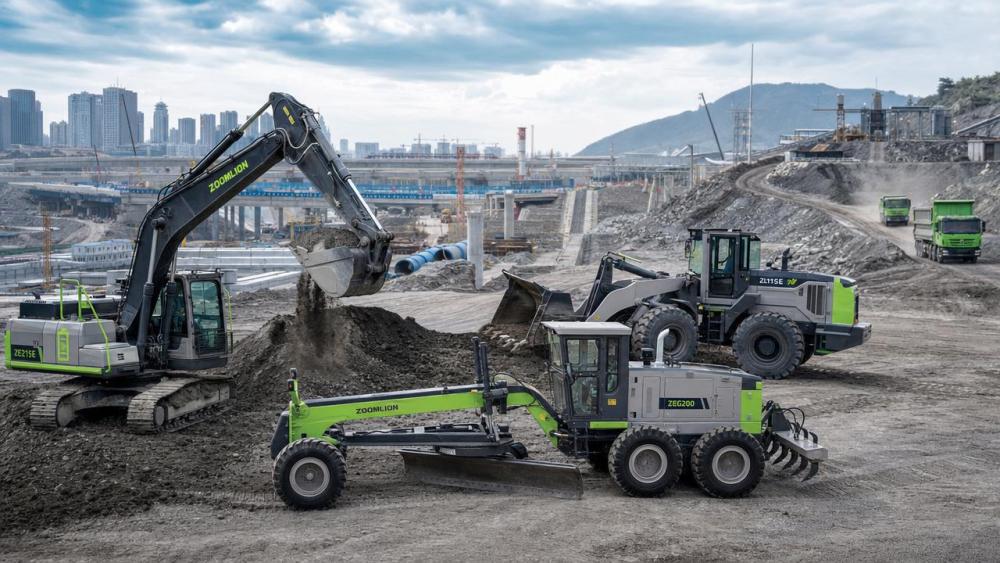
The construction equipment market is moving into a sharper, more selective cycle.
Demand is still tied to infrastructure spending, mining activity, logistics expansion, and urban renewal.
Yet the bigger shift is qualitative, not only quantitative.
Buyers now compare powertrain architecture, software capability, emissions readiness, and lifecycle visibility as closely as output ratings.
That is especially visible across crawler excavators, wheel loaders, motor graders, bulldozers, and skid steer loaders.
These core categories increasingly sit at the center of broader decisions about decarbonization, productivity, and operational resilience.
From EMD’s perspective, the construction equipment market is no longer defined by iron alone.
It is being reshaped by hydraulic intelligence, spatial precision, remote control logic, and asset utilization pressure.
Looking toward 2026, five shifts are becoming too visible to ignore.
Electrification is becoming a portfolio question, not a headline gesture
The construction equipment market has talked about electrification for years, but the conversation is maturing.
The real issue now is where electrification works economically and operationally.
Compact and urban-facing machines are moving first because duty cycles are easier to manage.
Skid steer loaders and mini excavators fit clean-air jobsites, municipal work, and indoor or low-noise applications.
Larger crawler excavators, wheel loaders, and bulldozers face a harder equation.
Battery weight, charging logistics, and runtime uncertainty still matter on remote or continuous operations.
That is why hybridization, smarter hydraulics, and fuel-efficiency gains remain commercially important.
In practical terms, 2026 will reward mixed portfolios rather than all-electric messaging.
- Urban fleets will prioritize emissions-free operation and lower noise signatures.
- Heavy site operators will focus on fuel burn reduction and hydraulic efficiency.
- Tender requirements will increasingly ask for measurable carbon and energy data.
For the construction equipment market, the key question is no longer whether electrification matters.
It is which machine classes can deliver reliable returns first.
Autonomy is spreading through control layers before full machine independence
A second shift is often misunderstood.
The construction equipment market is not waiting for fully autonomous fleets to create value.
Value is already appearing through assisted controls, semi-autonomous grading, remote operation, and task repeatability.
Motor graders illustrate this clearly.
GPS, laser sensing, and 3D positioning now influence surface precision, rework rates, and operator consistency.
Crawler excavators are also changing through electro-hydraulic proportional control and software-tuned response behavior.
In hazardous mines or unstable terrain, remote-controlled systems are moving from niche capability to strategic safeguard.
This matters because labor constraints are no longer a temporary issue.
The market needs machines that reduce skill variability while protecting output quality.
The construction equipment market is therefore shifting toward software-defined performance.
That creates new competitive gaps even among machines with similar mechanical specifications.
Emissions compliance is starting to reshape product strategy and regional timing
Another visible signal comes from regulation.
Non-road equipment emissions rules are tightening across major markets, but not at the same speed.
That uneven pace is changing how the construction equipment market plans production, sourcing, and launches.
Engine platforms, aftertreatment systems, and compliance documentation now influence regional sales strategy earlier in the cycle.
This is not only a cost issue.
It also affects machine packaging, maintenance intervals, thermal management, and operator acceptance.
In some cases, emissions transitions accelerate fleet replacement.
In others, they favor retrofits, delayed purchasing, or used-equipment migration between regions.
More importantly, compliance is blending into brand credibility.
A machine that meets regulatory thresholds but complicates uptime will struggle in the long run.
For 2026, the strongest positions will likely belong to platforms designed around compliance from the start.
The construction equipment market is becoming more data-dependent at the fleet level
Telematics is no longer an optional dashboard feature.
It is becoming part of how the construction equipment market measures business performance.
Fleet owners increasingly want visibility into idle time, fuel use, attachment utilization, fault codes, and maintenance risk.
That shift is especially relevant in mixed fleets where machine types serve very different operating profiles.
A wheel loader in quarry loading, a bulldozer in heavy push work, and a skid steer in urban utilities produce different data value.
Still, the strategic objective is the same.
Operators want to turn machine behavior into cost control and planning confidence.
This is where EMD’s intelligence-led view becomes relevant.
The construction equipment market increasingly rewards those who connect technical machine signals with macro infrastructure cycles and bid strategy.
Raw data alone does not create advantage.
Interpretation does, especially when demand conditions are changing by project type and geography.
- Track utilization by application, not only by machine model.
- Compare energy and fuel patterns across similar duty cycles.
- Link fault trends with environment, operator behavior, and attachment mix.
Demand is fragmenting, and that changes where growth will come from
Perhaps the most important 2026 signal is demand fragmentation.
The construction equipment market is no longer driven by one broad infrastructure narrative.
Large transport corridors, energy transition projects, mining expansion, secondary urbanization, and public utility renewal create different equipment needs.
That means growth may look uneven across categories.
Mini excavators and skid steer loaders benefit from dense urban work and utility maintenance.
Motor graders gain where airport, highway, and precision surface projects expand.
Bulldozers and large crawler excavators remain critical where land development, mining, and heavy civil projects accelerate.
The result is a more segmented construction equipment market.
Broad market averages can hide strong pockets of demand and equally sharp areas of hesitation.
For planning purposes, the better approach is to map equipment exposure against project pipelines, local regulation, and jobsite constraints.
What deserves attention now before 2026 decisions harden
Several implications follow from these shifts.
The construction equipment market is becoming more sensitive to technical differentiation, regional policy timing, and application-specific economics.
A simple capacity-based comparison will miss where competitive advantage is actually forming.
Near-term attention should stay on a few high-value questions.
- Which machine classes can support electrification without harming utilization?
- Where do automation layers create immediate productivity or safety gains?
- How quickly will emissions rules affect replacement cycles in each target market?
- Which data points genuinely improve maintenance, uptime, and bid quality?
- What demand segments are growing because of urban renewal, mining, or transport buildout?
The construction equipment market still offers growth, but it is rewarding sharper judgment.
Those preparing for 2026 should keep comparing project exposure, machine architecture, and regulatory readiness together.
The next useful step is straightforward.
Review fleet and product priorities by application, monitor emissions and autonomy signals by region, and reassess where precision, reliability, and asset intelligence create the strongest edge.