
Related News
- 00
0000-00
How an earthmoving equipment portal helps vet factory capabilities - 00
0000-00
How to assess equipment specifications against applicable standards - 00
0000-00
How Middle East climate conditions should shape heavy equipment selection - 00
0000-00
Can an industrial equipment sourcing supplier directory improve vendor selection? - 00
0000-00
How earthmoving equipment is applied in canal construction
As 2026 fleet planning takes shape, the heavy machinery industry is moving into a more selective and data-driven cycle. Capital budgets still matter, but so do emissions pathways, automation readiness, labor constraints, and the changing mix of infrastructure work. For companies evaluating excavators, loaders, graders, bulldozers, and compact equipment, the real question is no longer which machine is bigger or cheaper. It is which fleet structure can stay productive, compliant, and financially resilient across several operating environments.
Why 2026 looks different from previous planning cycles
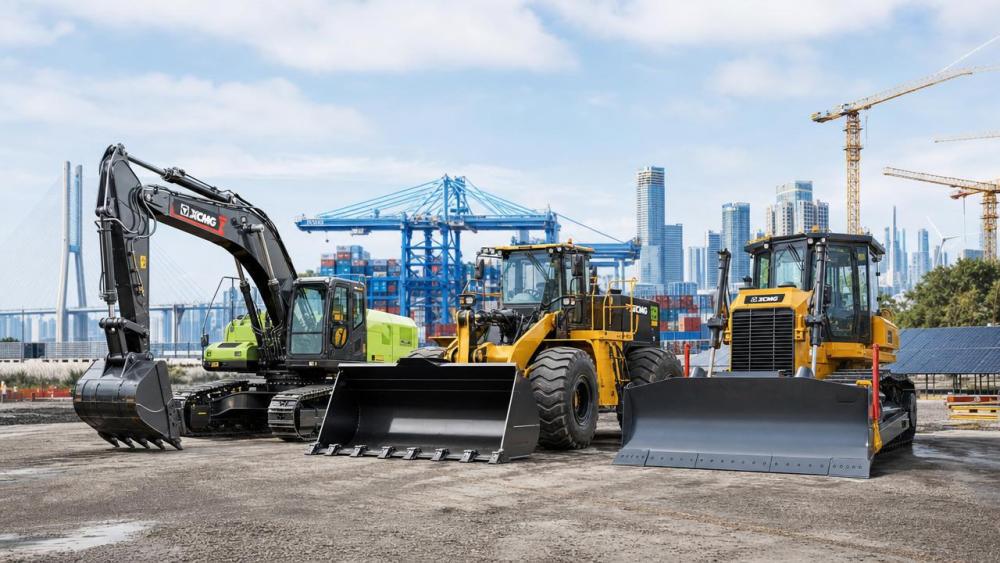
The heavy machinery industry has always followed construction spending, commodity demand, and replacement cycles. What changes in 2026 is the intensity of overlapping pressures.
Decarbonization targets are moving from policy language into fleet decisions. Non-road emission standards are tightening in several markets. Digital control systems are becoming standard rather than premium add-ons.
At the same time, infrastructure demand is splitting into two tracks. One favors large earthmoving for highways, mining, ports, and energy corridors. The other favors compact, flexible equipment for urban rebuilding and utility work.
That combination makes fleet planning more strategic. A machine must fit the job today, but it also needs to fit future regulation, operator availability, service support, and residual value expectations.
What the heavy machinery industry is really optimizing now
In practical terms, the heavy machinery industry is shifting from simple capacity expansion to asset quality optimization. Utilization, fuel burn, uptime, software capability, and application fit now sit closer to the center of fleet economics.
This is especially visible in earthmoving categories that EMD tracks closely. Crawler excavators remain central because they combine breakout force, hydraulic precision, and broad jobsite versatility.
Wheel loaders are under pressure to move more tonnage with lower operating cost per cycle. Motor graders are gaining importance where road and airport work depends on repeatable precision.
Bulldozers continue to anchor heavy push applications, but buyers are watching hydrostatic efficiency and control logic more carefully. Skid steer loaders are expanding because dense urban projects value attachment flexibility and compact maneuverability.
Across all five categories, the fleet discussion is becoming less about equipment labels and more about performance in a defined operating system.
The biggest trend signals shaping 2026 fleet plans
Electrification is becoming selective, not universal
The heavy machinery industry is not moving toward full electrification at the same speed in every segment. Compact and mid-sized machines in urban or regulated environments are the most realistic near-term candidates.
Large crawler excavators, dozers, and mining loaders still face energy density and charging constraints. For those machines, cleaner diesel platforms, hybrid architectures, and better hydraulic efficiency may deliver stronger near-term returns.
Automation is shifting from concept to usable workflow
Grade control, machine guidance, payload monitoring, and semi-autonomous functions are now affecting bid accuracy and job execution. These features matter most when labor is scarce or project tolerances are tight.
For graders and excavators, high-precision 3D spatial systems are becoming a planning issue, not only a site issue. A fleet without digital compatibility may underperform even when its iron is still mechanically sound.
Remote operation is gaining value in hazardous environments
Remote-controlled systems are especially relevant in mining, unstable terrain, and high-risk industrial zones. Low-latency communication architecture is no longer a niche engineering topic. It directly affects safety, productivity, and asset deployment range.
Compliance risk now influences equipment timing
Emission regulations can change the useful life of a fleet faster than wear alone. The heavy machinery industry is seeing more cases where replacement timing is driven by market access and permit requirements, not just repair cost.
How category priorities are changing across the fleet
Not every machine class is responding to the market in the same way. Planning becomes sharper when each category is assessed against its likely 2026 role.
This category view helps explain why the heavy machinery industry cannot be read through one demand indicator alone. Growth in mega-infrastructure and growth in secondary urbanization create very different equipment priorities.
Where business value is won or lost
The most expensive fleet mistake is often not overpaying for a machine. It is buying the wrong technical profile for the workload ahead.
A lower acquisition price can be erased by weak uptime, poor fuel efficiency, software limitations, or inadequate dealer support. The heavy machinery industry is increasingly punishing short-term decisions that ignore lifecycle behavior.
This is one reason intelligence-led evaluation matters. EMD’s approach is useful because it connects machine physics, digital control systems, emissions regulation, and commercial demand rather than treating them as separate topics.
That integrated view is especially important when comparing assets that may serve the same project but carry different risk profiles over five to seven years.
A practical framework for evaluating 2026 fleet choices
A useful review framework should stay close to operating reality. It should also reflect how the heavy machinery industry is evolving beyond traditional fleet scoring.
- Match each machine to expected duty cycles, site constraints, and attachment needs.
- Check emissions compliance against the regions where the fleet may actually operate.
- Assess digital readiness, including telematics, grade control, and remote diagnostics.
- Model total cost using fuel, maintenance, downtime, and residual value, not purchase price alone.
- Review supplier depth in hydraulic systems, software updates, and field service responsiveness.
- Stress-test whether the fleet can support both high-volume infrastructure work and tighter urban applications.
Usually, the strongest fleet plan is not the most aggressive. It is the one that balances compliance, productivity, and optionality without locking capital into a narrow use case.
What to watch next
Over the next several quarters, several signals will matter more than headline machine launches. Watch infrastructure funding conversion, regional emission enforcement, battery and charging economics for compact fleets, and adoption rates for machine control systems.
Also watch where demand is concentrating. The heavy machinery industry may see stronger premium in machines that combine reliability with precise digital performance, especially in grading, excavation, and remote-operation environments.
For 2026 planning, the smartest next step is to build a category-by-category review, compare fleet exposure to regulatory and utilization risk, and track intelligence sources that connect technical detail with market direction. In a heavy machinery industry defined by transition, better judgment will outperform faster spending.