
Related News
- 00
0000-00
How to size heavy-duty loaders for North American mining operations - 00
0000-00
How altitude affects mining excavator performance in Latin America - 00
0000-00
Caterpillar Launches New Cat 6060 and Upgraded Autonomous Mining System - 00
0000-00
When does eco-friendly construction equipment pay for itself? - 00
0000-00
Will a wheel loader quick coupler fit your existing attachments?
In 2026, choosing whether to lease or buy road construction machinery will directly affect project margins, fleet flexibility, and long-term asset performance. For procurement teams facing tighter budgets, evolving emissions rules, and rapid equipment innovation, the right decision goes beyond upfront cost. This guide breaks down the key financial, operational, and strategic factors to help you make a smarter investment.
How should procurement teams evaluate road construction machinery in 2026?
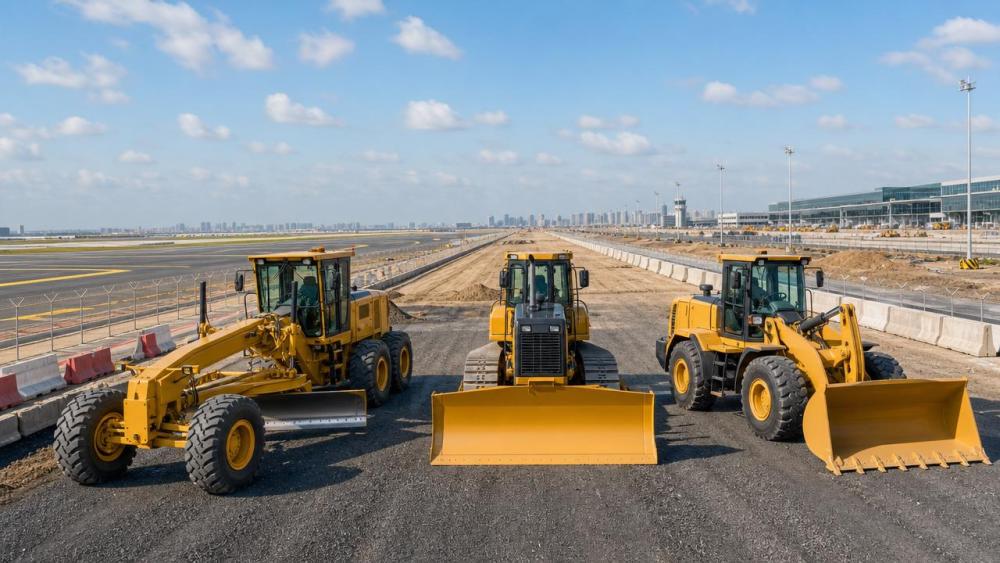
For buyers, road construction machinery is no longer a simple capex item. It is a moving combination of utilization rate, emissions compliance, operator productivity, digital control capability, and resale uncertainty.
That is especially true for fleets involving motor graders, bulldozers, wheel loaders, crawler excavators, and compact support equipment working across highways, airports, industrial parks, and municipal rehabilitation projects.
EMD follows these asset classes closely because procurement outcomes increasingly depend on more than purchase price. Hydraulic efficiency, grading precision, attachment flexibility, telematics integration, and local service reach can all reshape total project economics.
- Lease decisions usually favor uncertain workloads, short contract duration, pilot deployment of new technology, or temporary compliance gaps in older fleets.
- Buy decisions usually favor high annual utilization, stable backlogs, dedicated crews, and equipment categories with strong residual value and predictable maintenance cycles.
- Hybrid fleet strategies often deliver the best balance when contractors need core owned assets plus leased peak-capacity support during seasonal demand spikes.
Why the decision is harder in 2026
Three pressures are converging. First, financing costs remain important even when rate environments improve. Second, non-road emissions rules continue to tighten in many markets. Third, machine intelligence is advancing fast, especially in 3D grading, payload monitoring, and remote diagnostics.
That means a machine purchased today may offer excellent productivity, yet still face earlier-than-expected technological obsolescence if your projects soon require higher automation, more precise surface control, or stricter environmental reporting.
Lease or buy: which road construction machinery strategy fits which scenario?
The most useful starting point is not “What costs less?” but “What operating scenario are we buying for?” The table below compares typical procurement conditions where leasing or buying road construction machinery makes more commercial sense.
The pattern is clear: leasing supports uncertainty, while buying rewards durable demand. Procurement teams should therefore start with workload stability, not dealer persuasion or headline rental rates.
Best candidates for leasing
- Specialized motor graders for short paving windows where high-precision finish work is needed but annual hours remain modest.
- Supplemental wheel loaders or bulldozers required only during peak material movement or site preparation stages.
- Machines for market entry into a new region where local infrastructure demand has not yet been validated.
Best candidates for buying
- Core fleet graders working continuously on highway, airport, or municipal road programs with repeatable specification standards.
- Crawler excavators and bulldozers with steady annual hours and clear maintenance discipline across long-life infrastructure contracts.
- Equipment categories with active secondary markets, making residual value recovery more realistic at replacement time.
What costs should buyers compare beyond the monthly rate or purchase price?
Many procurement teams compare only the quote and the lease payment. That is risky. Road construction machinery decisions should be based on total cost of ownership or total cost of use, depending on fleet strategy.
The table below summarizes the cost elements that should appear in your internal evaluation model before approving a lease or buy decision.
A low monthly lease may become expensive if overuse charges are likely. A discounted purchase can also underperform if maintenance intervals are frequent, fuel burn is high, or resale demand weakens due to changing emissions requirements.
A practical cost checklist
- Estimate annual operating hours by machine type, not by fleet average. A grader and a skid steer rarely share the same utilization pattern.
- Model maintenance and wear separately. Tires, cutting edges, undercarriage, and hydraulic attachments follow different replacement logic.
- Include operator productivity. A machine with 3D grading support or faster hydraulic response may reduce rework and lower project cost even if acquisition cost is higher.
- Stress-test residual value against a stricter regulatory environment and faster technology refresh cycles.
Which technical and compliance factors can change the lease-versus-buy decision?
Technical performance matters because road construction machinery earns money through precision, uptime, and cycle efficiency. A procurement team that ignores specification detail may choose the wrong commercial model even if the financial spreadsheet looks clean.
Key machine attributes to verify
- For motor graders, check blade control accuracy, compatibility with GPS or laser guidance, hydraulic smoothness, and support for fine finish work.
- For bulldozers, review undercarriage durability, tractive effort, hydrostatic drive behavior, and suitability for pushing versus precision shaping.
- For wheel loaders, evaluate bucket payload matching, loading cycle time, visibility, and fuel efficiency under repeated material transfer conditions.
- For excavators supporting drainage, trenching, or shoulder works, verify hydraulic breakout force, attachment compatibility, and telematics reporting.
Compliance issues procurement cannot ignore
Depending on market and project type, road construction machinery may need to align with non-road emissions rules, noise restrictions, site safety obligations, and digital reporting expectations from public-sector clients.
If your tender pipeline suggests stricter compliance in the next two to three years, leasing can reduce stranded-asset risk. If you already know the required specification and local acceptance is stable, buying may protect margins better.
This is where EMD-style intelligence becomes useful. Procurement is stronger when technical evolution, compliance direction, and asset economics are evaluated together rather than in isolated silos.
What procurement model works best for different road construction scenarios?
Not all projects deserve the same fleet structure. Scenario-based sourcing often outperforms blanket policies such as “always lease” or “always buy.”
Scenario 1: Municipal resurfacing and short-cycle urban works
These projects usually involve scheduling volatility, tight job sites, noise sensitivity, and fragmented work packages. Leasing is often attractive for support machines, compact loaders, and specialized grading units that are not needed year-round.
Scenario 2: Highway expansion with multi-year visibility
When backlog is firm and production volume is predictable, buying core road construction machinery usually creates better lifecycle value. Dedicated crews learn the machine, preventive maintenance can be planned, and replacement timing becomes more strategic.
Scenario 3: Airport pavement and precision grading work
Here, grading precision and documentation matter as much as raw output. Procurement teams should weigh whether advanced guided graders or digitally enabled support machines may evolve quickly enough to justify leasing during the first adoption phase.
Scenario 4: Entering a new regulatory market
If emissions rules, import compliance, or aftersales support are uncertain, leasing or short-term asset-light agreements reduce exposure. Ownership becomes safer only after local service response and machine acceptance are proven.
Common mistakes buyers make when sourcing road construction machinery
- Choosing by unit price alone and ignoring utilization. A cheap owned machine that sits idle destroys capital efficiency.
- Treating all machine classes the same. Motor graders, bulldozers, and wheel loaders have different wear profiles, resale behavior, and technology cycles.
- Overlooking software and controls. In 2026, telematics, grade control, and diagnostics can be meaningful cost drivers and productivity levers.
- Not checking service depth before award. A machine is only as valuable as the speed of parts supply and field support after delivery.
- Ignoring contract detail on leased units. Damage clauses, hour caps, transport responsibility, and attachment limitations can materially change the real cost.
A disciplined procurement process should therefore link finance, operations, maintenance, and compliance. That cross-functional method is increasingly necessary as road construction machinery becomes more connected and regulation-sensitive.
FAQ: what buyers ask most about leasing or buying road construction machinery
How do I know when leasing becomes more expensive than buying?
Compare expected annual hours, lease term, maintenance inclusions, and end-of-term charges against depreciation, financing, and resale assumptions. If utilization is high and stable for several years, buying often gains ground quickly.
Which road construction machinery categories are most sensitive to technology change?
Motor graders and precision-focused machines are highly sensitive because machine control, GPS integration, and digital surface accuracy can improve procurement value fast. That makes leasing attractive during early adoption or spec transitions.
Should I lease if emissions rules may tighten soon?
Often yes, especially if project geography may change or future tender requirements remain unclear. Leasing can reduce the risk of holding road construction machinery that later becomes commercially restricted or less desirable in the secondary market.
What should be included in a supplier comparison sheet?
Include delivery lead time, service radius, parts availability, machine control support, operator training, maintenance terms, attachment compatibility, telematics access, return or resale assumptions, and region-specific compliance documentation.
Why work with EMD when planning your 2026 machinery strategy?
EMD helps procurement teams connect technical reality with commercial decisions. That means looking beyond simple fleet lists and understanding how graders, excavators, bulldozers, loaders, and compact equipment perform across utilization, compliance, precision, and replacement horizons.
Our perspective is especially valuable when road construction machinery decisions involve 3D grading adoption, hydraulic performance tradeoffs, machine control integration, or uncertainty around global infrastructure cycles and non-road emissions rules.
- Ask us to help compare lease-versus-buy assumptions for specific machine classes and project durations.
- Consult us on parameter confirmation, such as hydraulic capability, grading accuracy needs, attachment compatibility, and telematics expectations.
- Use our intelligence support to review delivery timing, market evolution, compliance direction, and tailored sourcing plans for your 2026 road construction machinery portfolio.
- Start the conversation around quote benchmarking, solution selection, lifecycle planning, and region-specific procurement risks before committing capital.
If your team is deciding whether to lease or buy road construction machinery in 2026, the strongest next step is a structured review of utilization forecasts, machine specifications, compliance requirements, delivery windows, and ownership horizon. That is where a smarter procurement decision begins.