
Related News
- 00
0000-00
How much does a 3D grader guidance system cost fully installed? - 00
0000-00
How to verify capacity before sourcing equipment from manufacturers - 00
0000-00
When to choose LGP dozers for infrastructure site preparation - 00
0000-00
How to size heavy-duty loaders for North American mining operations - 00
0000-00
How altitude affects mining excavator performance in Latin America
In 2026, hydraulic machinery costs may rise from multiple directions at once—from raw material volatility and tighter emissions rules to labor shortages, financing pressure, and smarter equipment integration. For financial decision-makers, understanding these cost risks early is essential to protecting margins, improving capital planning, and avoiding procurement surprises across excavators, loaders, graders, and other heavy equipment investments.
Why are hydraulic machinery costs becoming harder to forecast in 2026?
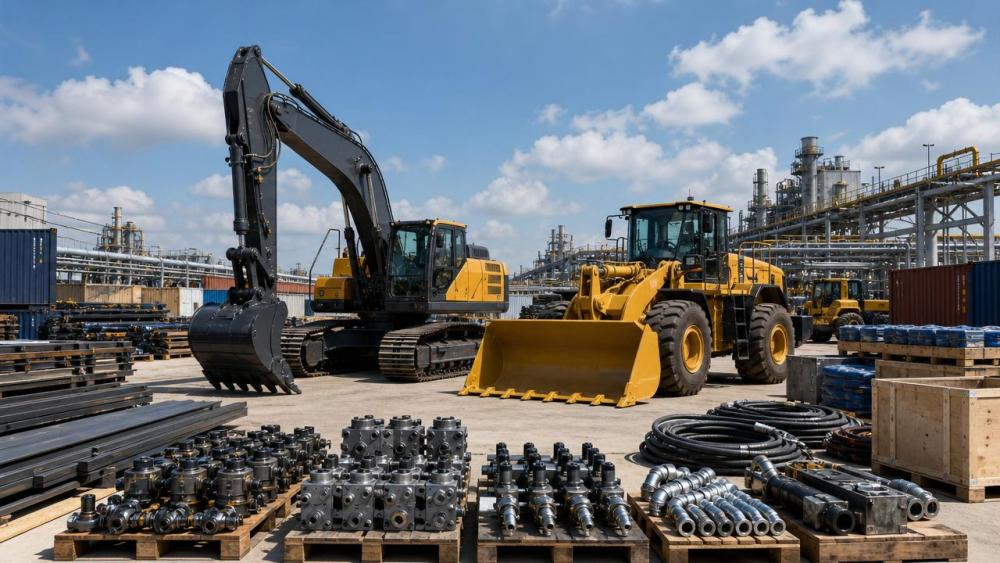
For finance approvers, the challenge is no longer the sticker price alone. Hydraulic machinery now carries layered cost exposure across steel, hydraulic components, electronics, software integration, regulatory compliance, transport, and after-sales support.
That complexity is especially visible in crawler excavators, wheel loaders, motor graders, bulldozers, and skid steer loaders, where hydraulic performance increasingly intersects with telematics, 3D guidance, and lower-emission power systems.
EMD tracks these shifts through its focus on earthmoving equipment dynamics, electro-hydraulic control logic, and the commercial impact of decarbonization and autonomy. For procurement and finance teams, that perspective matters because cost inflation is now technical as much as economic.
- Base machine prices may move upward due to steel, castings, hose assemblies, pumps, valves, and semiconductor-related supply constraints.
- Operating costs may rise if fuel efficiency, operator productivity, or maintenance intervals are not evaluated during approval.
- Compliance costs can emerge later if the selected hydraulic machinery does not align with local non-road emissions, safety, or site-control requirements.
- Residual value can fall if buyers approve outdated configurations while the market shifts toward smarter and lower-emission fleets.
The main 2026 cost risks finance teams should model before approving hydraulic machinery
A useful way to review hydraulic machinery budgets is to separate visible cost from embedded risk. The table below highlights where cost pressure may enter the approval process and what finance teams should verify before purchase orders are released.
The key takeaway is simple: by 2026, hydraulic machinery cost risk is distributed across the full asset lifecycle. Finance teams that approve machines based only on list price may underestimate the true budget impact by a meaningful margin.
What makes these risks more severe in earthmoving fleets?
Heavy equipment used in excavation, grading, loading, and dozing operates under punishing duty cycles. When hydraulic machinery works in mines, airport projects, urban utility sites, or mega-infrastructure corridors, failures are expensive because idle crews, delayed subcontractors, and liquidated damage exposure can multiply equipment cost.
EMD’s sector coverage is relevant here. Understanding breakout force, grading precision, hydrostatic transmission efficiency, and remote-control architecture helps buyers connect equipment specification choices to financial outcomes rather than treating procurement as a generic capital purchase.
Which hydraulic machinery categories carry the biggest budget surprises?
Not every machine category creates the same cost pattern. Finance approvers should compare cost exposure by application, hydraulic complexity, attachment dependency, and digital control requirements before approving 2026 fleet plans.
This comparison shows why a single approval template rarely works for all hydraulic machinery. An excavator bought for demolition, a grader bought for airport paving, and a skid steer bought for municipal utility work each create different cost behavior over the asset life.
How should finance approvers evaluate total cost instead of purchase price?
A disciplined approval process should convert hydraulic machinery procurement from a unit-price discussion into a total-cost decision. That means measuring what the machine will consume, require, and potentially disrupt over its planned life.
A practical review checklist
- Define application intensity. Identify whether the hydraulic machinery will face light municipal use, mixed contractor use, quarry loading, precision grading, or continuous mining support.
- Map cost by lifecycle stage. Include acquisition, freight, commissioning, operator training, maintenance kits, wear parts, software subscriptions, and resale assumptions.
- Stress-test utilization assumptions. A machine approved for 2,000 annual hours but used for 3,000 hours can distort service cost and replacement timing.
- Request hydraulic system service detail. Pump life, cylinder seal intervals, filtration practices, and contamination controls affect unplanned repair budgets.
- Quantify digital feature payback. Smart guidance, telematics, and remote diagnostics should be tied to lower rework, reduced idle time, or better fuel management.
For many organizations, the largest financial mistake is approving advanced hydraulic machinery without matching the technology level to field capability. If operators, technicians, and site managers are not prepared, the promised efficiency may not translate into realized savings.
Questions worth asking suppliers before approval
- What assumptions are built into the quoted fuel, maintenance, and uptime figures?
- Which hydraulic components have the longest replenishment lead times?
- What site conditions could void expected service intervals or raise wear rates?
- Which smart features require subscriptions, calibration, or annual updates?
- How are warranty boundaries defined for attachments, control software, and operator misuse?
Compliance, decarbonization, and smart integration: cost center or cost shield?
Many budget holders see emissions upgrades and intelligent control systems as unavoidable cost additions. In reality, the answer depends on project type, region, and contract structure. In some tenders, non-compliant hydraulic machinery may reduce competitiveness or require costly rework at deployment.
For fleets entering regulated urban, airport, public works, or multinational infrastructure projects, compliance and digital transparency can protect revenue. Better machine data improves maintenance planning, operator accountability, and asset allocation, especially across mixed fleets.
Common areas to verify
- Non-road emissions alignment for the intended export or operating market.
- Safety and control provisions for remote or hazardous operation where relevant.
- Data ownership, telematics access, and reporting compatibility with fleet systems.
- Training burden associated with 3D grading, payload systems, or proportional electro-hydraulic controls.
EMD’s intelligence-led view is useful because the market is moving beyond mechanical comparison. The financial value of hydraulic machinery increasingly depends on how well the machine fits future rules, site automation expectations, and utilization analytics.
Frequent mistakes that increase hydraulic machinery cost exposure
Mistake 1: treating all brands and configurations as financially equivalent
Two machines with similar engine power may produce very different ownership outcomes if one has stronger hydraulic efficiency, easier service access, better parts availability, or more suitable attachment flow settings.
Mistake 2: underestimating downtime costs
In major earthmoving operations, one failed hydraulic machinery unit can delay hauling, grading, compaction sequencing, or concrete support tasks. The indirect cost often exceeds the repair invoice.
Mistake 3: buying advanced features without a payback path
Precision controls, telematics, and assisted operation can create strong value, but only if the machine is deployed in workflows that convert those features into lower rework, fewer passes, better fuel efficiency, or improved safety.
Mistake 4: ignoring attachment strategy
For excavators and skid steers, hydraulic machinery economics are heavily influenced by attachment utilization. A low-cost base machine may become expensive if attachments cause hose wear, compatibility issues, or poor cycle performance.
FAQ: what do finance decision-makers ask most about hydraulic machinery in 2026?
How should I compare two hydraulic machinery quotes that look similar?
Compare more than unit price. Review included attachments, warranty scope, telematics terms, training, spare parts packages, freight, commissioning, and maintenance intervals. Similar quotes can diverge significantly once service and uptime assumptions are included.
Is it better to delay purchases if hydraulic machinery prices may soften later?
Not always. Delaying approval may expose the business to further rate pressure, project delays, or older equipment downtime. The better question is whether the expected savings from waiting exceed the operational and financing cost of delay.
Which cost line is most often underestimated?
Maintenance-related downtime is often underestimated, especially for high-hour crawler excavators, bulldozers, and loaders. Finance teams tend to budget for parts but not for interrupted production, standby labor, or subcontractor rescheduling.
Do smart features really reduce hydraulic machinery cost?
They can, but only in the right scenario. Grade control, payload systems, and remote diagnostics create value when the work involves repeatable cycles, quality-sensitive surfaces, or multi-site fleet oversight. In low-utilization environments, payback may be slower.
Why work with EMD when reviewing hydraulic machinery investment risk?
EMD is built around the technical and commercial realities of earthmoving equipment. That matters for finance teams because cost risk in hydraulic machinery is increasingly driven by machine application, hydraulic architecture, digital integration, and regulatory transition rather than by list price alone.
Our intelligence focus covers crawler excavators, wheel loaders, motor graders, bulldozers, and skid steer loaders, along with the broader forces shaping procurement: decarbonization, autonomy, hydrostatic efficiency, electro-hydraulic control response, and global infrastructure demand cycles.
If you are reviewing hydraulic machinery budgets for 2026, contact EMD for support with parameter confirmation, application-fit analysis, equipment category comparison, compliance checkpoints, delivery-cycle review, attachment planning, and quotation benchmarking. This helps finance approvers move from reactive price approval to structured capital decision-making.